
I’ve always been drawn to projects that use simple, natural materials. Sometimes the most creative ideas start with things we already have in the kitchen.
Vegetable block printing is a simple technique that lets you print patterns on fabric using everyday vegetables like cabbage, peppers, and okra.
On my blog WM Design House, I may sometimes use affiliate links, which means a small commission is earned if you purchase via the link. The price will be the same whether you use the affiliate link or go directly to the vendor’s website using a non-affiliate link. Read my full disclosure policy here.
I love bringing natural elements into projects like this, just like I do when planning my cut flower garden each summer.
Give me a basket of fresh vegetables, a piece of linen, and a little paint, and suddenly a creative idea starts to take shape. That’s exactly how this project began. After experimenting with cabbage, peppers, lettuce, and artichokes, I realized the natural shapes inside these vegetables create beautiful organic patterns when stamped onto fabric.
In This Post
In this tutorial, I’ll show you how to:
- Use cabbage, peppers, and other vegetables for vegetable block printing
- Print beautiful patterns on fabric using simple supplies
- Create a DIY table runner without sewing
- Make charming vegetable printed tea towels
- Style your handmade linens for a relaxed garden-inspired table
The Handcrafted Society
The Handcrafted Society is back today, and we’re so excited to share our creative projects with you.
This month’s theme is block printing, and everyone has come up with such beautiful and creative ideas.
At the end of this post, you’ll find links to all of the other Handcrafted Society projects. I hope you’ll take a few minutes to visit each one and see the wonderful ways everyone explored block printing this month.
What Is Vegetable Block Printing?
Vegetable block printing is a simple fabric printing technique where vegetables are used as natural stamps to create patterns on fabric.
When vegetables are sliced open, the internal shapes and layers form interesting patterns that transfer beautifully when dipped in paint and pressed onto fabric.
Each vegetable produces its own unique design. Some create floral shapes, while others form circular or geometric patterns. The charm of vegetable block printing is that every print is slightly different, giving the finished fabric a relaxed, handmade feel.
Best Vegetables for Block Printing on Fabric
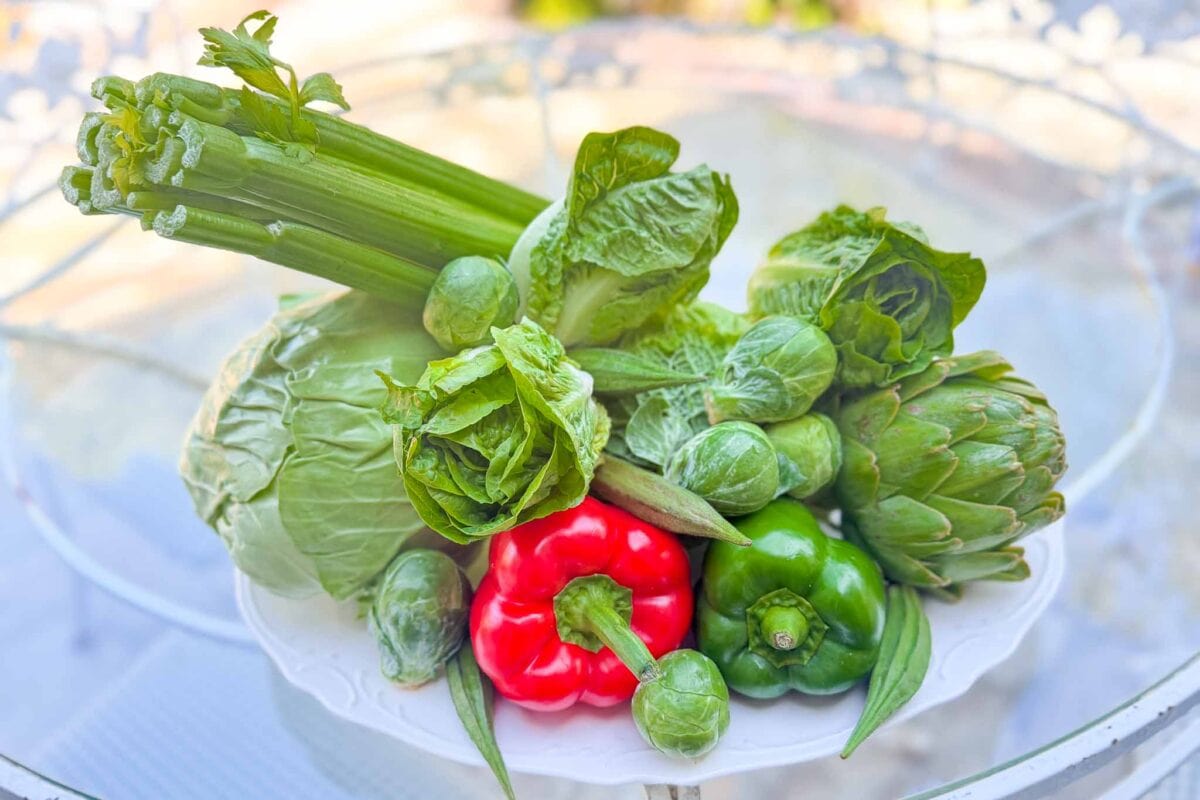
Not every vegetable creates a good stamp, but many of the ones we already have in our kitchen produce surprisingly beautiful prints.
Here are a few that work especially well.
Cabbage
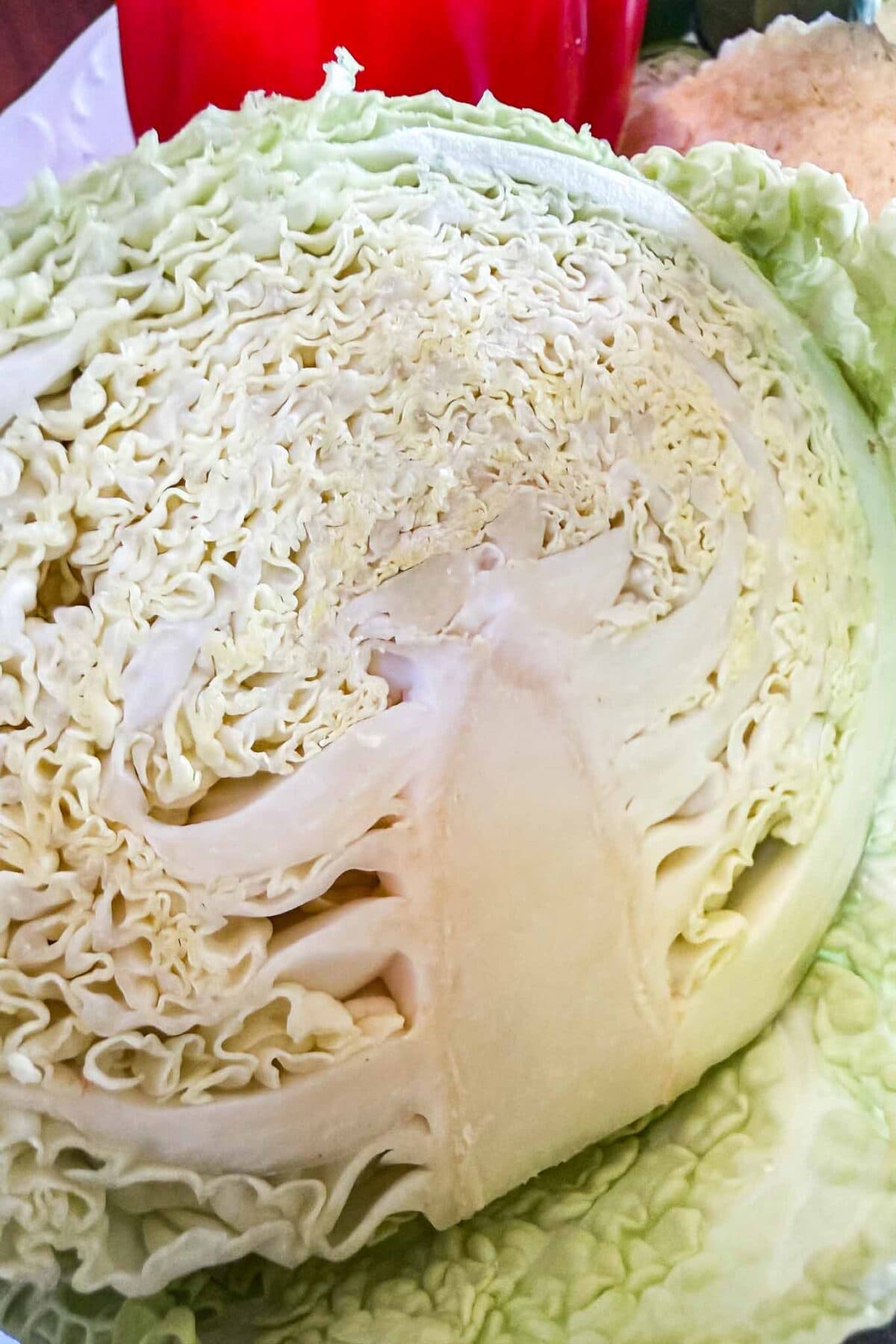
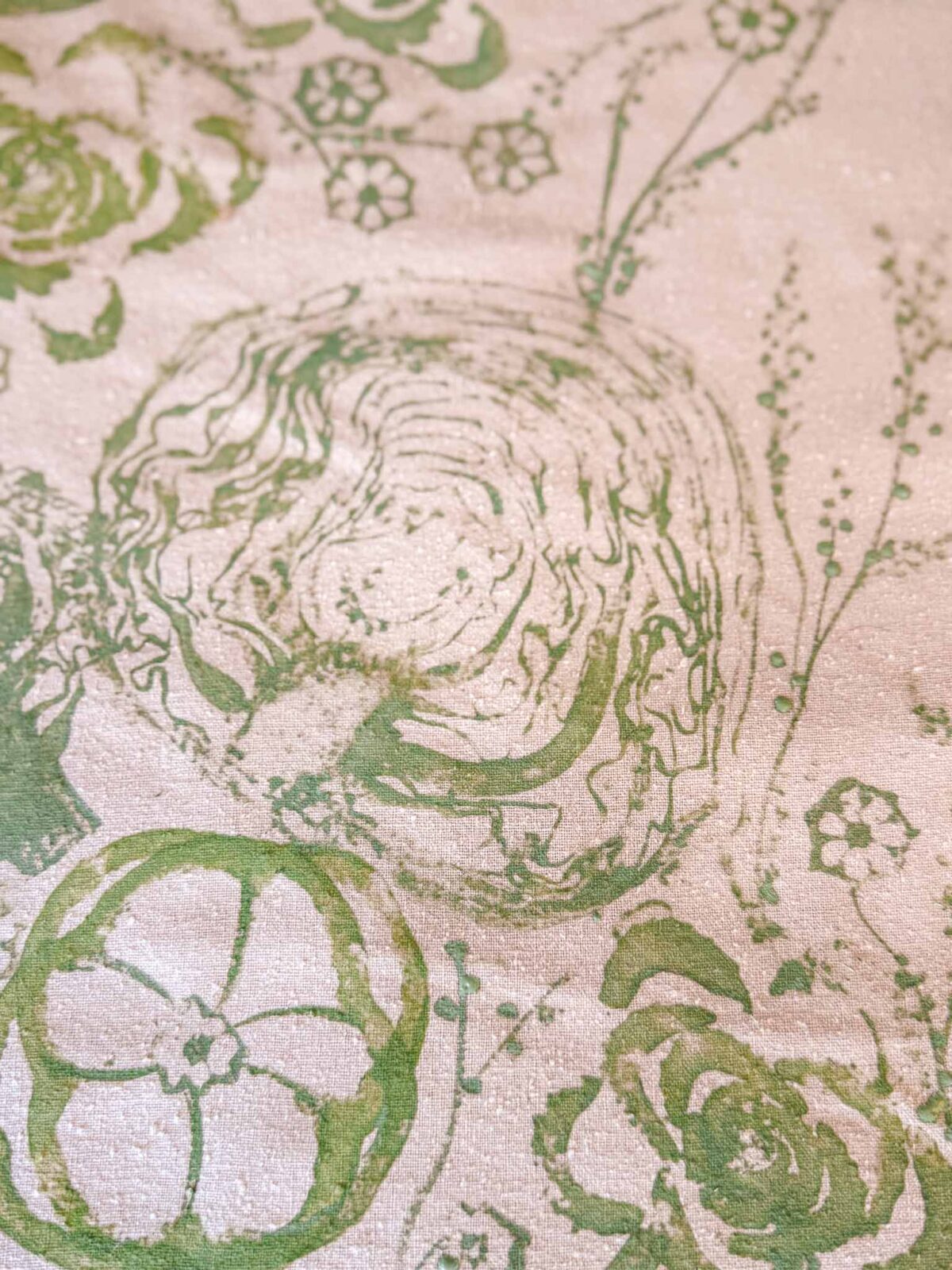
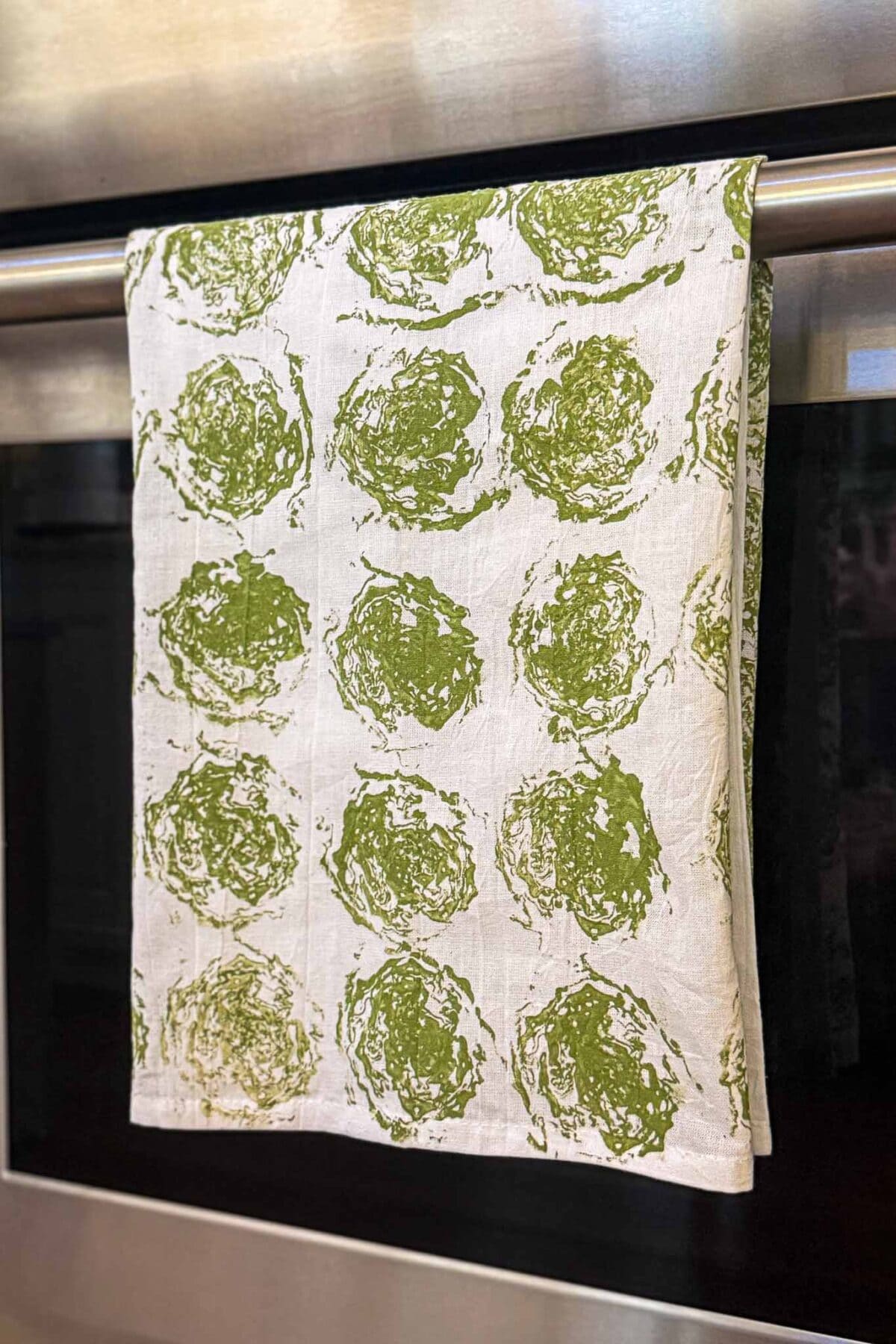
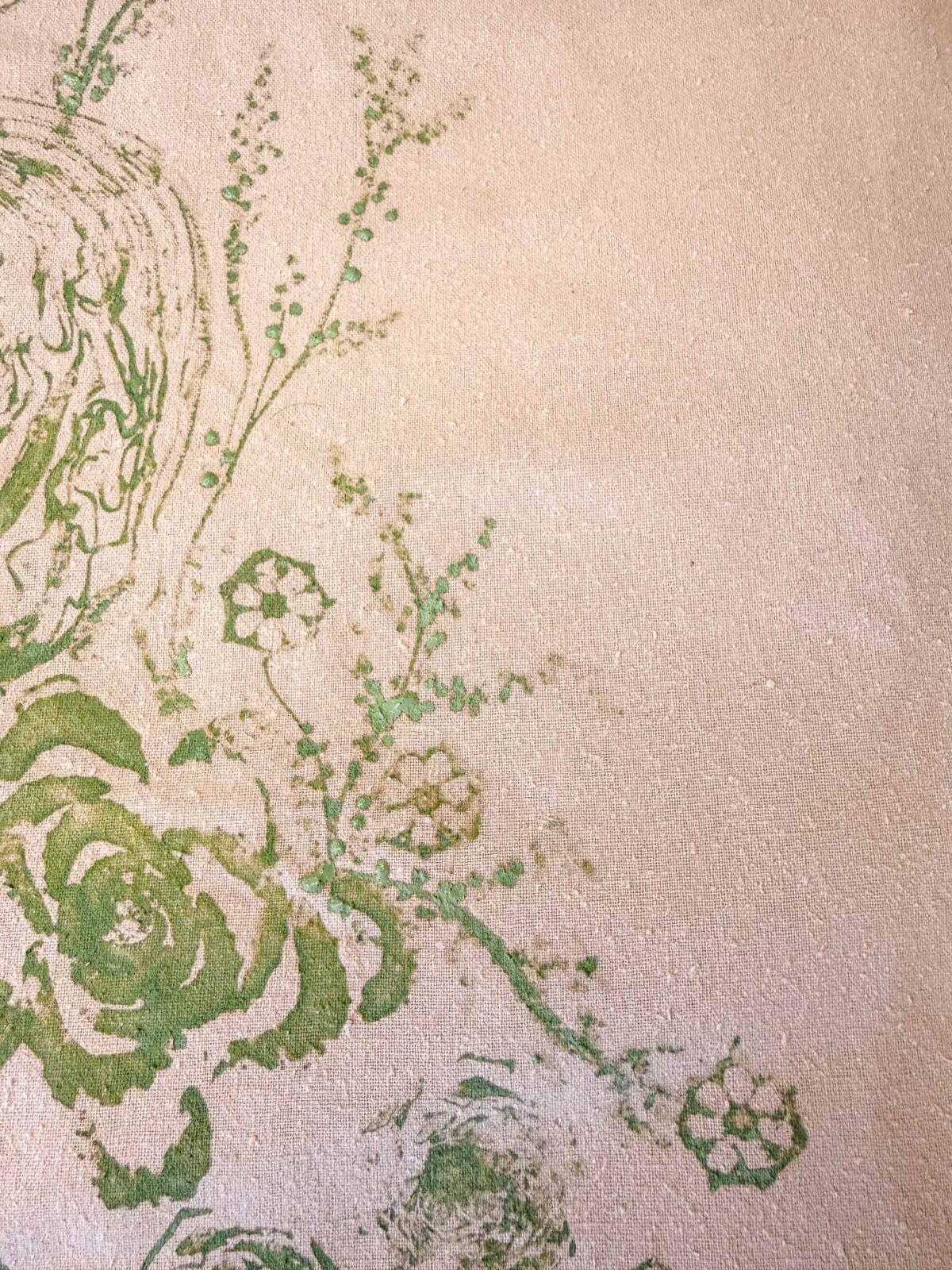
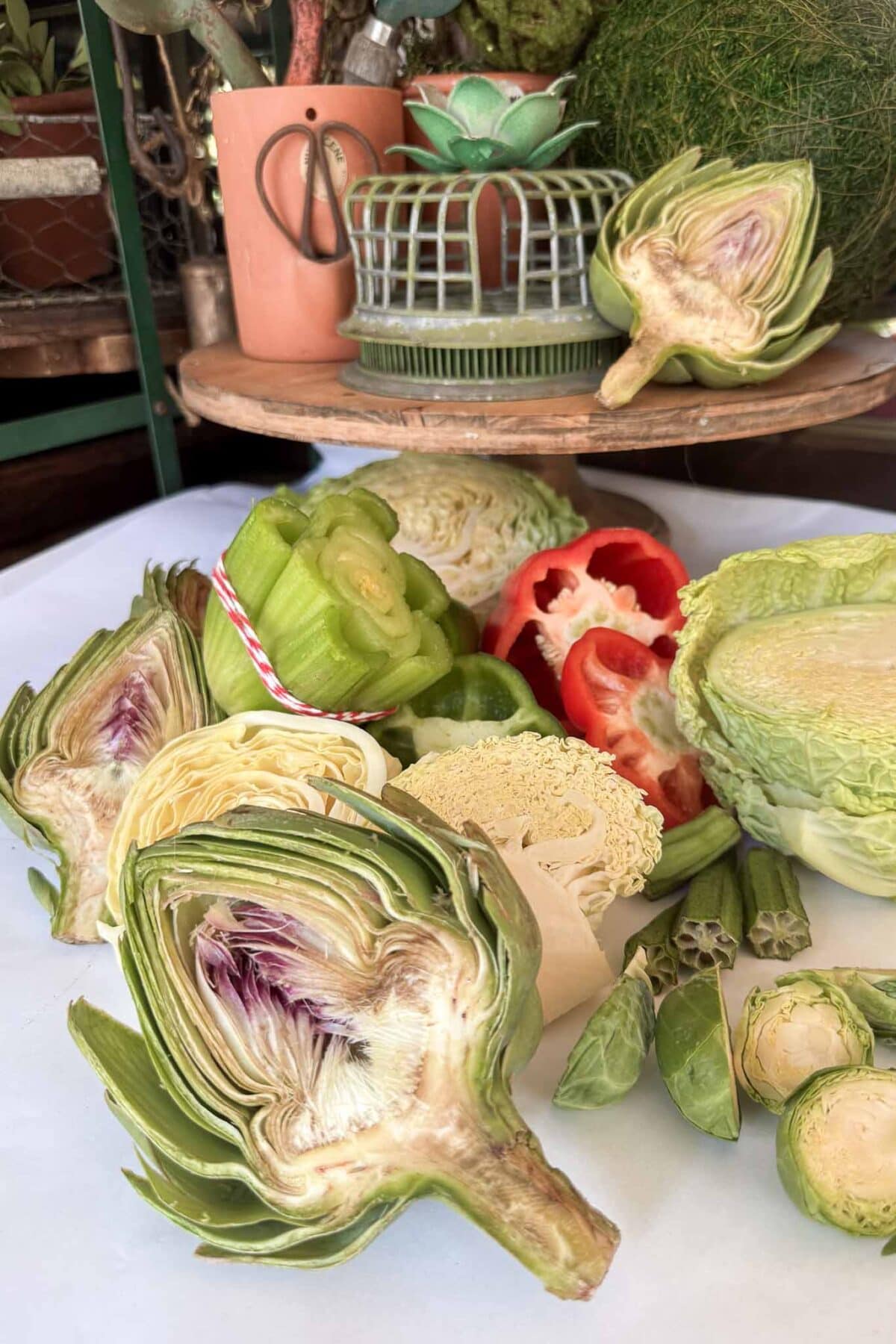
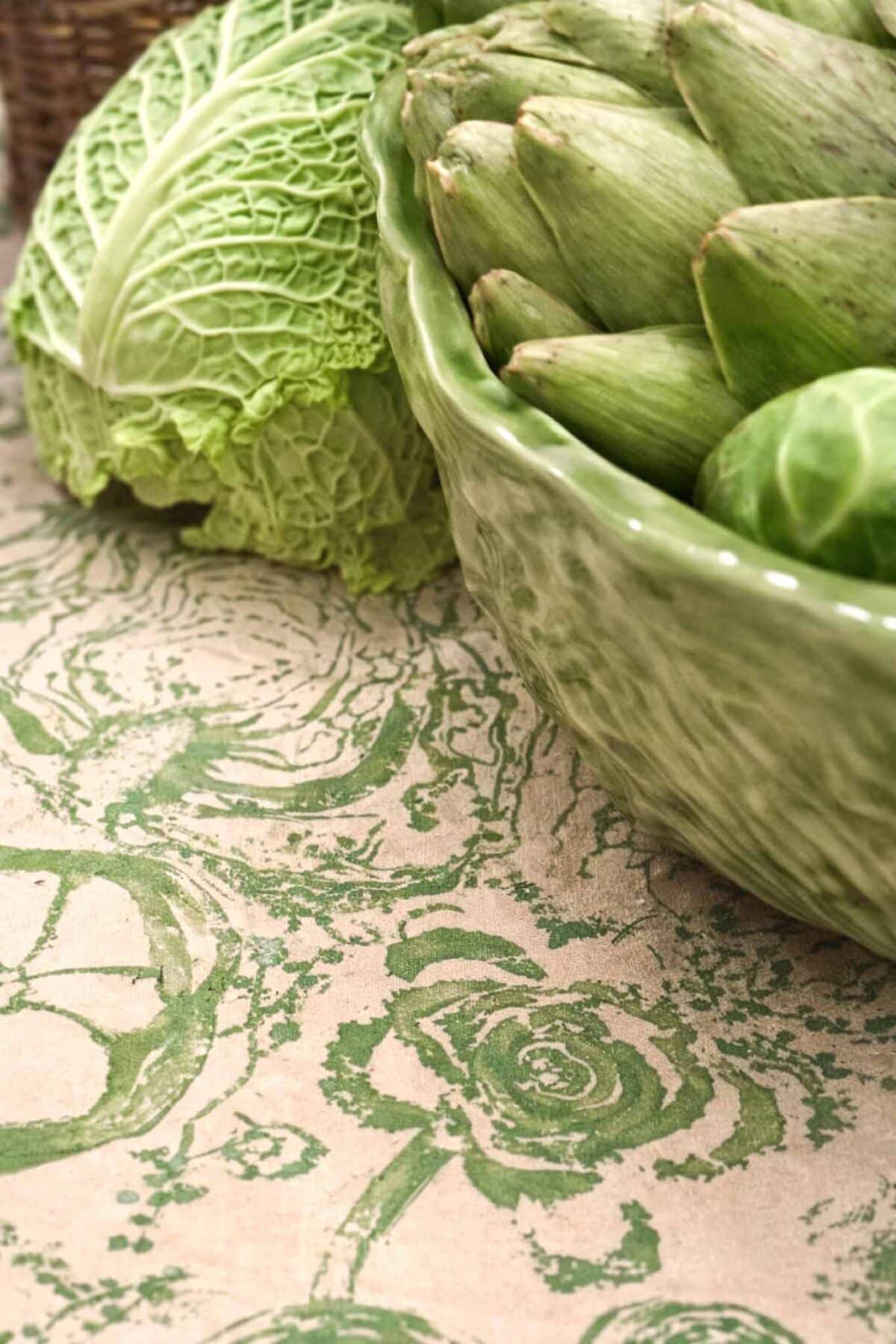
Cabbage is by far my favorite vegetable for block printing. When cut in half, the layered leaves create a pattern that looks almost like a large blooming flower.
This is what gives the fabric that soft, organic look that feels perfect for table linens.
Bell Peppers
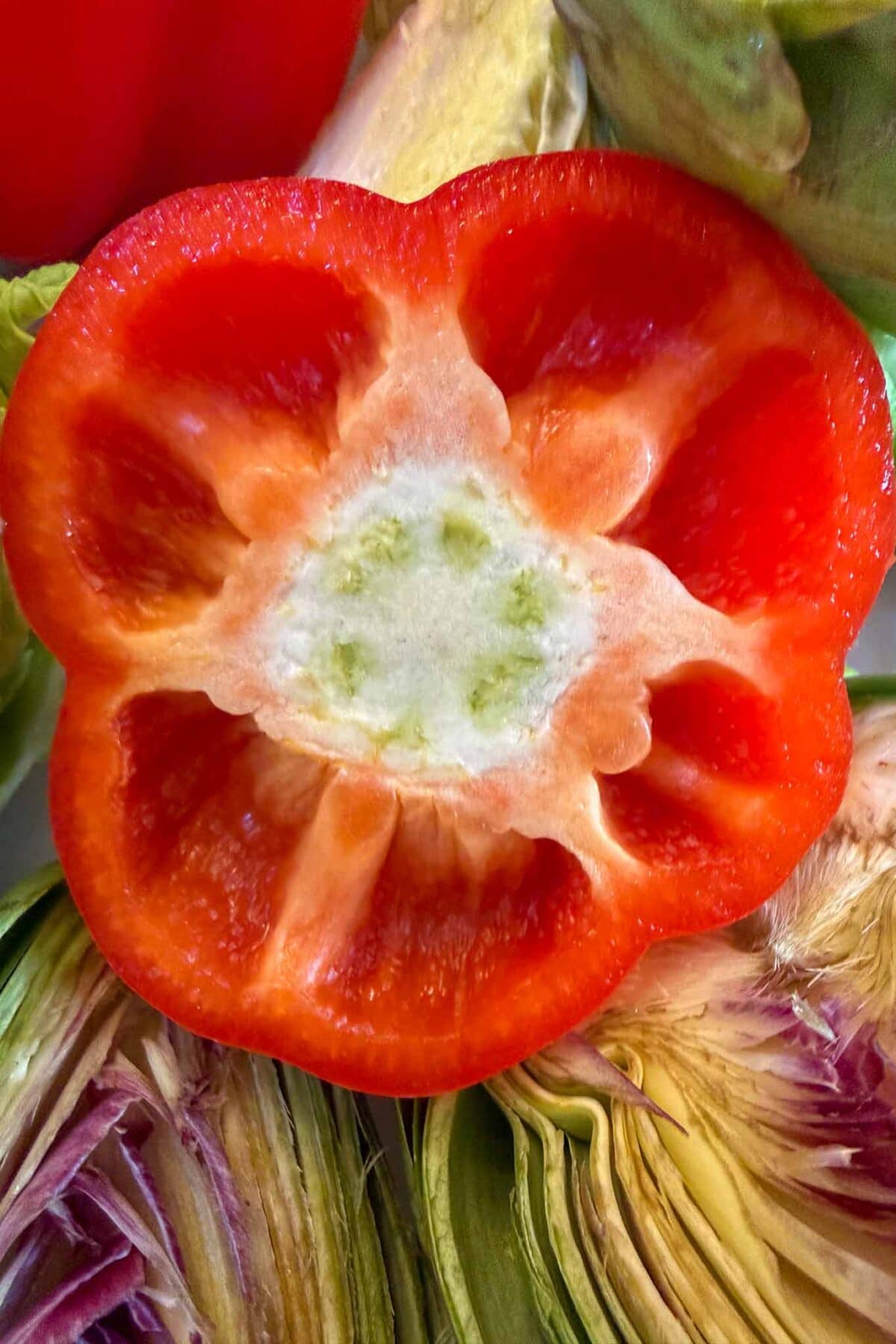
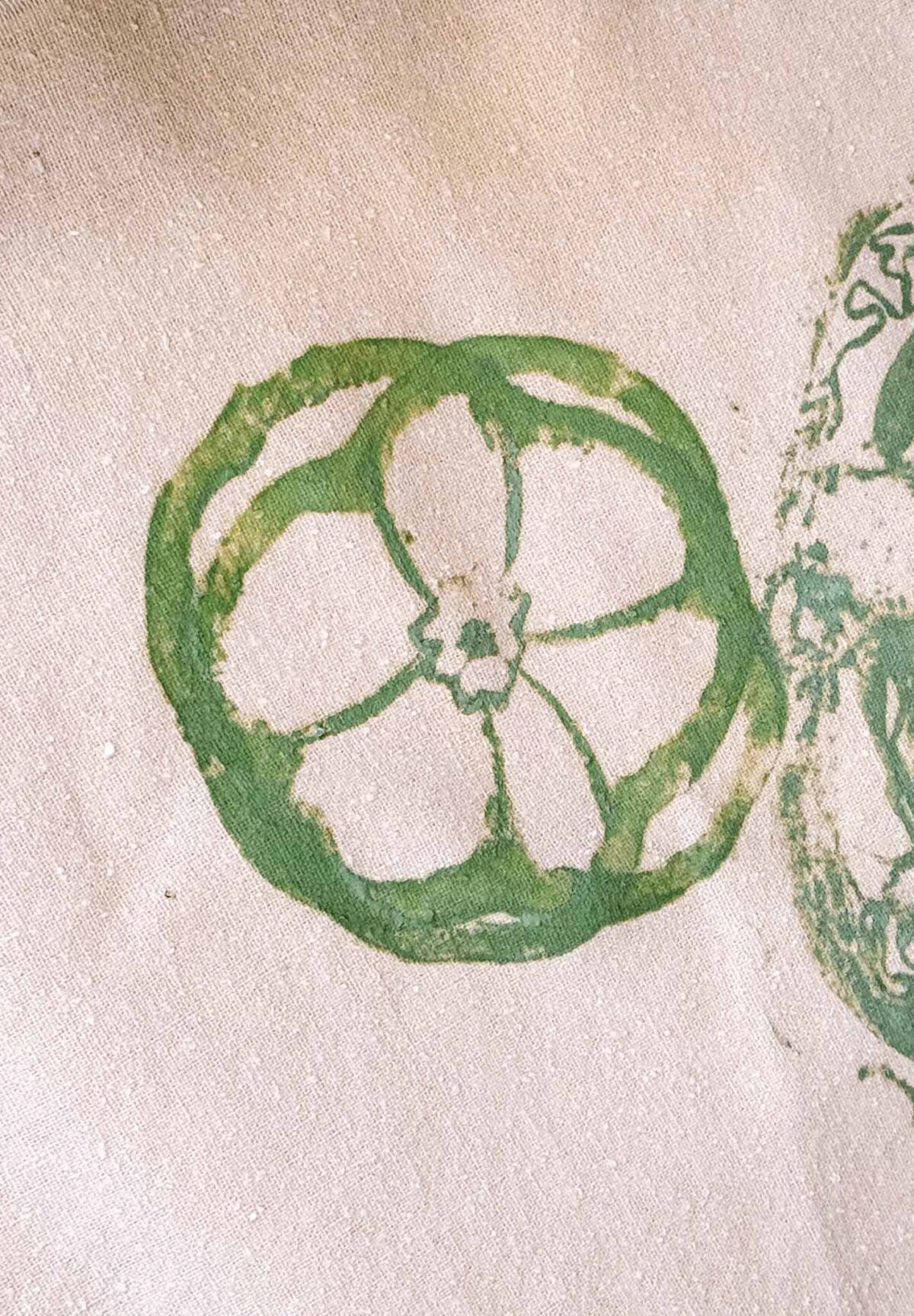
When you slice a bell pepper horizontally, the inside forms a natural flower shape. It makes the sweetest little repeating prints on tea towels.
Lettuce
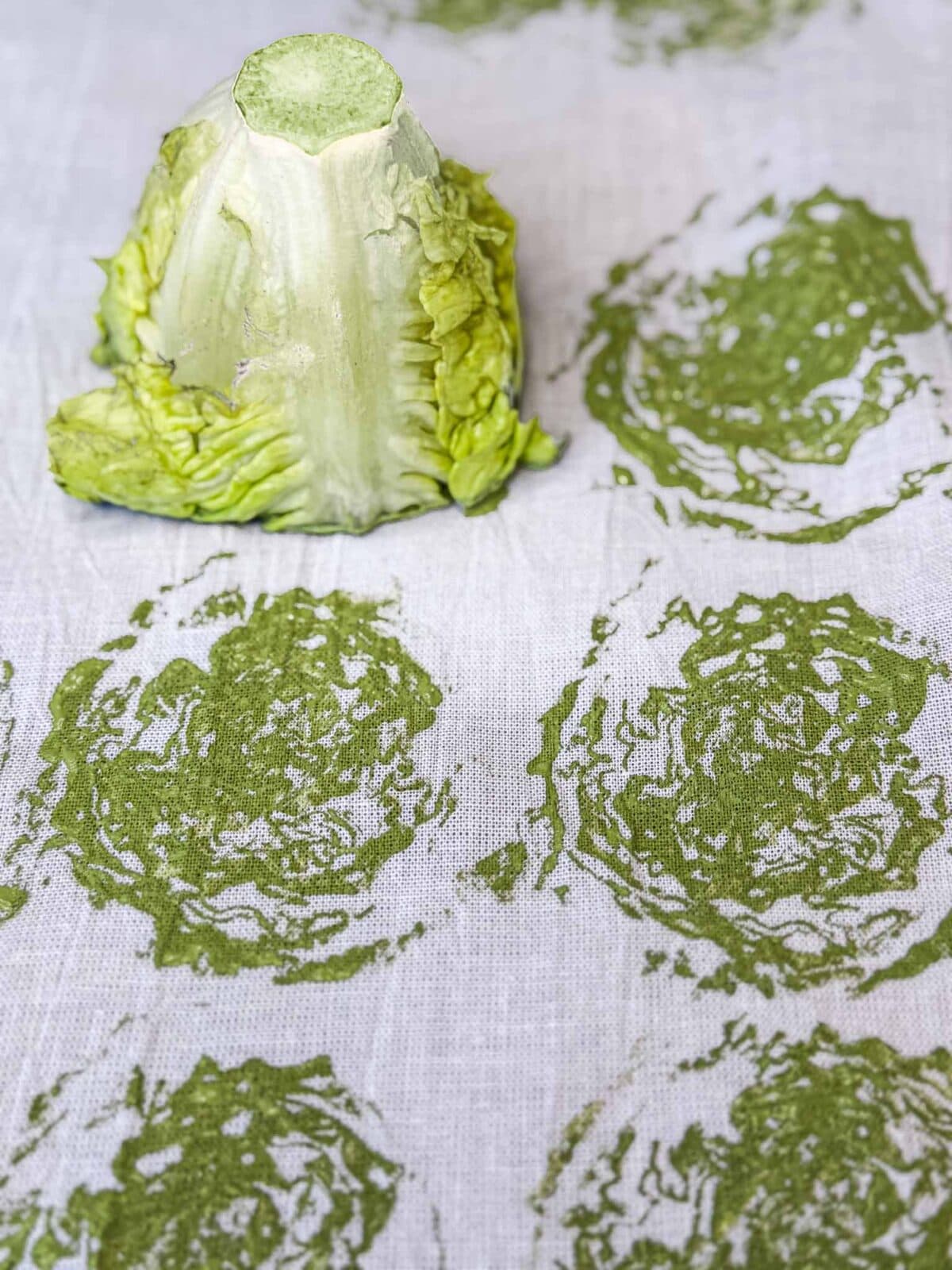
Lettuce creates a looser, more delicate pattern. The edges of the leaves produce soft organic shapes that work beautifully layered with other prints.
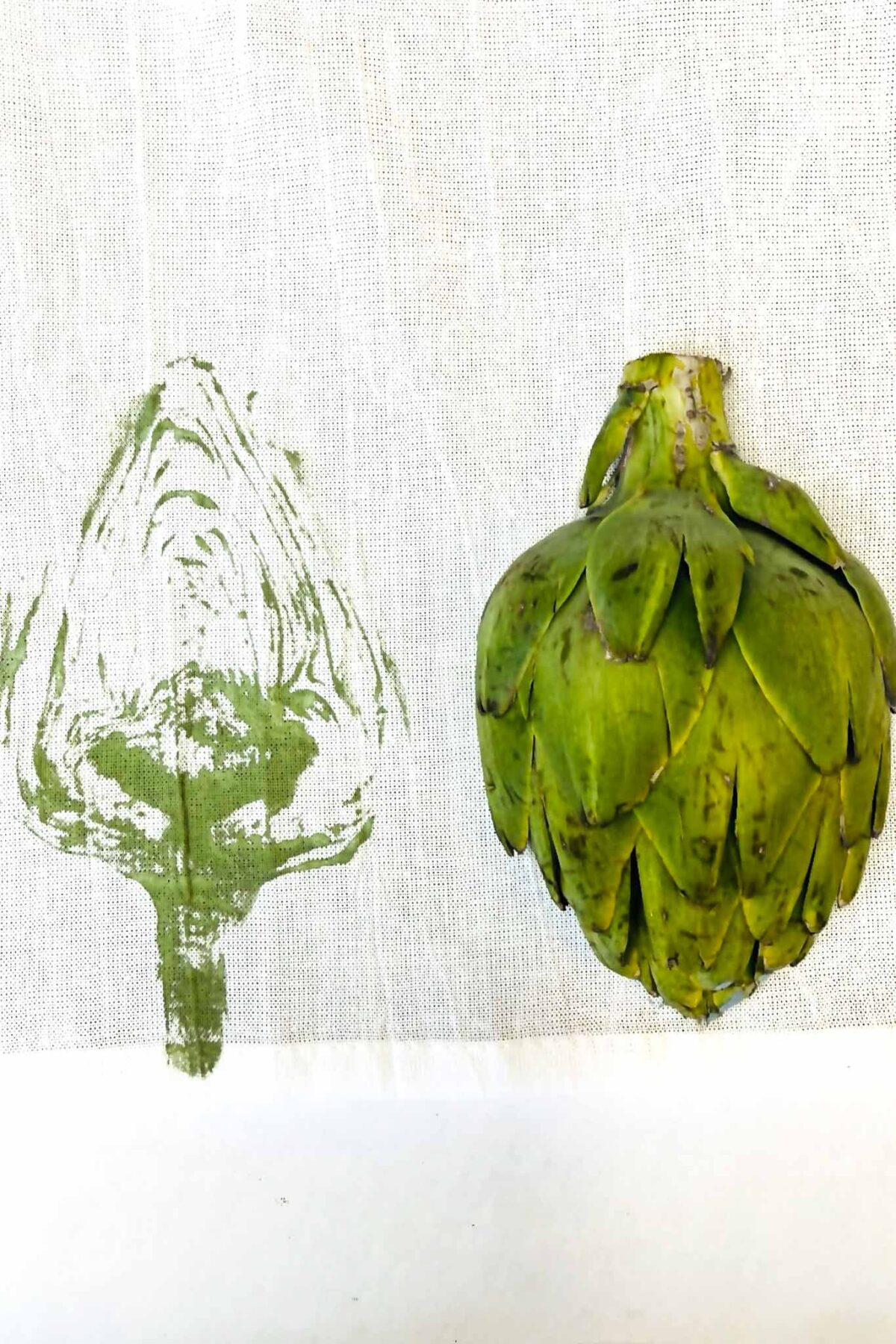
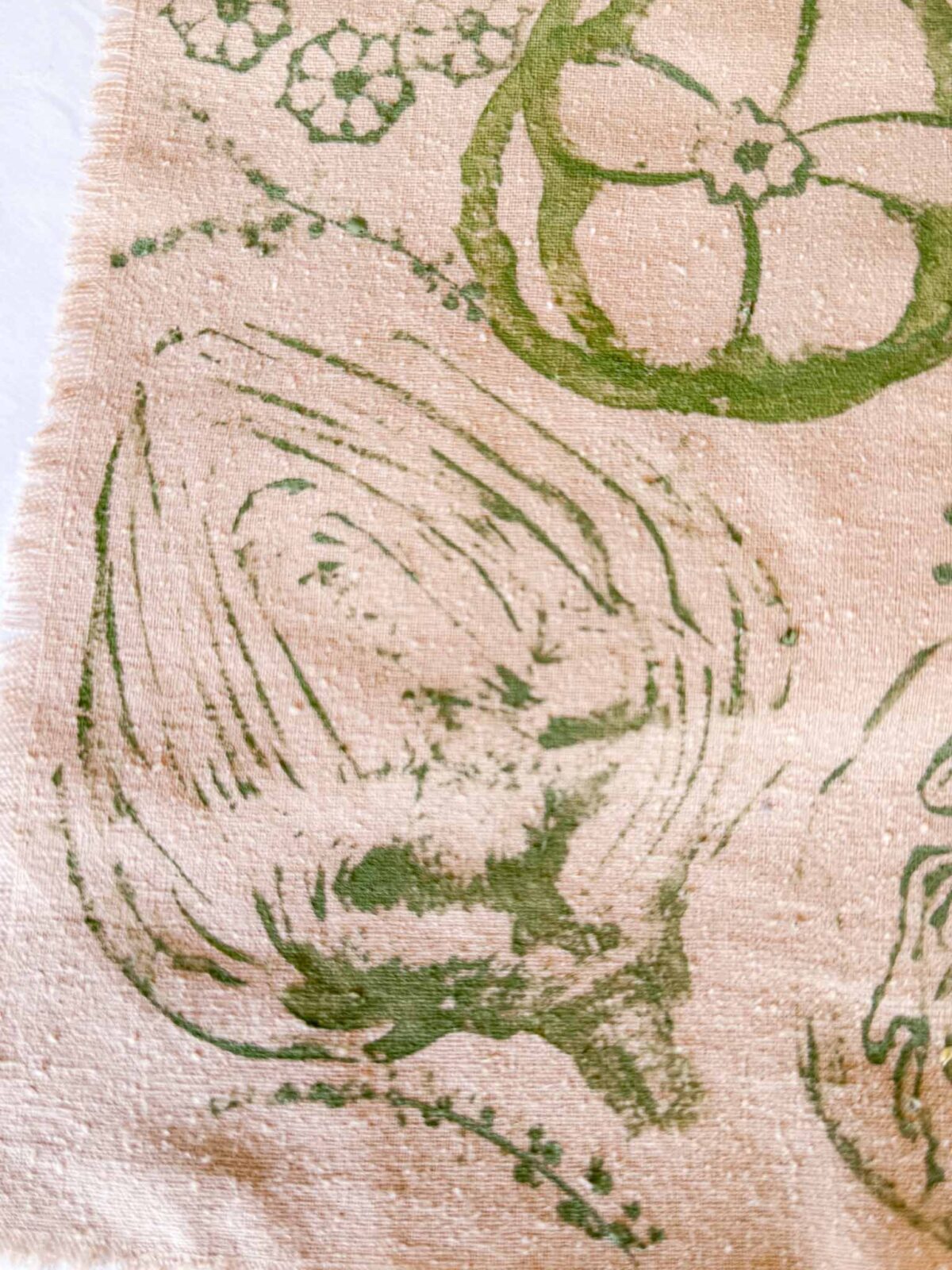
Artichokes
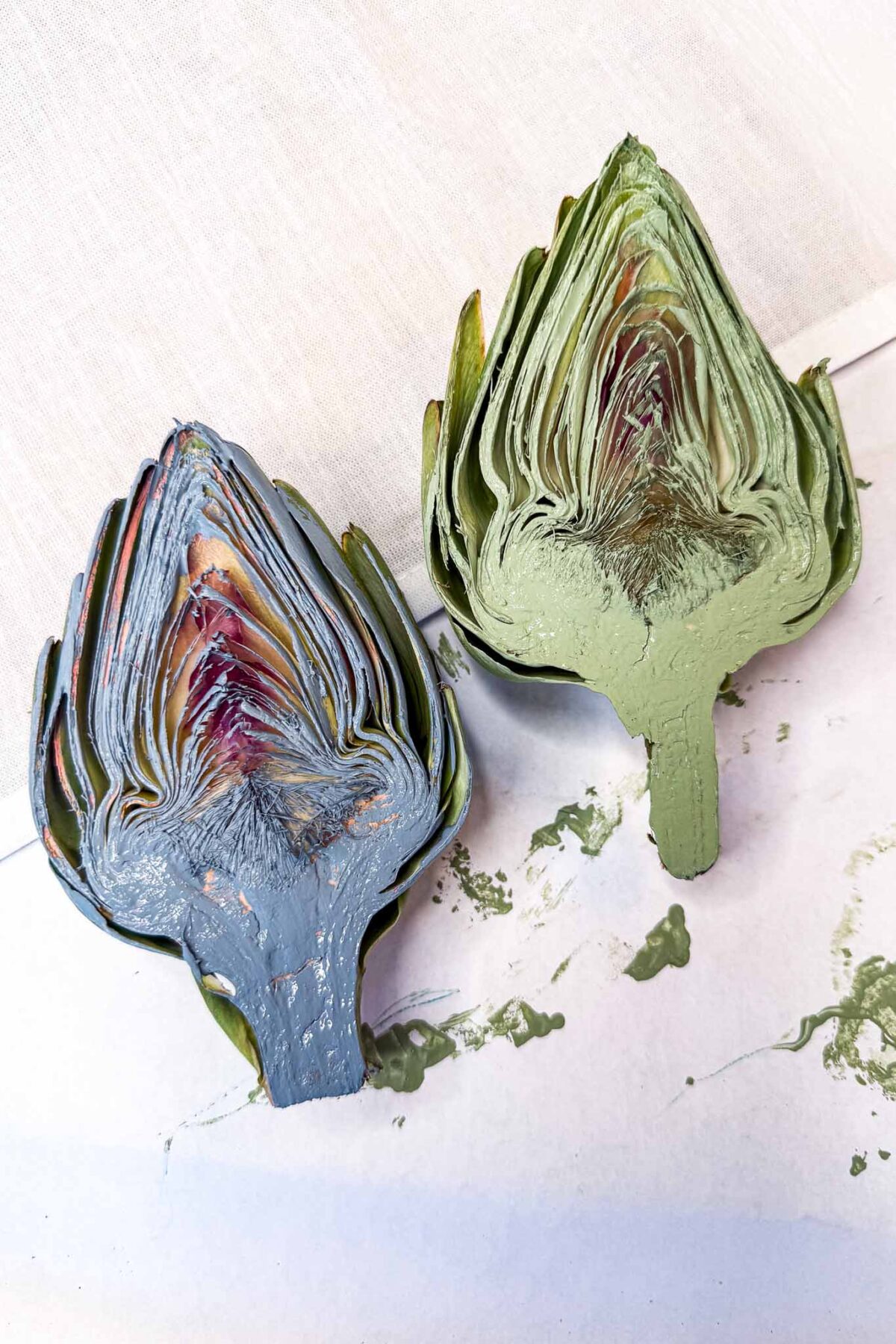
Artichokes have a wonderful texture when cut, and they create more abstract prints that add interest to the fabric.
The fun part is experimenting with different vegetables and discovering the patterns they create on fabric.
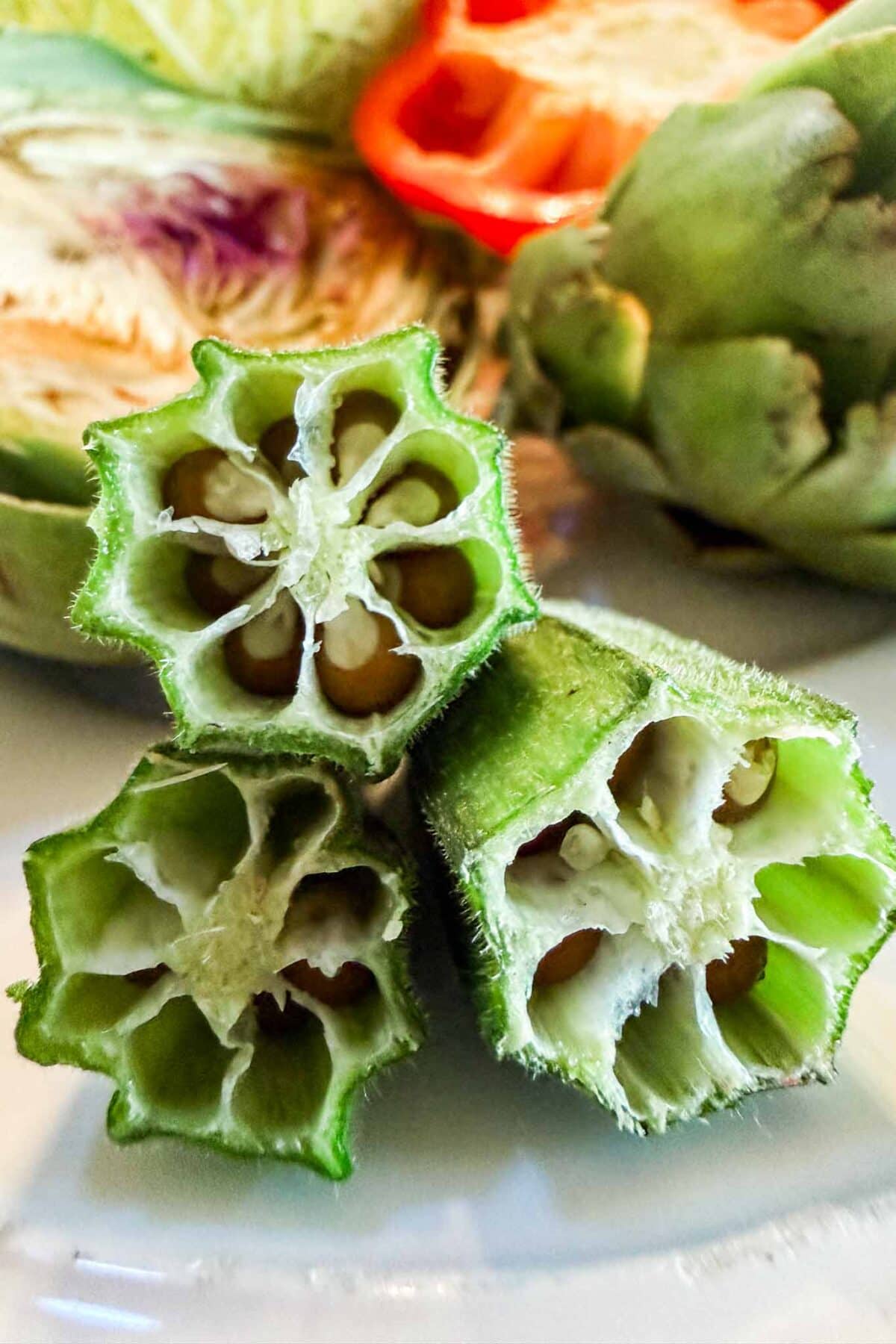
Okra
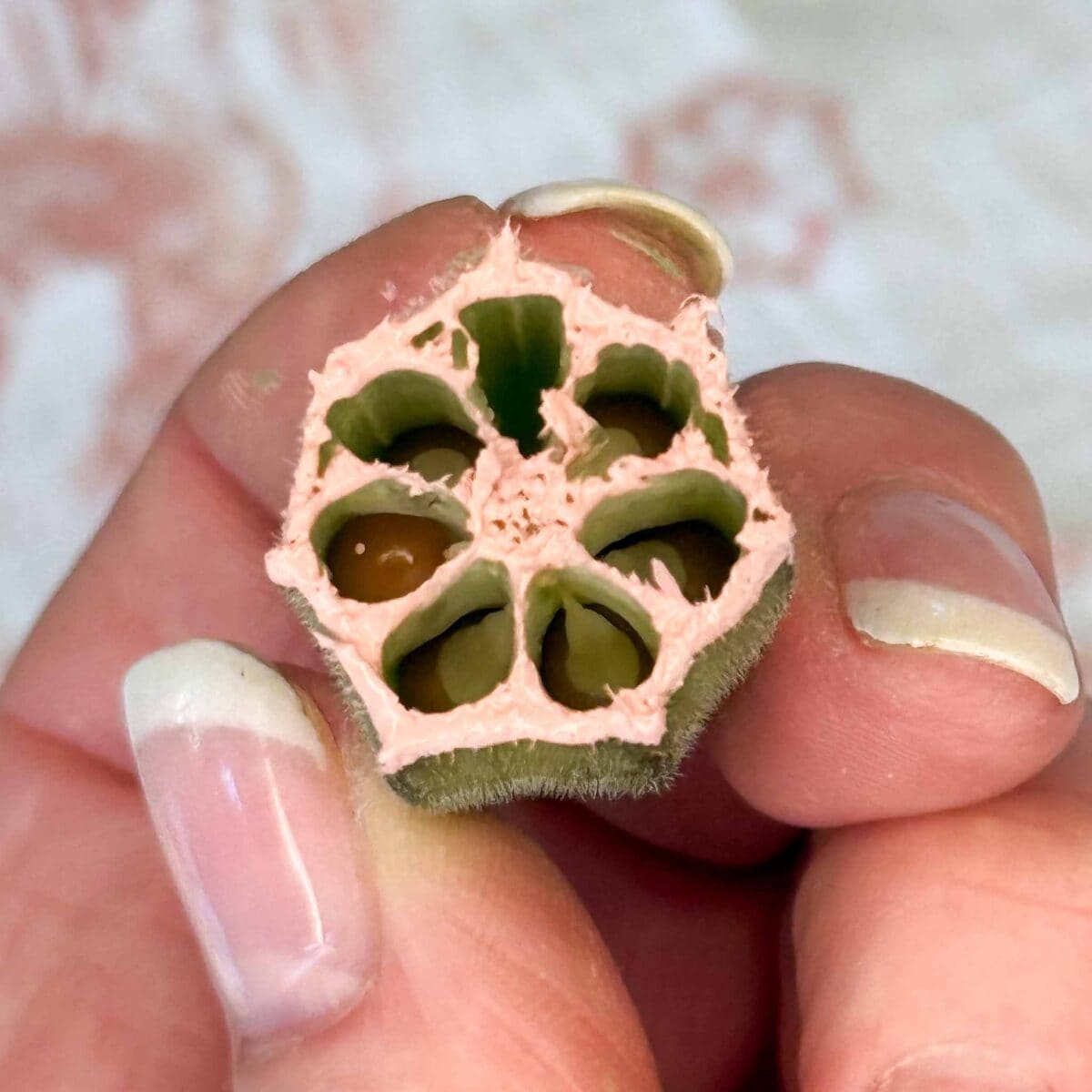
Okra is another fun vegetable to use for block printing because it creates the sweetest little star-shaped design. When you slice the okra crosswise, the natural chambers inside form a perfect star pattern.
Once stamped onto fabric, those little stars create a playful repeating print that works beautifully on tea towels and napkins. They’re especially charming when scattered across the fabric or layered between larger prints like cabbage or peppers.
Because okra is smaller, it’s also great for filling in open spaces and adding a bit of detail to your design.
Supplies Needed for Vegetable Block Printing
You only need a few simple supplies.
- Linen or cotton fabric
- Fabric paint
- Small paint/ink roller or brush
- Cutting board
- Sharp knife
- Paper plates or paint tray
- Fresh vegetables such as cabbage, peppers, lettuce, artichokes, and okra
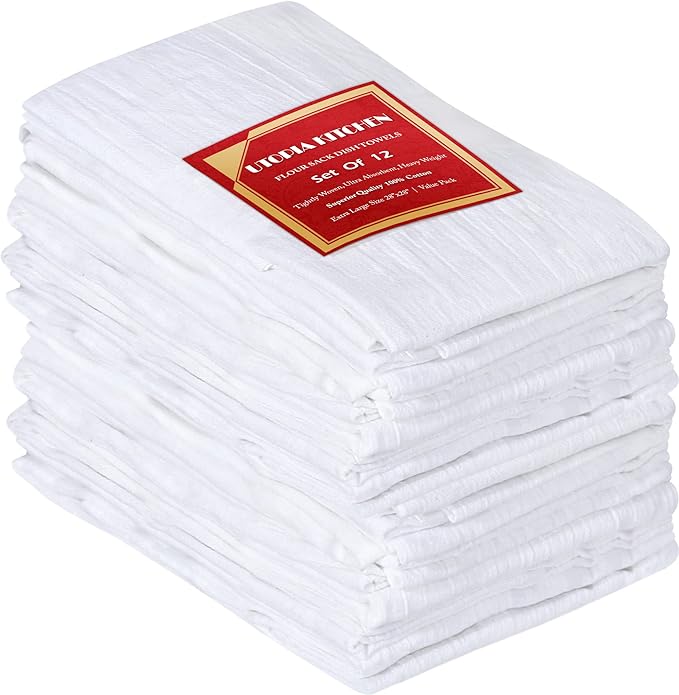
- Flour sack tea towels (optional)
Natural fabrics like linen and cotton absorb paint beautifully and give the clearest prints.
How to Print Fabric Using Vegetables
Step 1: Prepare the Fabric
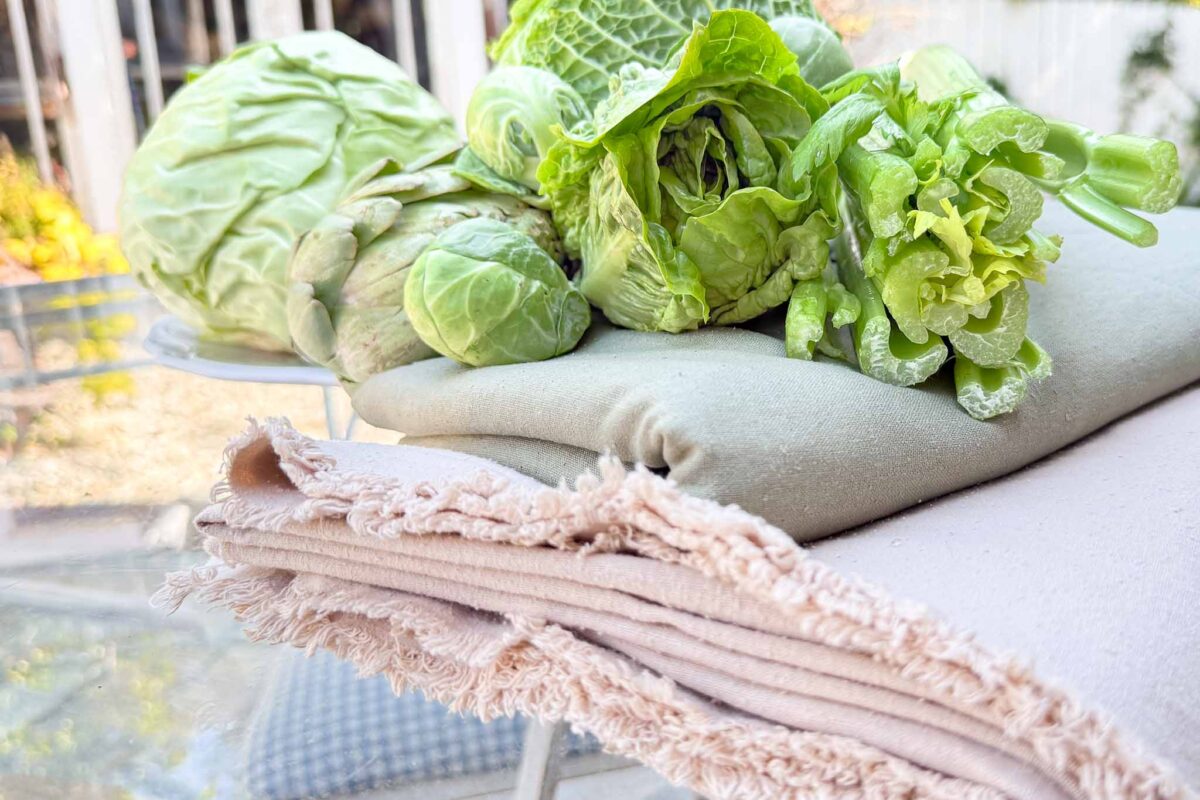
If you can believe it, we have a local thrift store that is dedicated entirely to crafting supplies. It truly feels like heaven on earth. Naturally, that’s where I went looking for the perfect fabric for this project, and I found exactly what I had in mind. A beautiful blush linen-silk fabric that felt perfect for printing.
Before you begin, wash and dry the fabric to remove any coating. Then lay the fabric flat on a protected surface and smooth out any wrinkles.
Place a piece of cardboard underneath the fabric to prevent paint from bleeding through.
Step 2: Cut the Vegetables
Slice vegetables in half to reveal their natural patterns. Pat the cut surface dry before adding paint.
Step 3: Apply the Paint
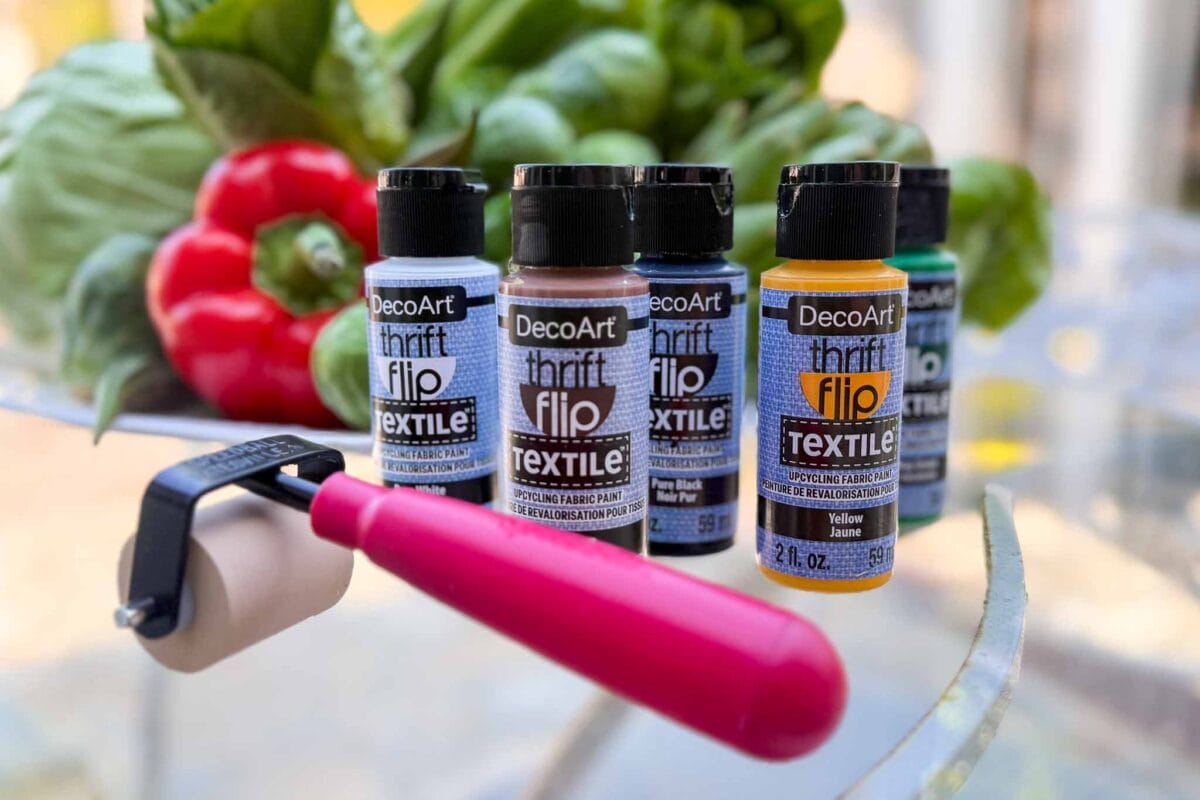
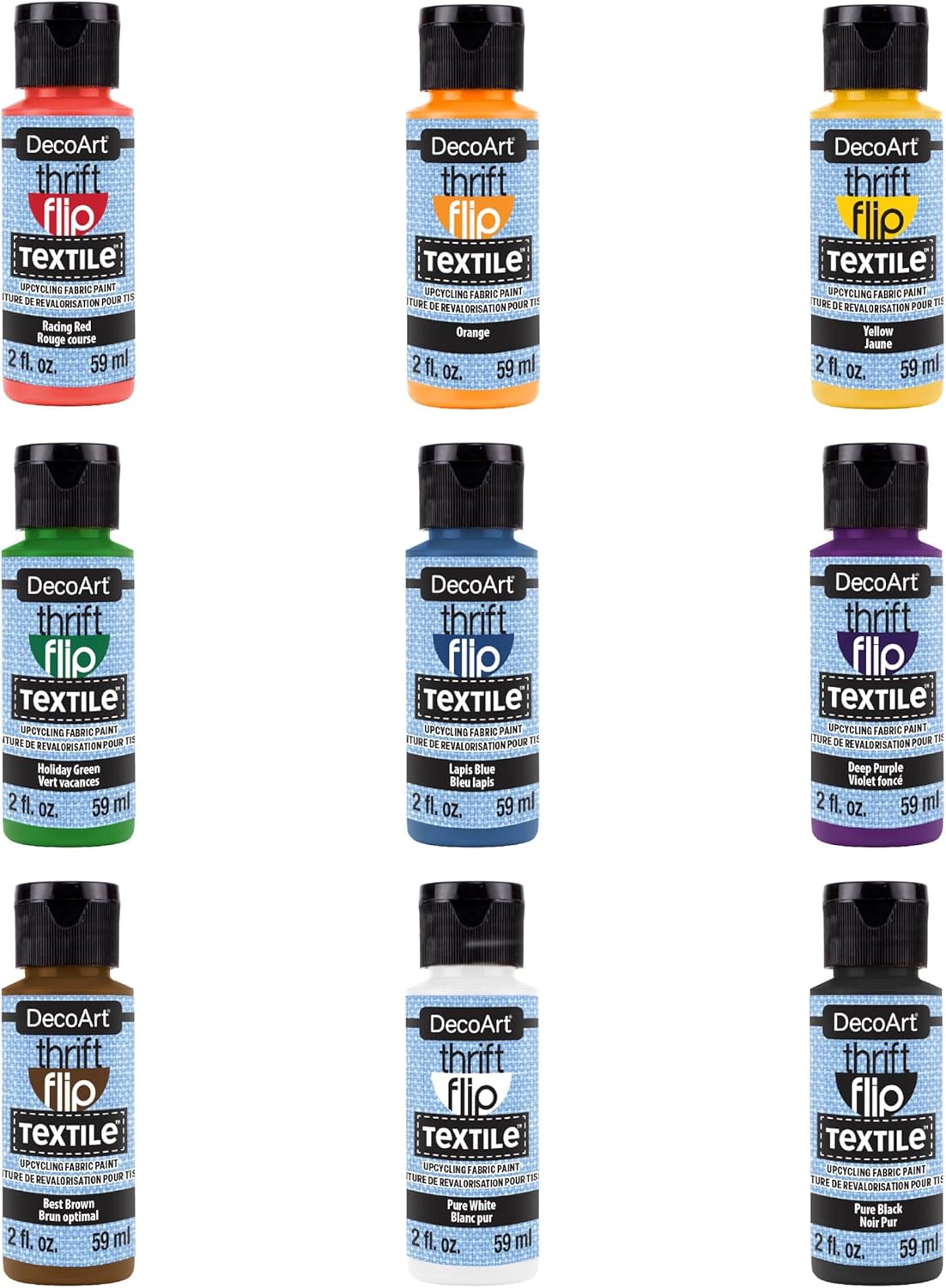
I ordered a set of primary color fabric paints and mixed a bit og green, brown, yellow and white to get the green color I used.
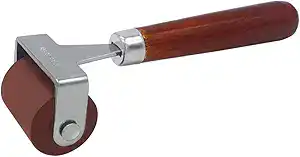
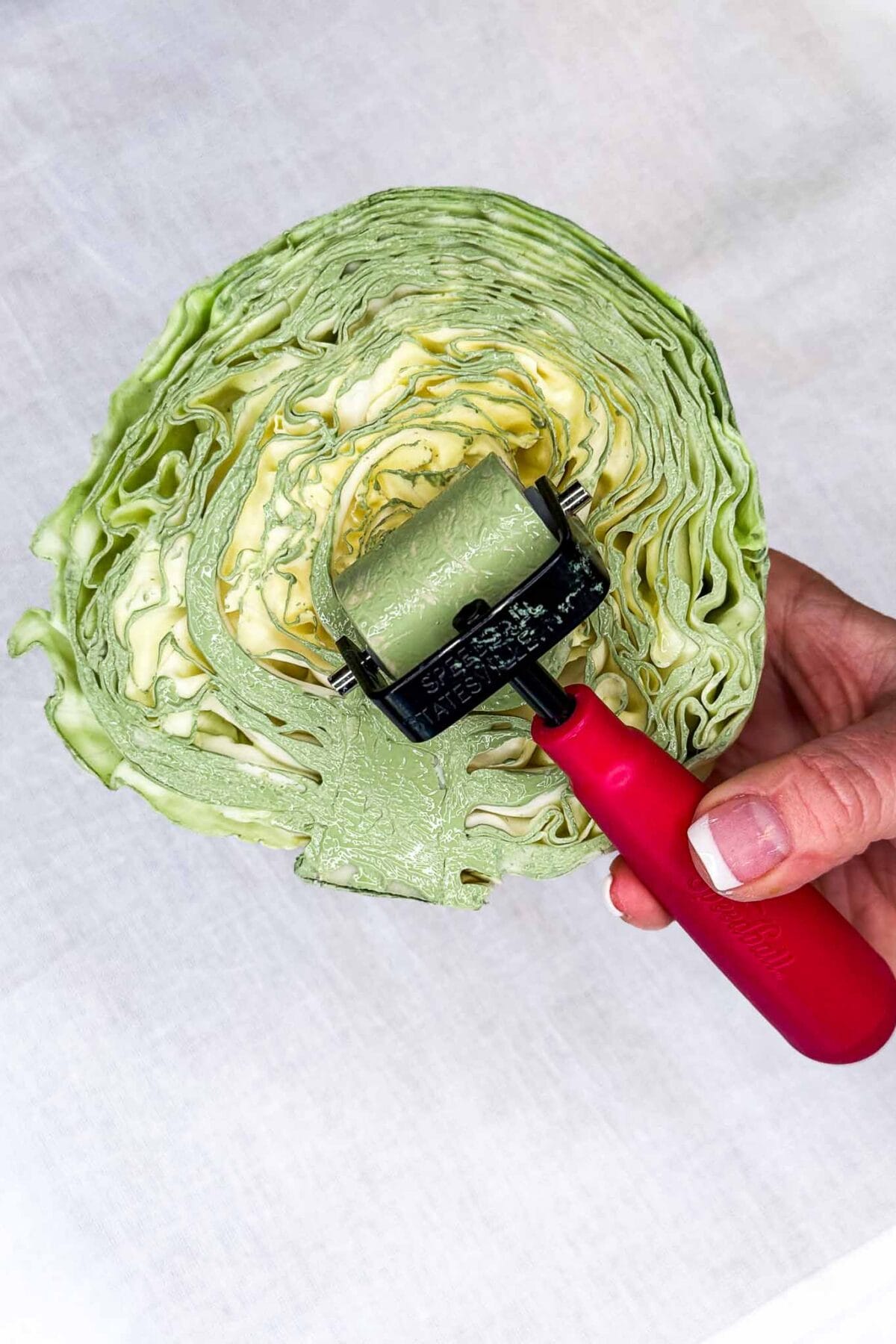
Roll a small amount of fabric paint onto the vegetable using a roller. This helps create even coverage without excess paint.
If there is excess paint, lightly dab the vegetable on a paper towel before stamping it onto the fabric.
Step 4: Stamp the Fabric
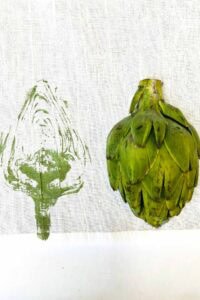
Press the vegetable firmly onto the fabric and lift straight up. Try not to twist or slide the vegetable while stamping.
Repeat the process to create a repeating pattern like my block printed tea towels or a more organic scattered design.
Tip from wendy’s craft room:
If you want the organic pattern to feel soft and natural rather than perfectly lined up, try rotating the vegetable slightly each time you stamp it. Turning the cabbage or pepper just a little between prints keeps the pattern from looking too repetitive and helps it feel more like a hand-printed textile.
Why Cabbage Is Perfect for Vegetable Block Printing
Out of all the vegetables I tried, cabbage created the most beautiful prints.
The layers inside cabbage form a natural rosette shape that almost looks like a flower when stamped. Once printed on fabric, it creates a soft botanical design that feels timeless and organic.
One of the smaller cabbage pieces had a stronger core, which created a print that looked more like a little tree.
It’s easy to see why cabbage patterns have long been popular in tableware and textiles.
Tips for Getting Clear Vegetable Prints on Fabric
- Pat vegetables dry: Before adding paint, gently pat the cut side of the vegetable dry with a paper towel so excess moisture does not dilute the paint or blur the print.
- Use a roller for even paint: Rolling the paint onto the vegetable with a small roller helps create a thin, even layer that produces clearer, more consistent prints.
- Practice on scrap fabric: Test your vegetable stamps on a piece of scrap fabric first so you can adjust the paint amount and pressure before printing on your final project.
Creating a Vegetable Printed Table Runner
Once the printing was finished, I decided to turn the fabric into a simple table runner.
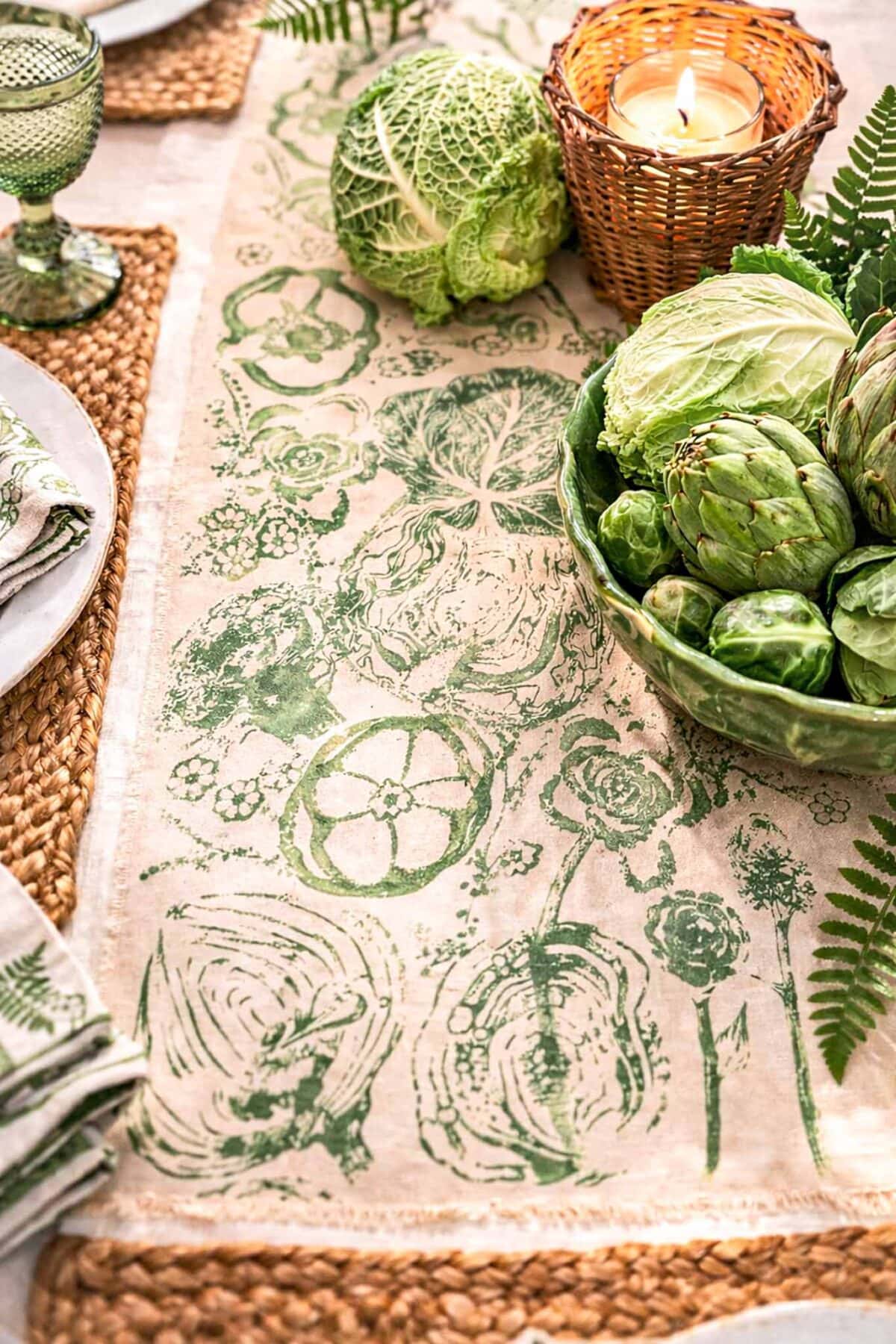
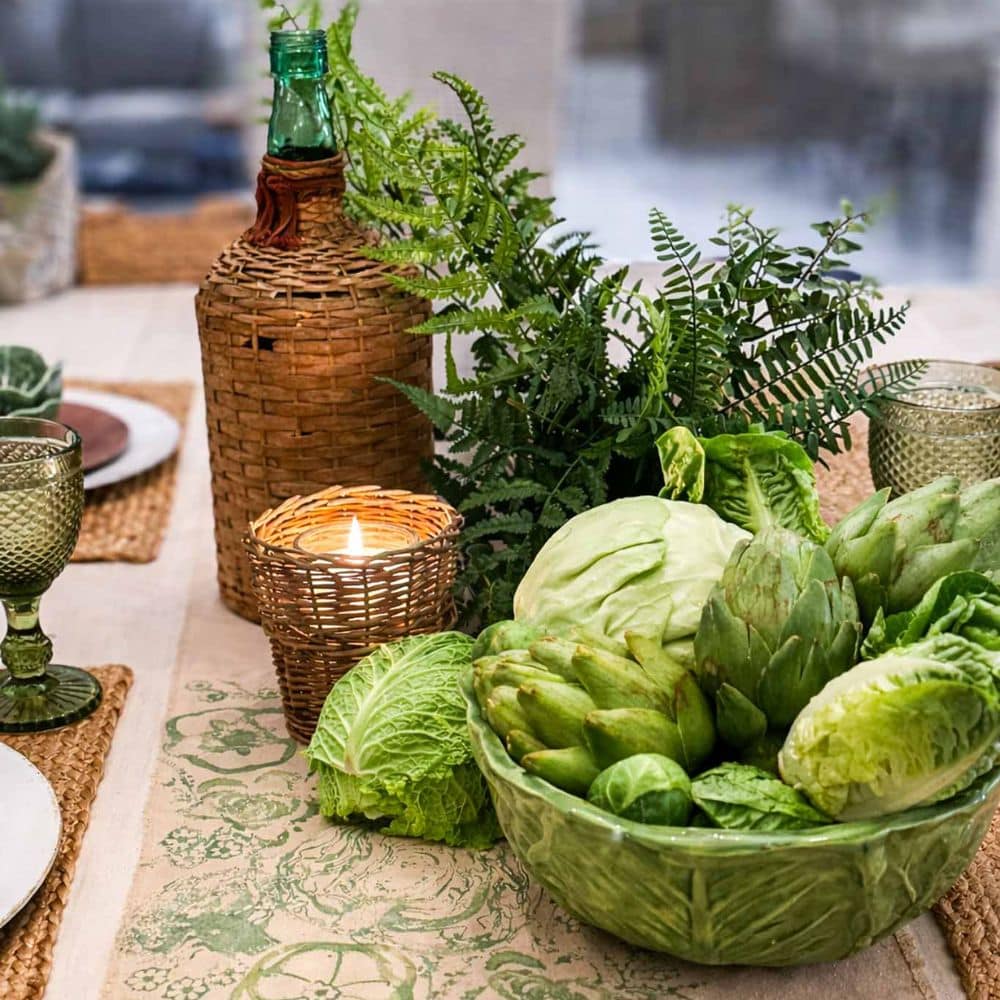
Instead of sewing the edges, I tore the fabric to create a soft raw edge. Linen tears beautifully along the grain, which gives the runner a natural fringe that feels relaxed and a little rustic.
I love this approach because it keeps the project simple and lets the printed pattern be the star. The slightly frayed edge also adds texture, which works perfectly for casual tablescapes.
Simple handmade details like this can really set a table apart, especially when decorating for gatherings or seasonal celebrations.
This simple method is a great way to make a DIY table runner without sewing while experimenting with vegetable block printing.
If you enjoy styling tables with simple collected pieces, you might also enjoy my post on how to decorate a spring table for Easter.
Tip from wendy’s craft room:
If you’re using linen or cotton, try tearing the fabric instead of cutting it to size. Fabric naturally tears along the grain, which creates a beautifully straight edge and a soft, slightly frayed finish. It’s an easy way to make a table runner without sewing, and the raw edge adds a relaxed texture that works perfectly with the organic look of the vegetable prints.
This approach keeps the project simple and lets the printed pattern remain the focus.

Making Vegetable Printed Tea Towels
Tea towels are another wonderful project for vegetable printing.
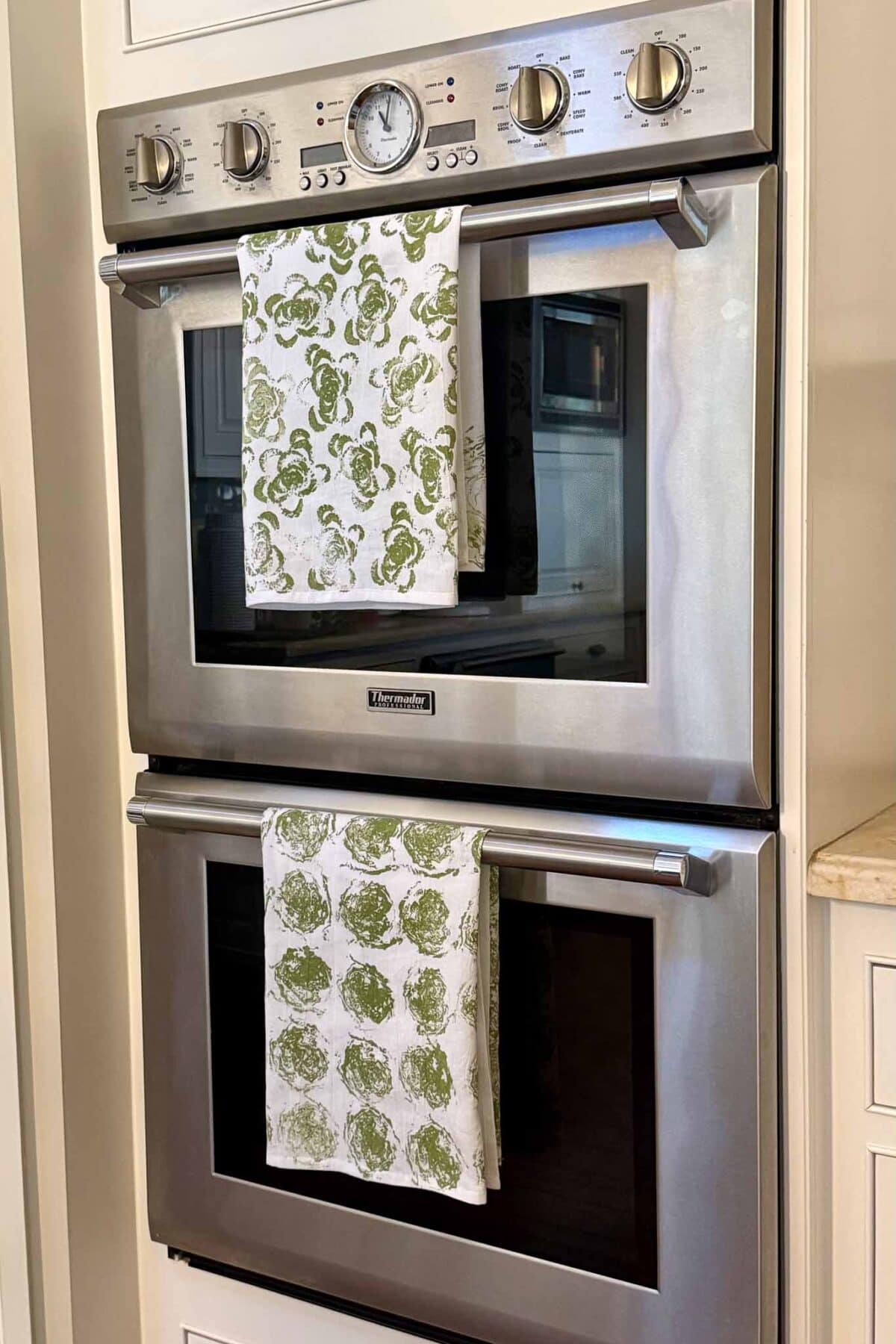
I used flour sack tea towels, which made this project incredibly easy. They are small, easy to experiment with, and add so much personality to the kitchen.
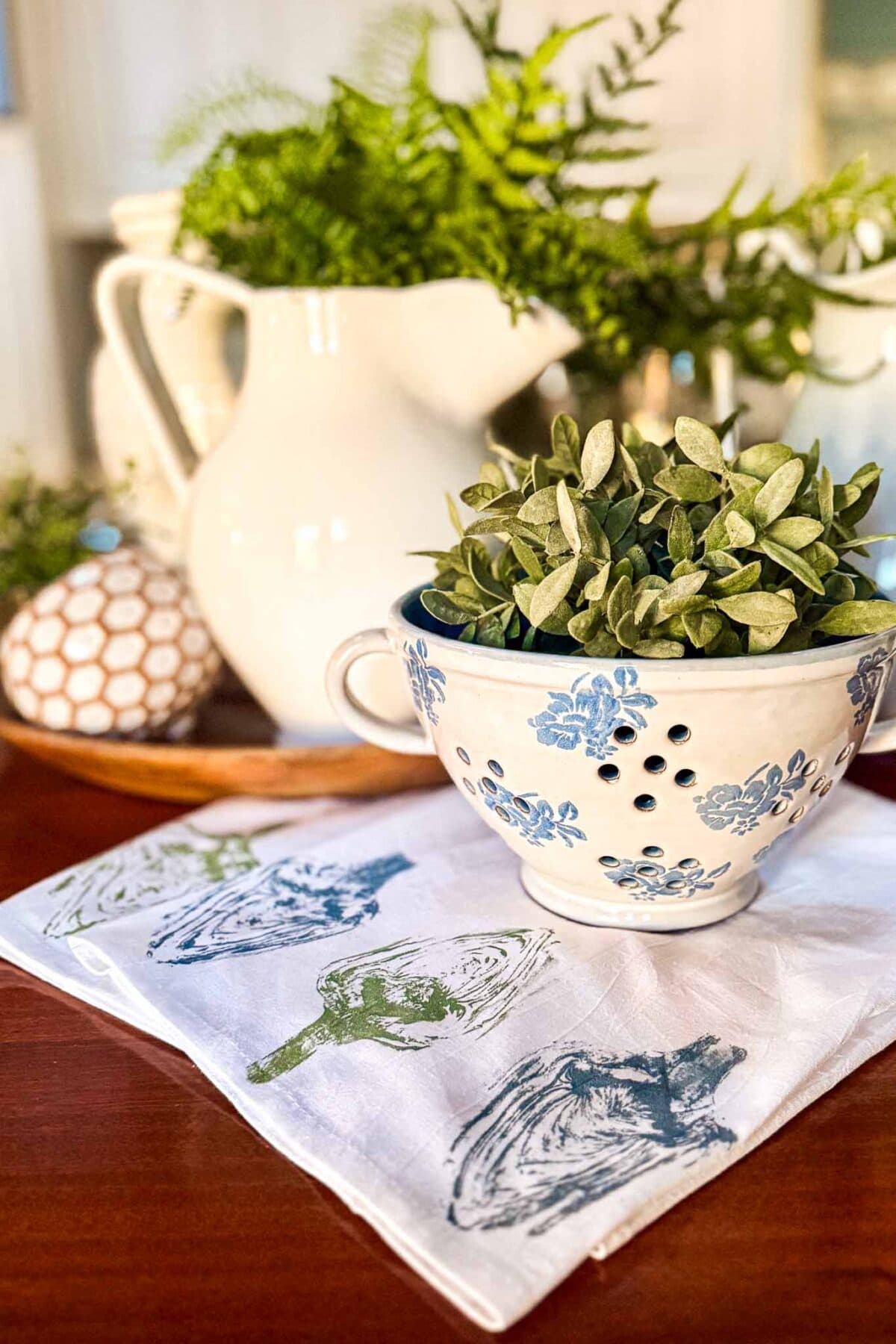
These simple vegetable printed tea towels are a fun way to bring handmade charm into the kitchen while trying different vegetable stamps.
I printed several towels using different vegetables so each one would have its own unique pattern. For these, I used one vegetable per towel including lettuce, celery, and artichoke.
They look especially pretty draped over the oven handle or folded beside the sink.
Styling Vegetable Printed Linens on the Table
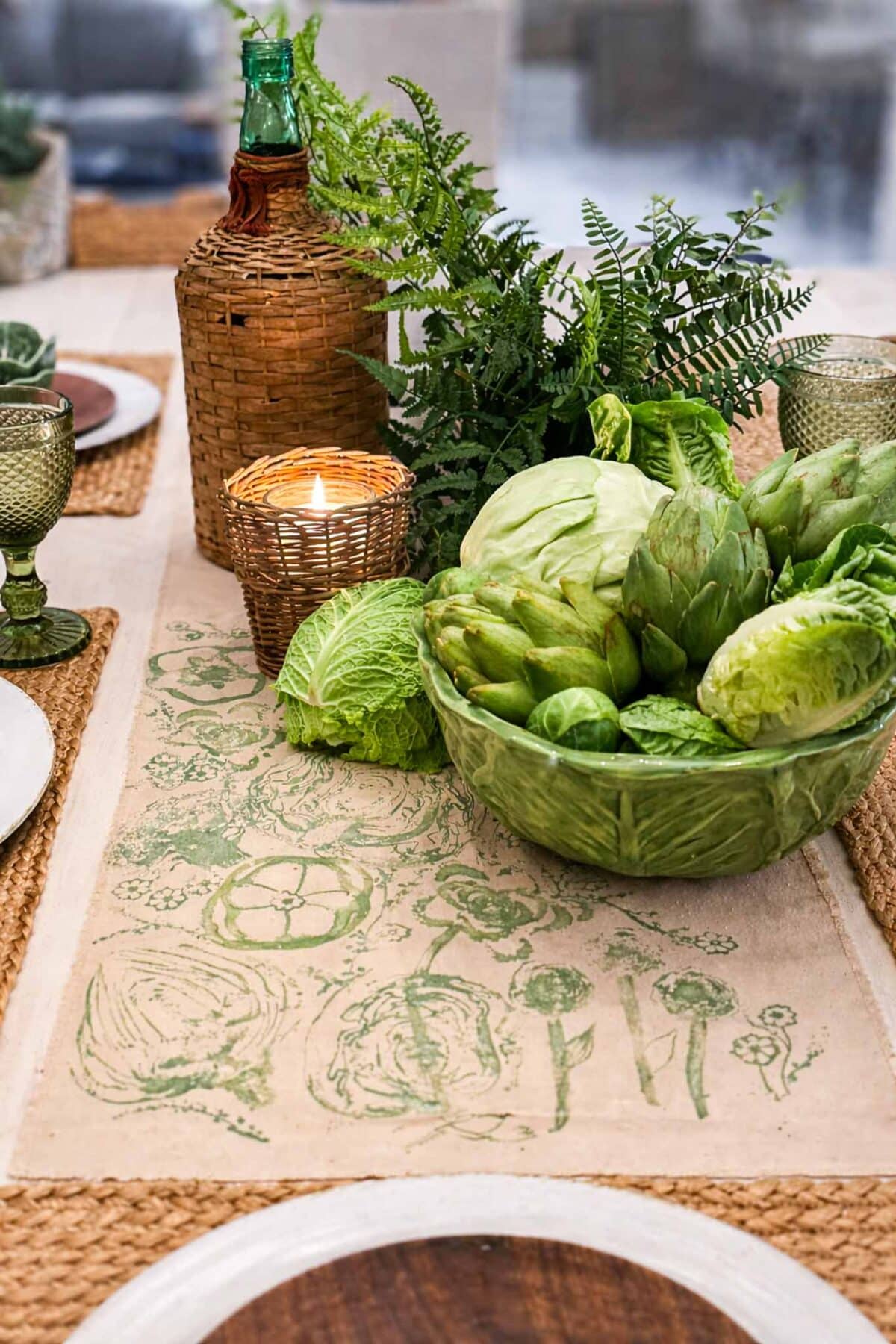
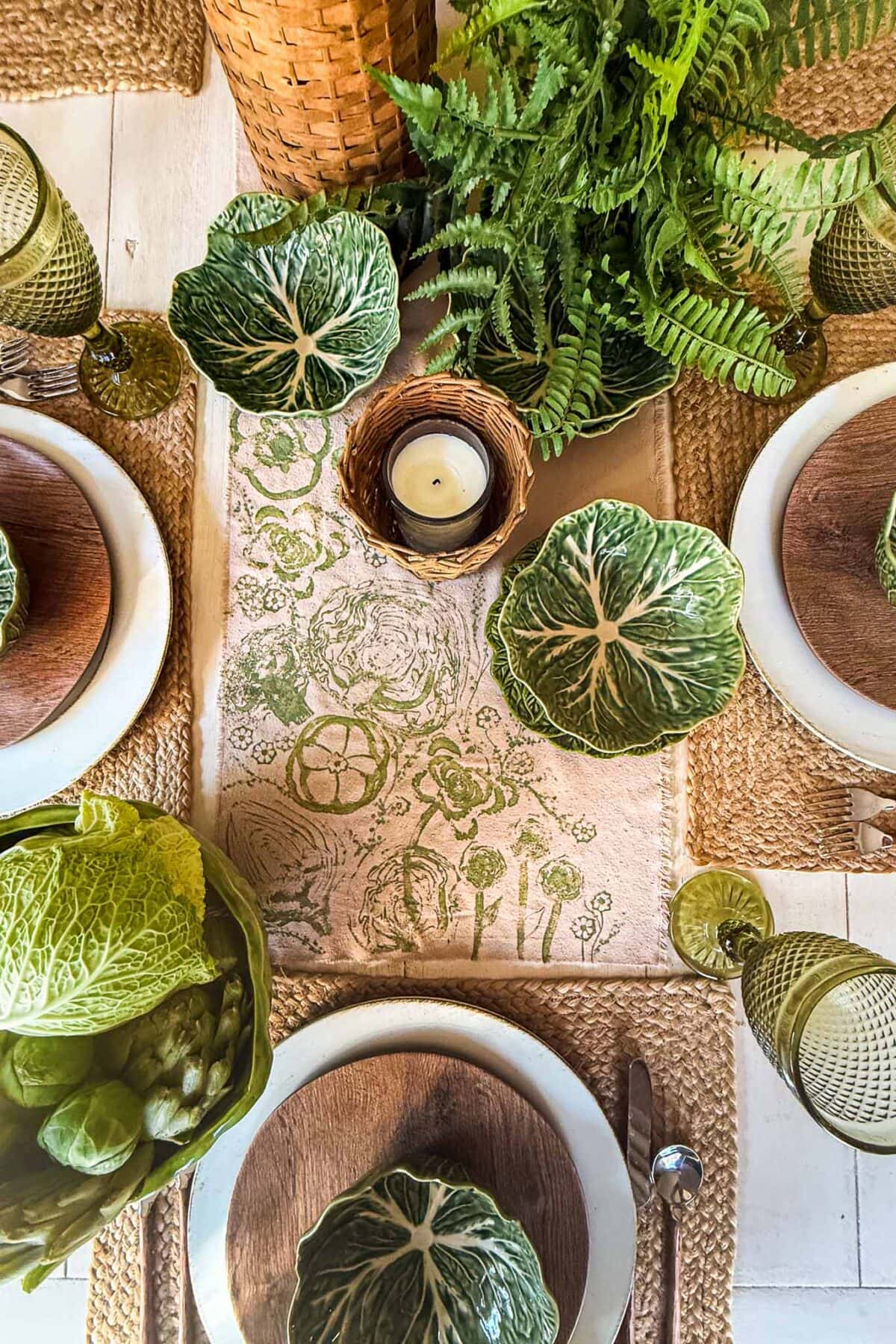
Once the runner was finished, I layered it on the table with a few garden-inspired pieces.
I often mix handmade pieces with vintage finds when styling a table or vignette.
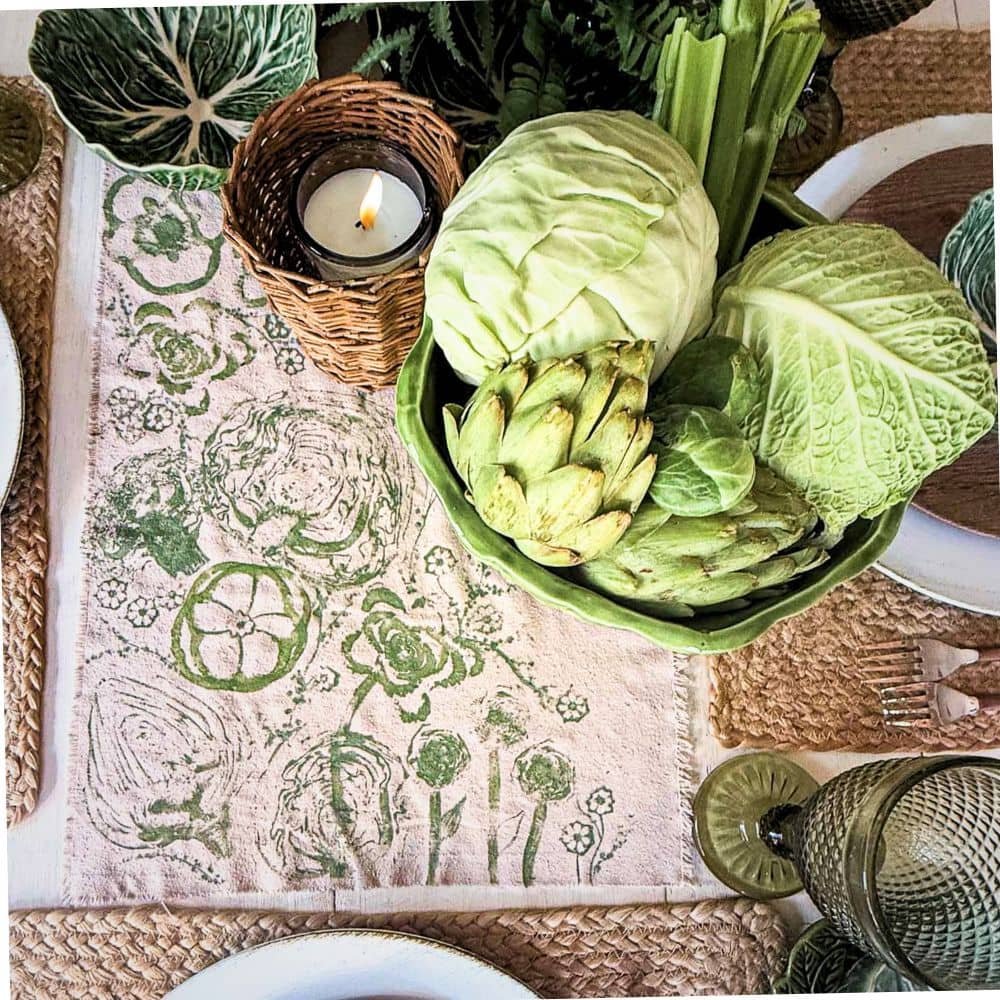
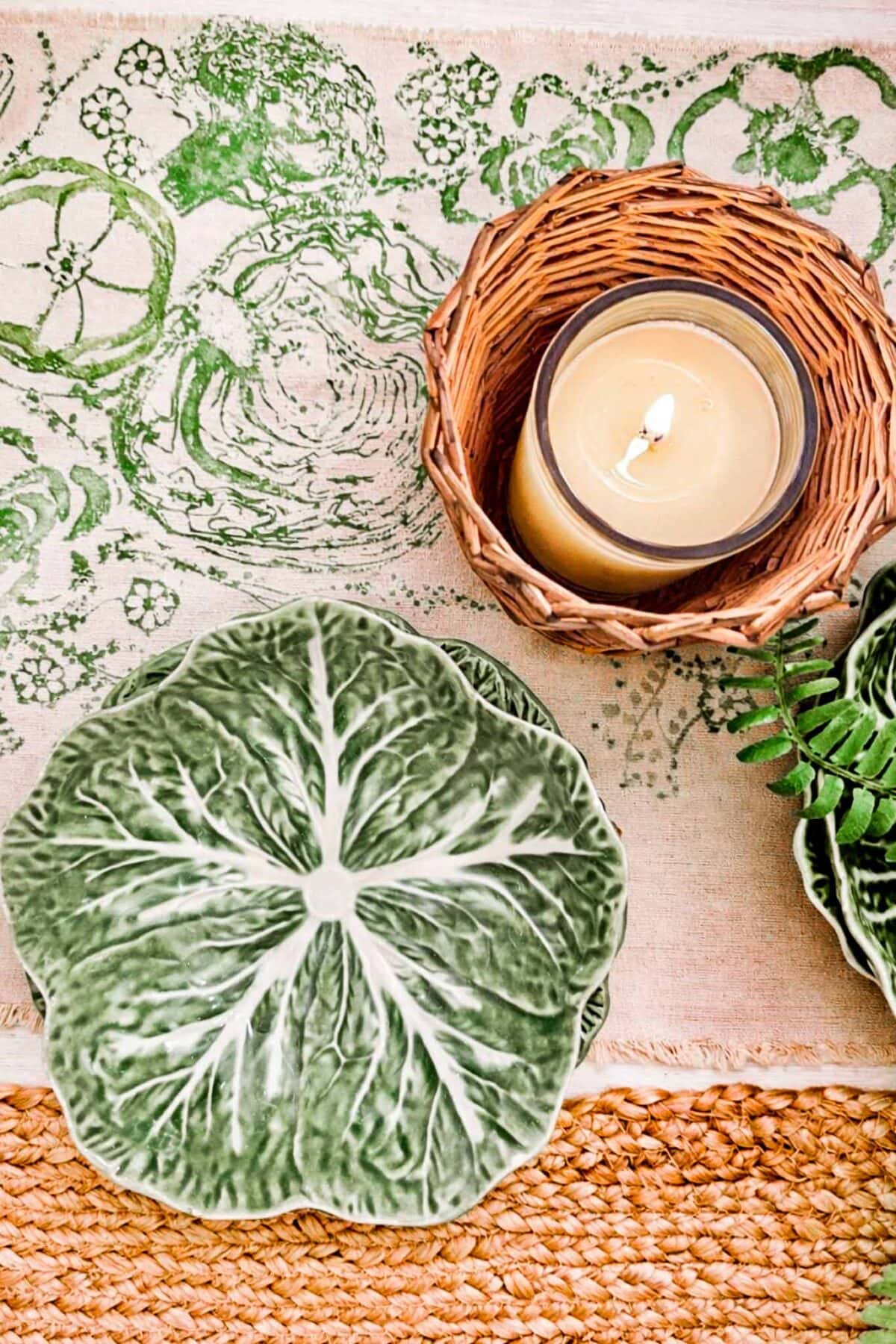
Woven placemats, green cabbage plates, and simple glassware help create a table that feels relaxed and natural. Adding fresh vegetables and greenery to the center of the table ties the whole look together and echoes the botanical patterns in the fabric.
The printed runner adds just enough pattern while still keeping the table soft and inviting.
More Block Printing Inspiration
If you enjoy block printing projects, you’ll love seeing the creative ideas from the rest of the Handcrafted Society. Everyone interpreted this month’s theme a little differently, and the results are so inspiring.
Block Printed Pillow
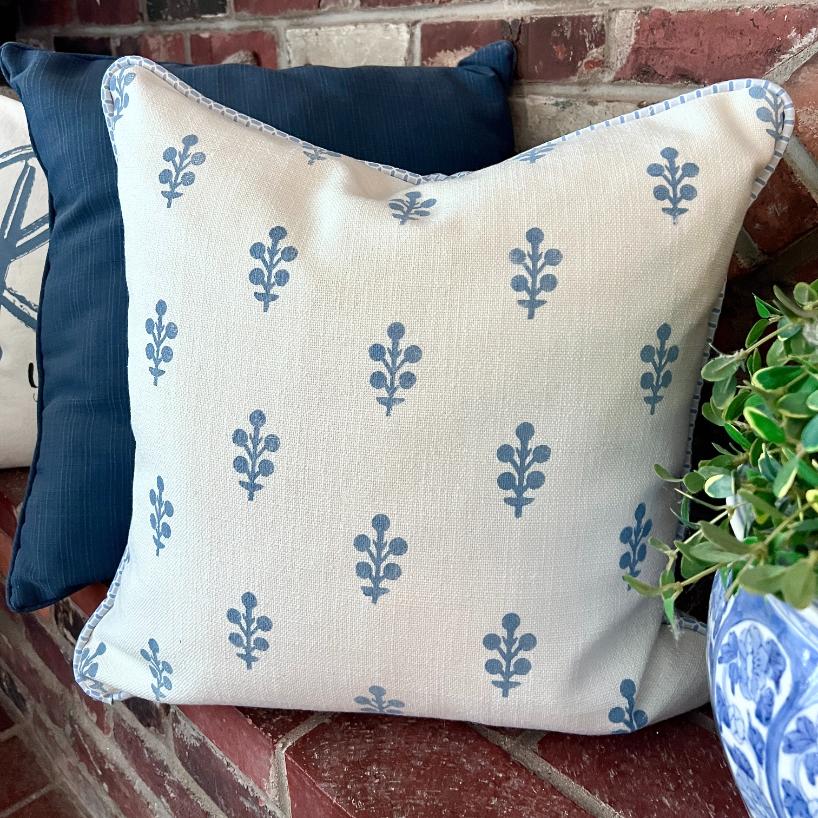
This beautiful block printed pillow from South House Designs shows how stunning this technique can be on larger home textiles. The soft blue pattern gives the pillow a timeless look that works beautifully layered with other fabrics.
Bird Block Print Artwork
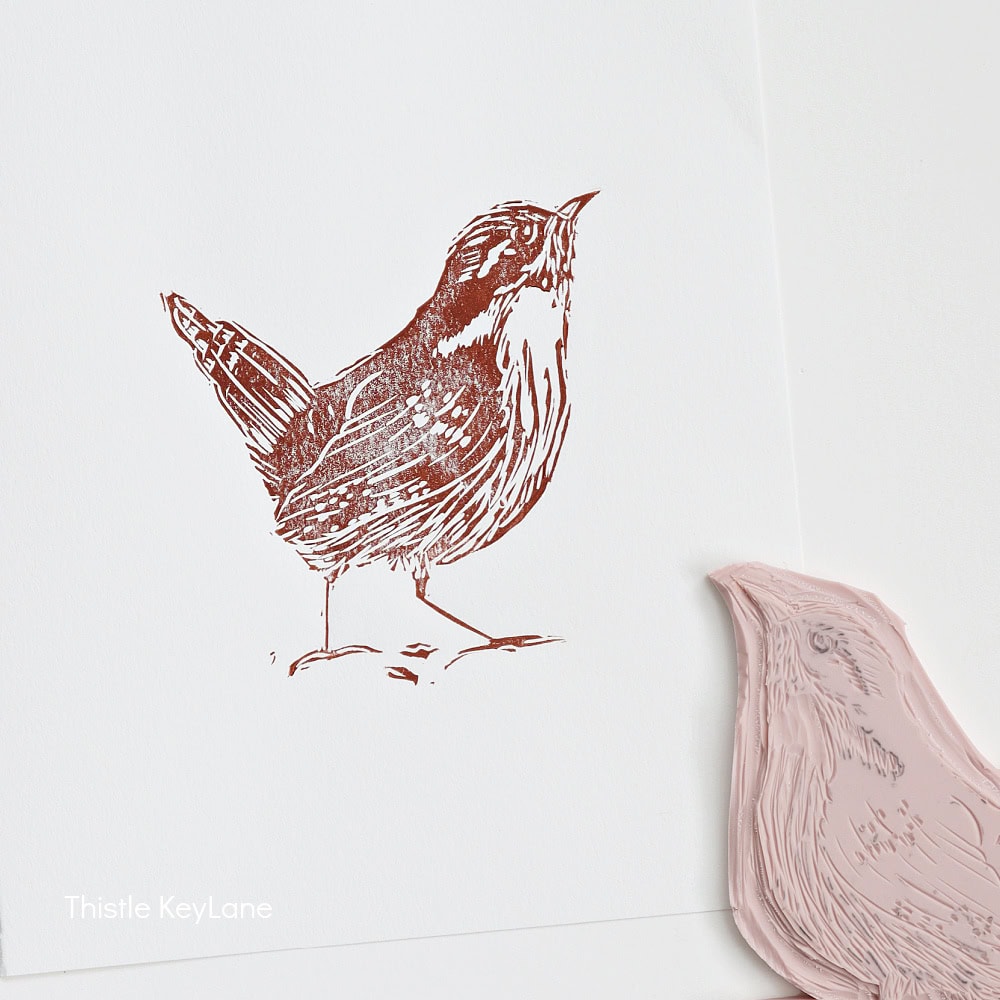
This charming bird print from my friend Michelle at Thistle Key Lane shows how detailed and artistic block printing can be when used for wall decor.
Butterfly Block Print Artwork
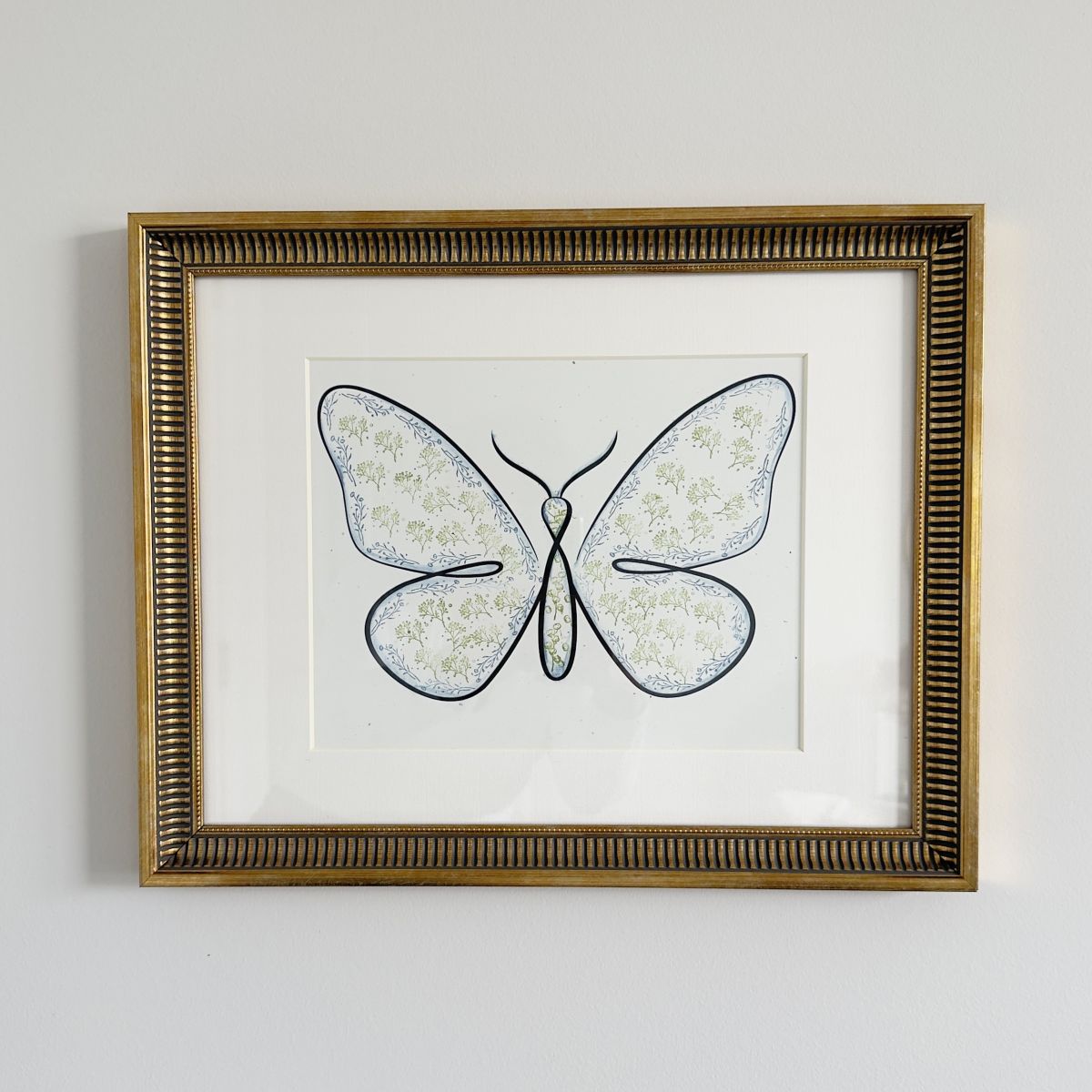
Block printing can also be used to create delicate artwork for the home. This butterfly print from White Lilac Farmhouse is such a pretty example of how the technique translates into framed art.
Potato Printed Tote Bag
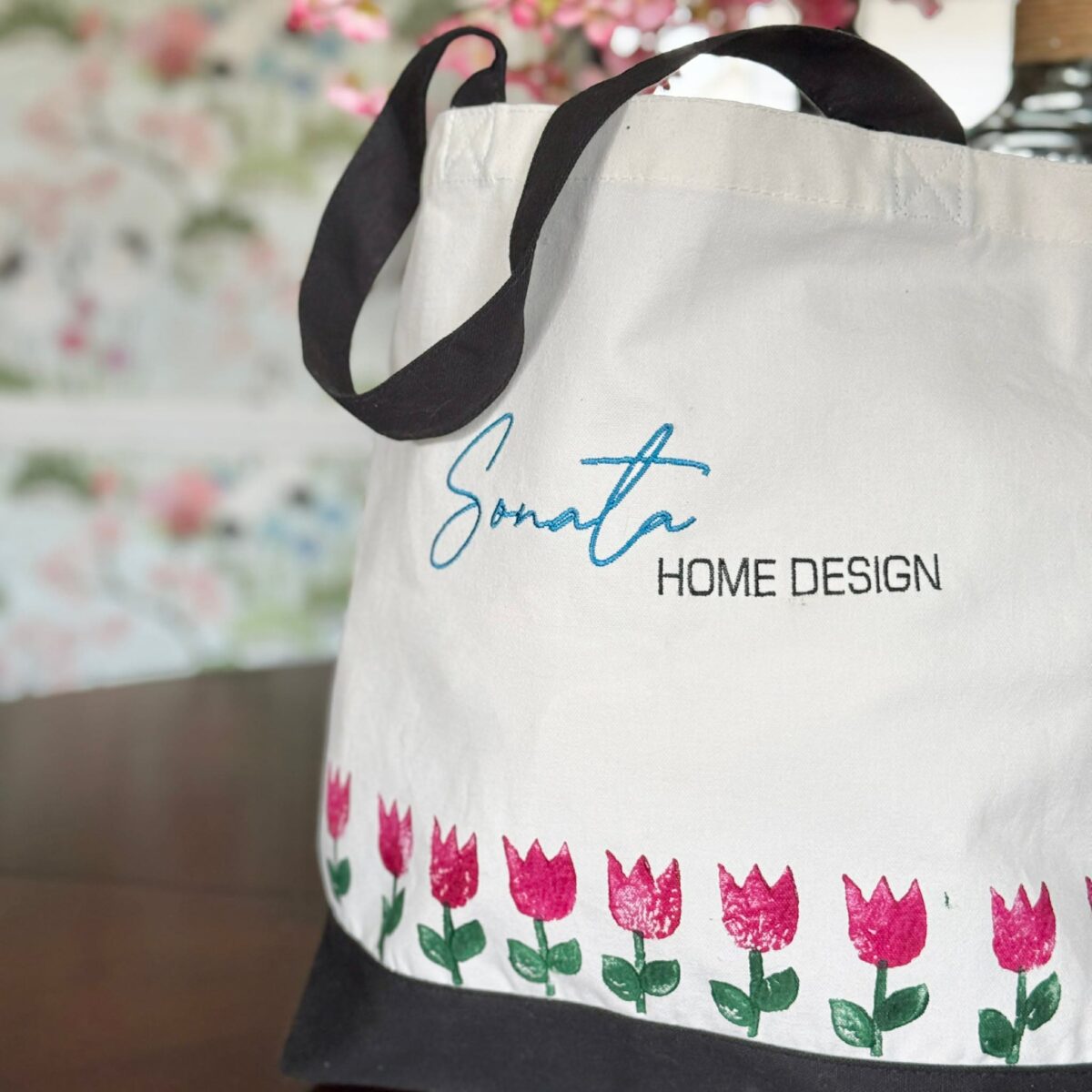
Block printing is not limited to home decor. This adorable tote bag from Sonata Home Design shows how fun potato printing can be for creating custom patterns on fabric accessories.
Hand Printed Tea Towels
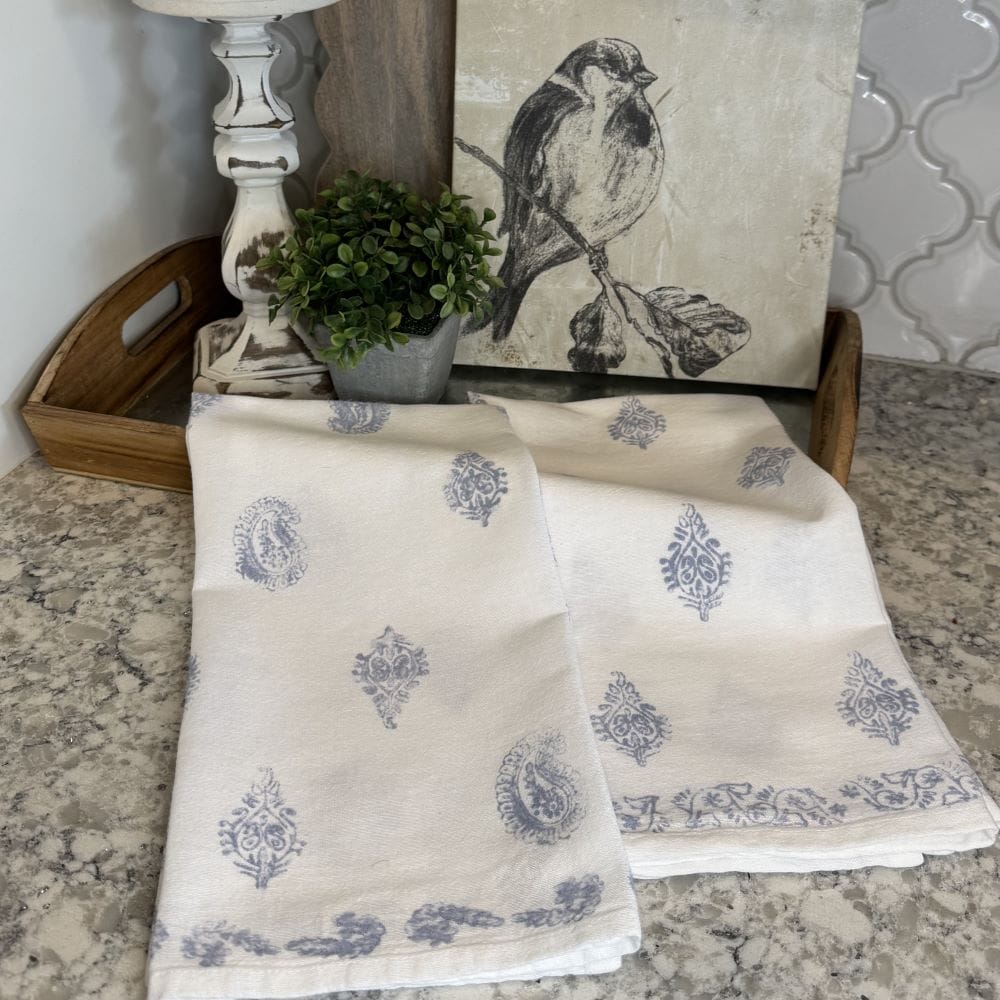
Tea towels are one of the easiest ways to experiment with block printing. These hand printed towels from An Organized Season add personality to the kitchen while still feeling simple and elegant.
Vegetable Block Printing
Materials
- Linen or cotton fabric such as tea towels or a table runner
- Fabric paint
- Small paint roller or foam brush
- Cutting board and sharp knife
- Paper plate or paint tray
- Fresh vegetables including cabbage peppers, lettuce, artichokes, or okra
- Tip: Natural fabrics like linen and cotton absorb paint well and produce the clearest prints.

Instructions
- Prepare the Fabric
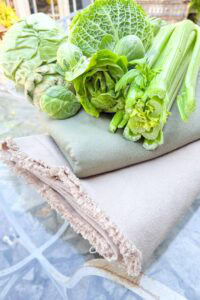
- Wash and dry the fabric before starting to remove any coatings that may prevent the paint from absorbing properly. Lay the fabric flat on a protected work surface and smooth out wrinkles. If printing tea towels or a runner, place cardboard inside or underneath the fabric to stop paint from bleeding through.
- Slice the Vegetables
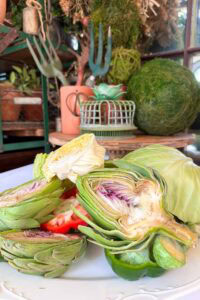
- Cut the vegetables in half to reveal the natural patterns inside. Gently pat the cut surface dry with a paper towel before applying paint.
- Apply the Paint
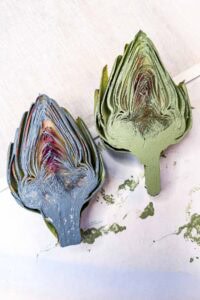
- Pour a small amount of fabric paint onto a plate or tray. Use a small roller to apply an even layer of paint to the vegetable. If the paint looks heavy, lightly dab the vegetable on a paper towel to remove excess.
- Stamp the Fabric
- Press the vegetable firmly onto the fabric and lift straight up without twisting. Continue stamping across the fabric to create either a repeating pattern or a more relaxed, scattered design.
Notes
Wrapping Up
Vegetable block printing is one of those projects that reminds you creativity does not have to be complicated.
With just a few vegetables and some paint, you can create beautiful fabric pieces that feel thoughtful, handmade, and completely unique.
And honestly, once you start stamping cabbage onto fabric, it is hard to stop.


Did you make this craft?
We would love to see what you have created, so mention us @wmdesignhouse or tag us using #wmdesignhouse so we can see your creations!
More about me!

Hello, I’m Wendy – a dedicated homemaker with a deep passion for decorating, gardening, cooking, and crafting. I find joy in harmonizing beautiful elements to fashion a space that is both comfortable and inspiring. I will help you create a beautiful home, one project at a time.
Connect with Wendy
Other Tutorials from WM Design House
If you love this creative project, you might also enjoy some of my other favorite blog posts.
Wow, Wendy! It’s incredible the stamped designs you got from using vegetables. You are so creative. I am in love with the table runner using the different veggies. Stunning!!! I would love to use this technique on one of my garden aprons.
It’s amazing the patterns you find when you look closer at vegetables. I love the cabbage print! I love all the patterns and how you styled everything. So beautiful! Pinned!
Wendy
I LOVE THIS! So fun and creative. I can’t wait to share on Sunday.
So cute my friend! Particularly love the artichoke edging on the tea towels mixing the blue and green. Perfectly imperfect, oozing with charm.
I’ve seen stamping with celery, artichokes and bell peppers, but cabbage and okra take it to a whole new level. Your collage of vegetable block printing is absolutely gorgeous Wendy! Can’t wait to try it!
Thank you Michelle, I had so much fun experimenting with all the different vegetables.
Hi Wendy! I can’t get over how great the veggies worked as stamps! I adore how your table runner turned out! It’s fabulous and I’m in awe of the cute flowers the okra makes! This looks so fun! Pinning now!
Thank you Donna, it was such a fun project to create. I loved working with each different vegetable to see what pattern they would create.
Wendy, you are so clever! Printing with vegetables and making little flowers out of okra?!? Wow!
Thank you Amy, super easy and fun to make!
Oh my goodness Wendy! I love this so much! This is so creative! I love to make these for gifts.
Thank you Susan, they are so fun and easy to make, I would love to see some of your creations. Semd me a pic next time you make them.