
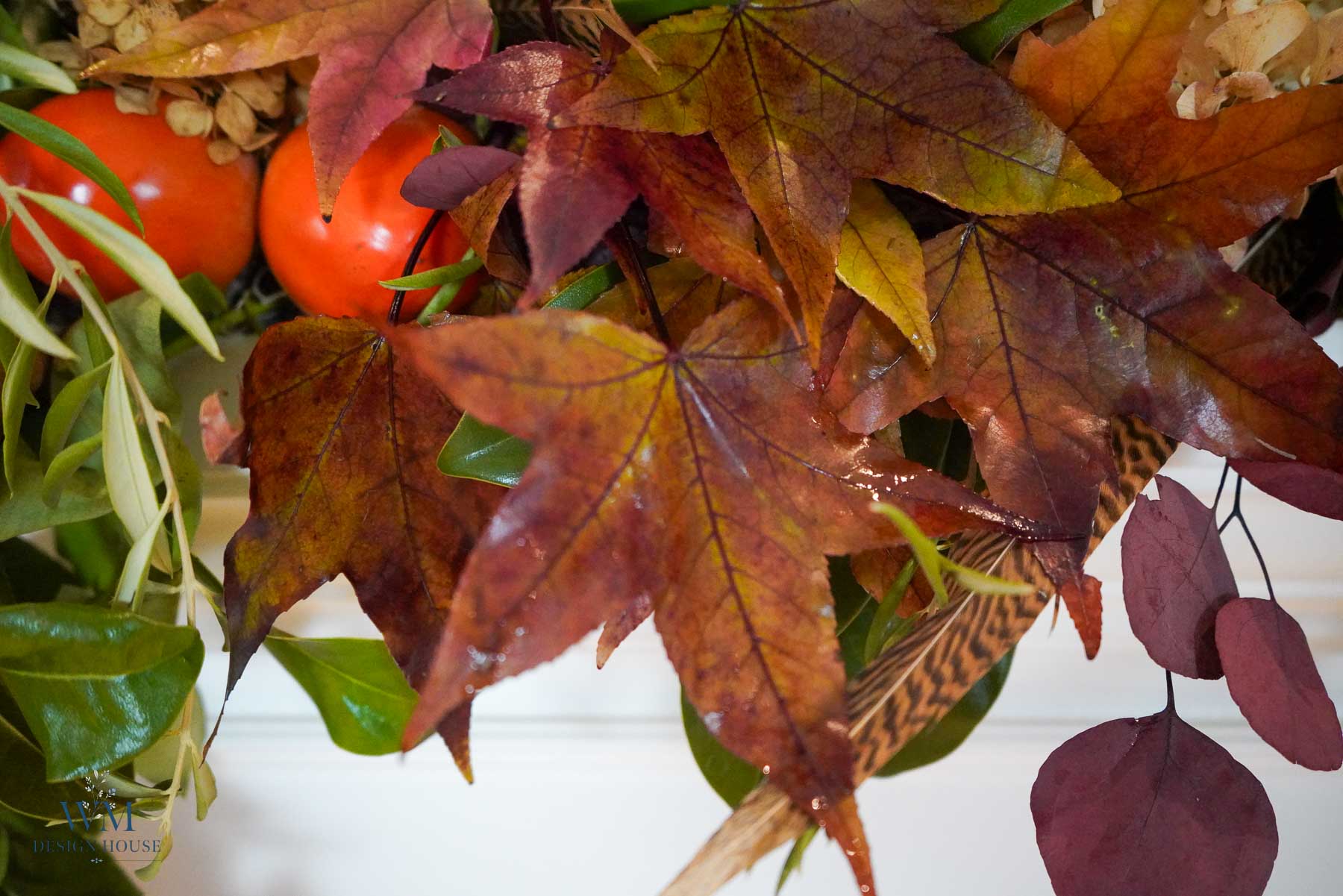
Preserving leaves with glycerin is the easiest way I know to hold on to fall color without ending up with a pile of crumbs by Thanksgiving. The leaves stay soft and bendable, almost like thin leather, so you can tuck them into a table setting, wire them onto a wreath, or string them into a garland without a single one cracking.
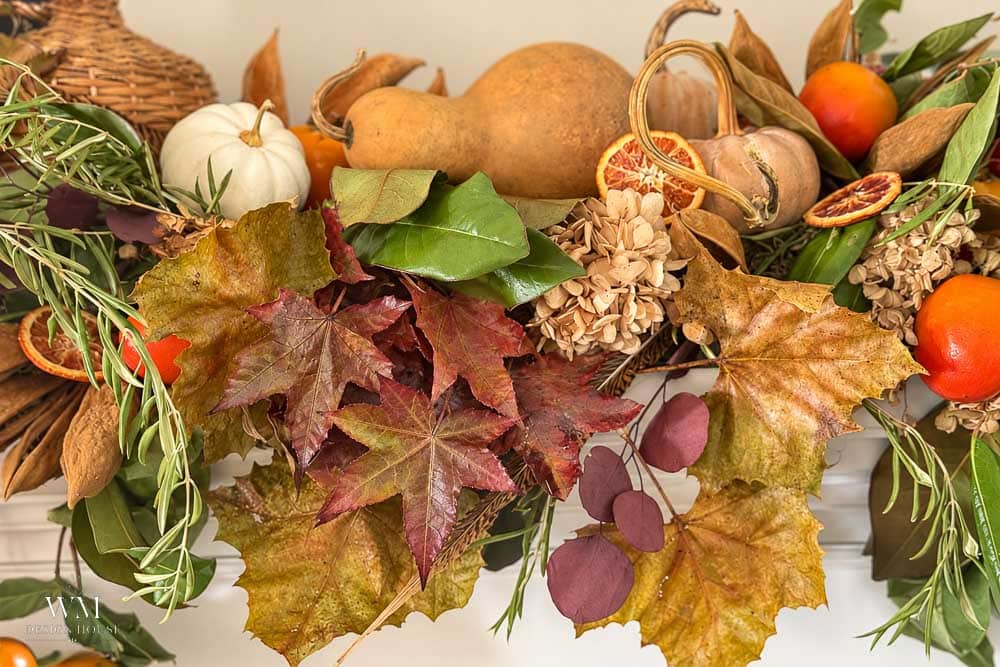
Fall color comes late here in Southern California, and when it finally shows up I want to keep it as long as I can. This year I gathered leaves in Northern California when we were visiting some friends. I gathered liquidambar, sycamore, oak and olive and magnolia branches and tried two methods: a shallow dish soak for loose leaves and a jar method for whole branches. Both use the same two ingredients, glycerin (you may also see it spelled glycerine) and water.
On my blog WM Design House, I may sometimes use affiliate links, which means a small commission is earned if you purchase via the link. The price will be the same whether you use the affiliate link or go directly to the vendor’s website using a non-affiliate link. Read my full disclosure policy here.
Why Glycerin Beats Drying and Pressing Your Leaves
A leaf turns brittle because the water inside it evaporates. Glycerin fixes that by taking the place of the water. The leaf slowly absorbs the glycerin solution, and because glycerin does not evaporate the way water does, the leaf stays supple instead of drying out. That is the whole difference. A pressed or air-dried leaf looks pretty but shatters when you handle it. A glycerin leaf can be bent, wired, glued, and moved from project to project.
The Best Leaves for Preserving with Glycerin
Start with good leaves and the rest is easy.
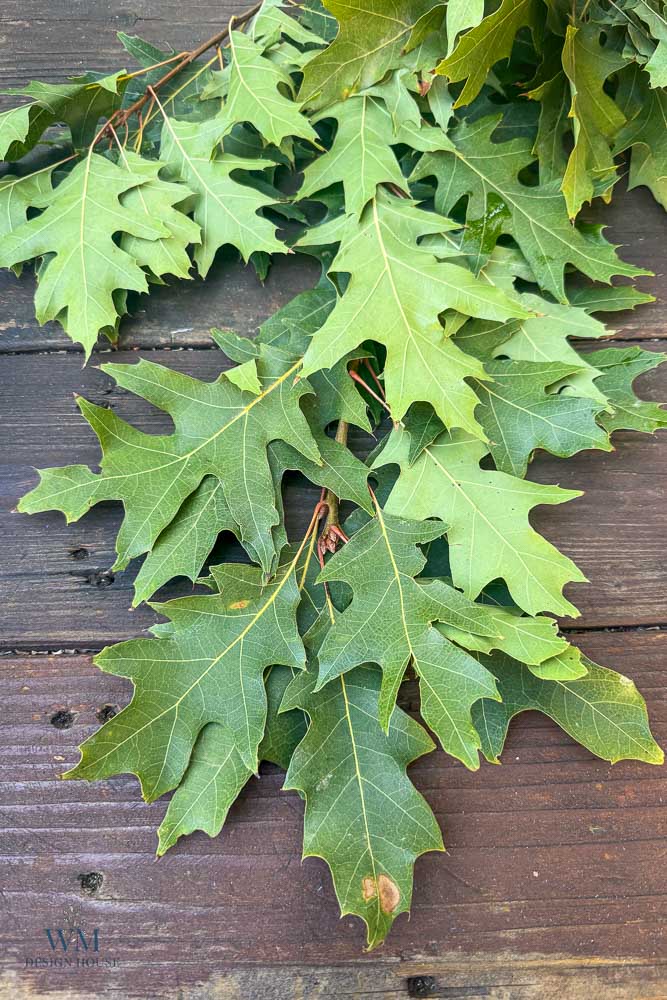
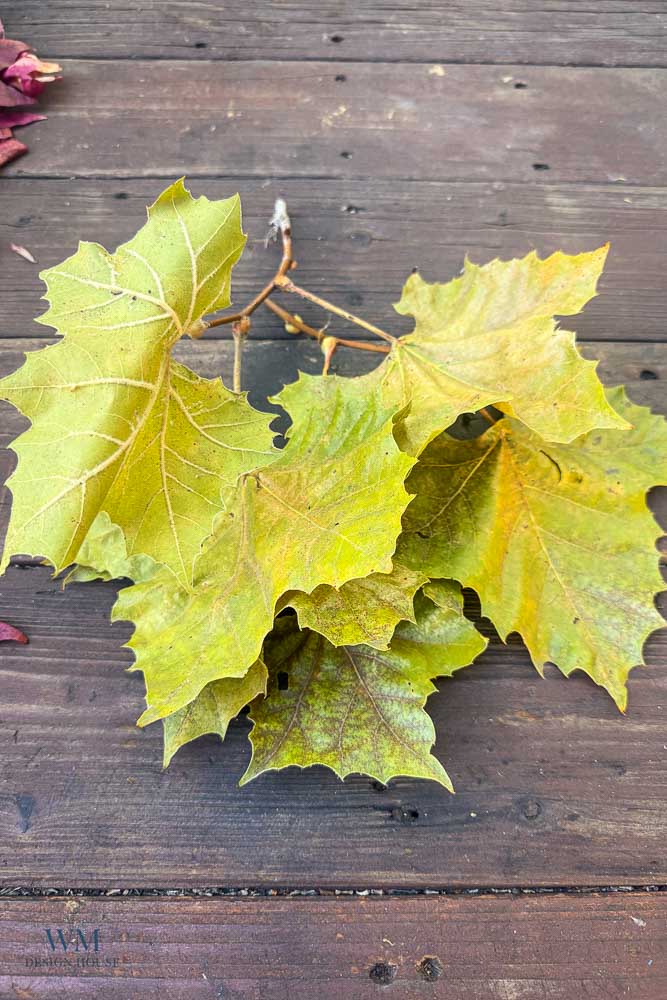
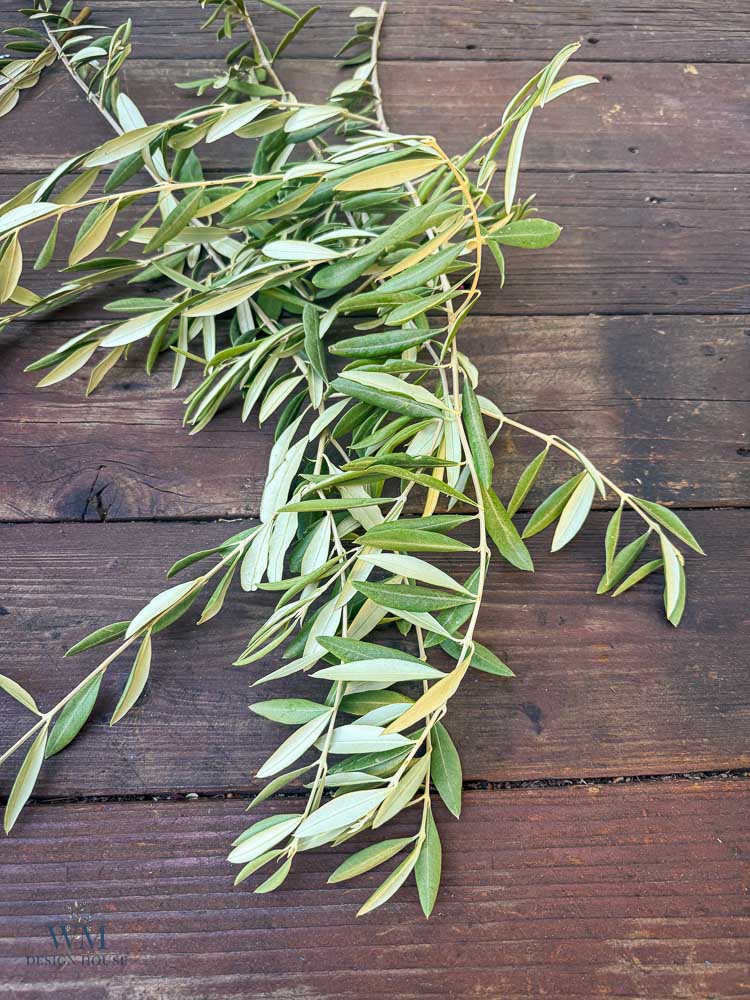
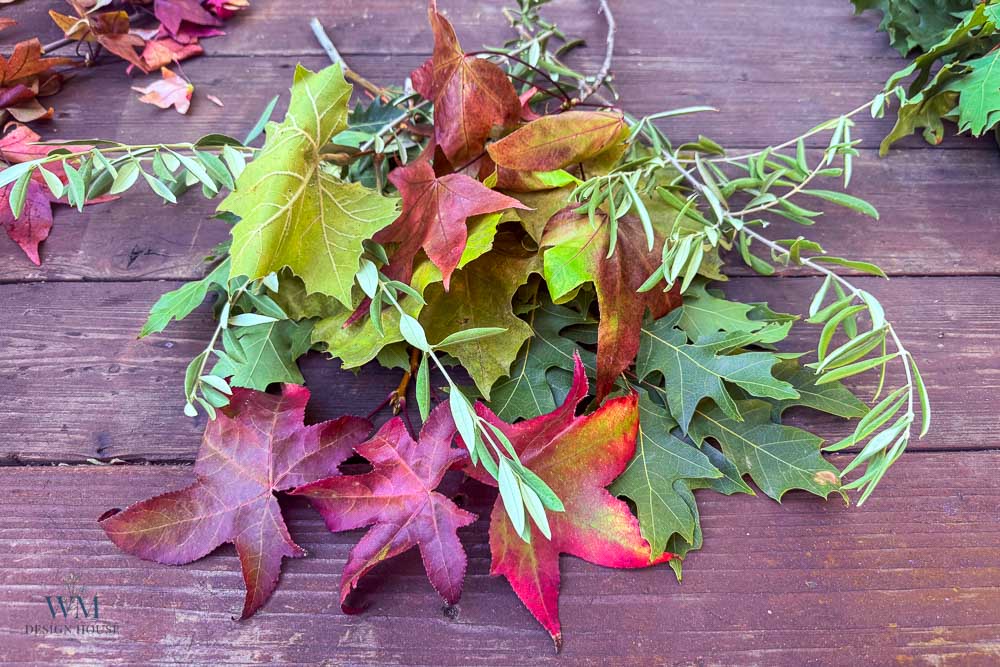
- Pick them fresh. Leaves that have just turned color and are still soft on the tree, or that fell that day, absorb the solution best. Dry, crunchy leaves from the ground will not take it up.
- Choose healthy ones. Skip leaves with spots, tears, or curled dry edges. Any flaw will still be there when you are done.
- Mix your colors. Reds and oranges hold up well. Include a few green and half-turned leaves too, since the variety looks more natural.
Good choices in warm climates: liquidambar (sweetgum), maple, oak, magnolia, and eucalyptus.
We do not get frost here, so there is no rush to beat a freeze. Watch the color instead and gather when the leaves are at their brightest.
Supplies You Will Need
- Vegetable glycerin (I buy the largest bottle I can find)
- Warm water
- Measuring cup
- Two shallow dishes that nest (baking dishes or pie plates) for loose leaves
- A tall, heavy jar or vase for branches
- Pruners and a hammer for the branch method
- Paper towels
Tip from wendy:
Choose an assortment of colors, shapes and sizes for your fall leaves.
Method 1: Preserving Loose Leaves in a Dish
Use this method for single leaves and very small branches of leaves you want to scatter on a table, glue to a pumpkin, or string into a garland.
Mix the solution
Stir together 1 part glycerin and 2 parts warm water. For one baking dish, 1/2 cup glycerin and 1 cup water is a good start. Warm water helps the glycerin blend in.
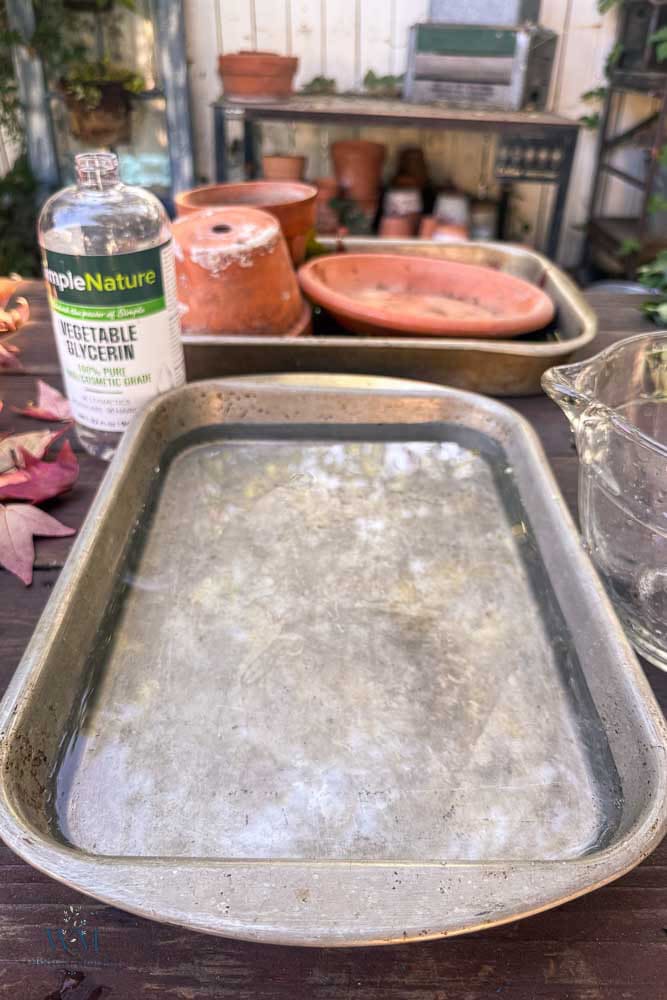
Wipe the leaves
Brush off any dirt and blot them dry.
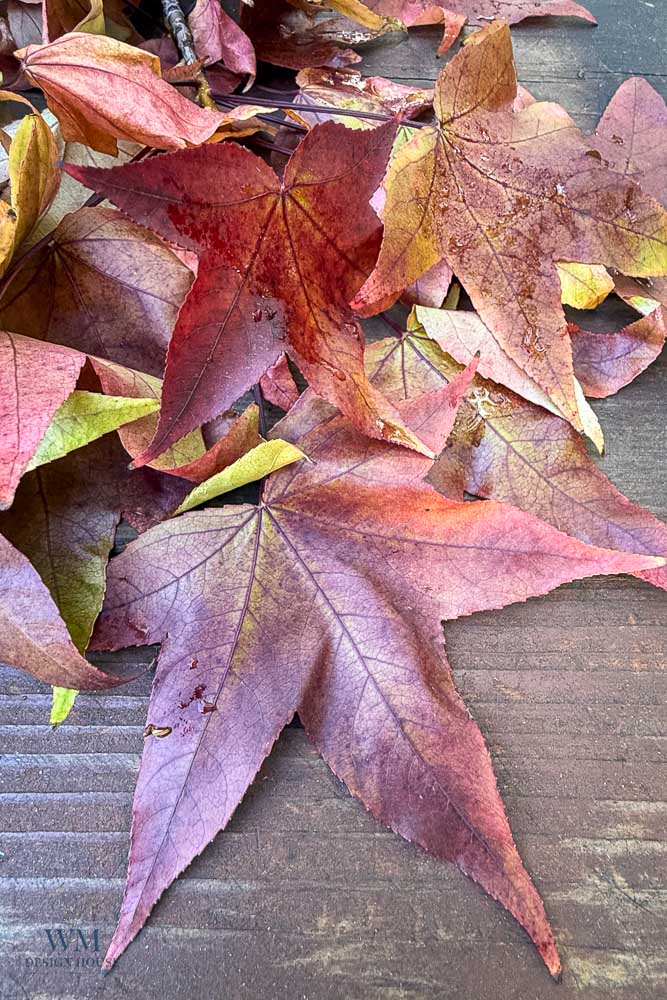
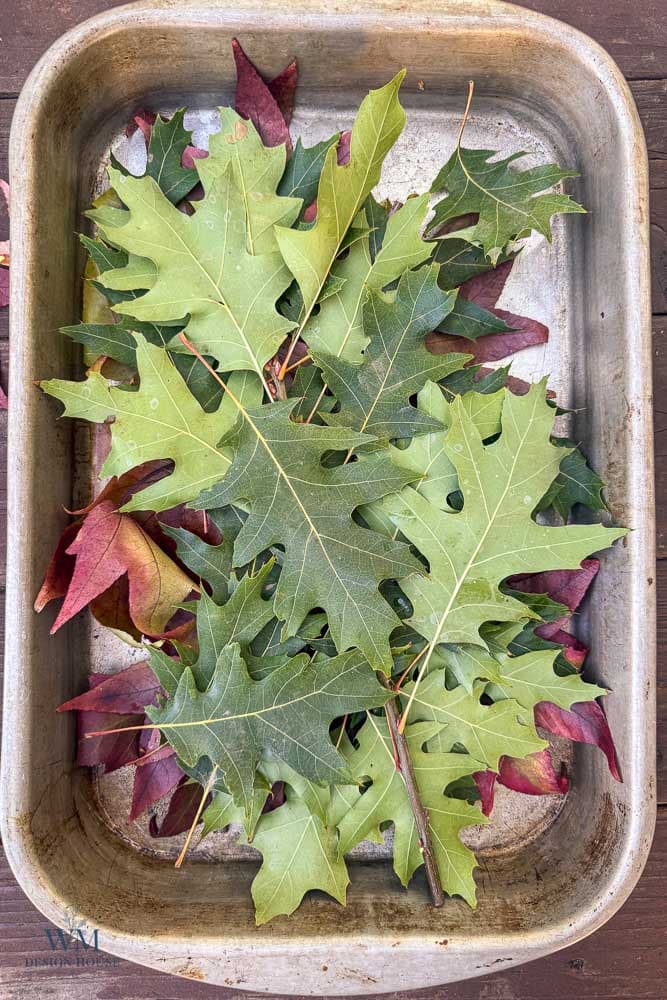
Lay the leaves in the dish
A few layers are fine as long as the solution can reach every leaf.
Pour the solution over the top
Until every leaf is covered.
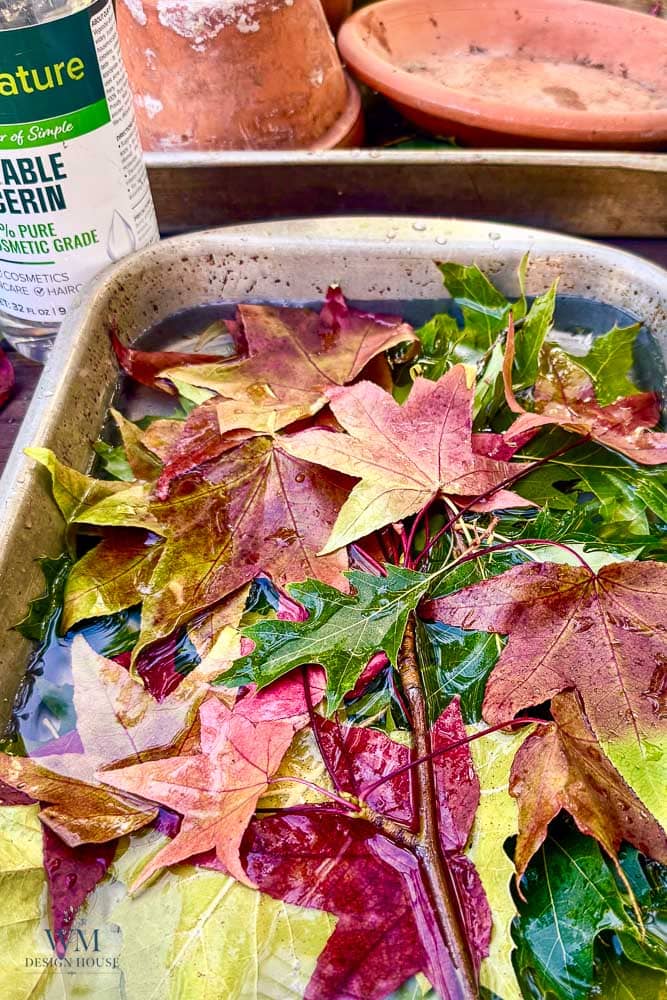
Weigh them down
Set something heavy on top so the leaves stay under the surface. A smaller pan nested inside this one and filled with water works well, or do what I did and use a stack of clay pots and saucers.
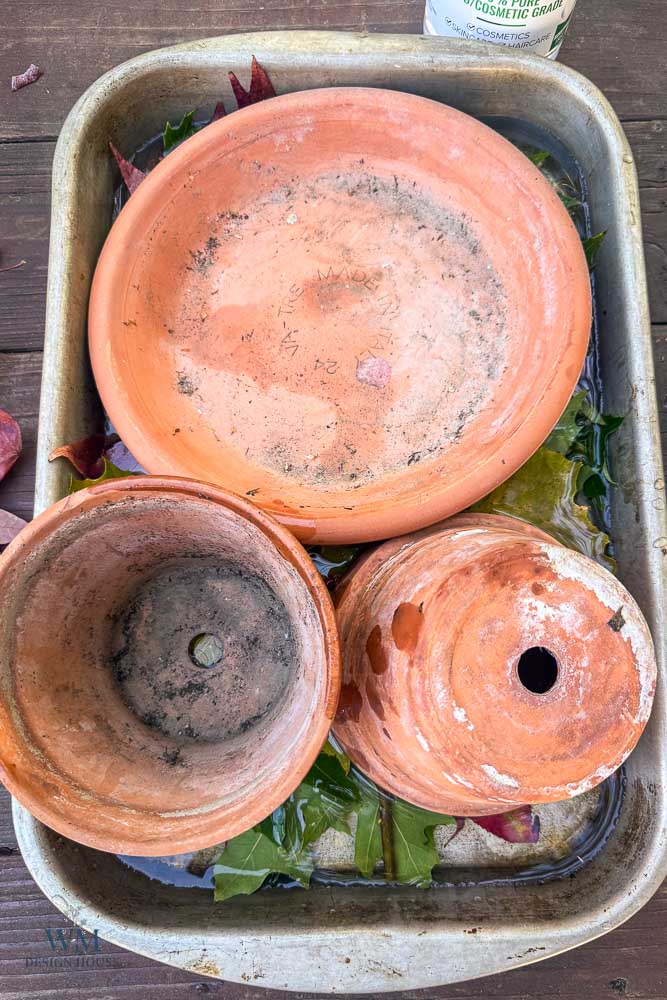
Wait 3 to 6 days
Set the dish somewhere out of the sun. Check on day 3. The leaves are ready when they feel soft and flexible all the way to the tips. Mine took 5 days and I was ready to remove them from the solution.
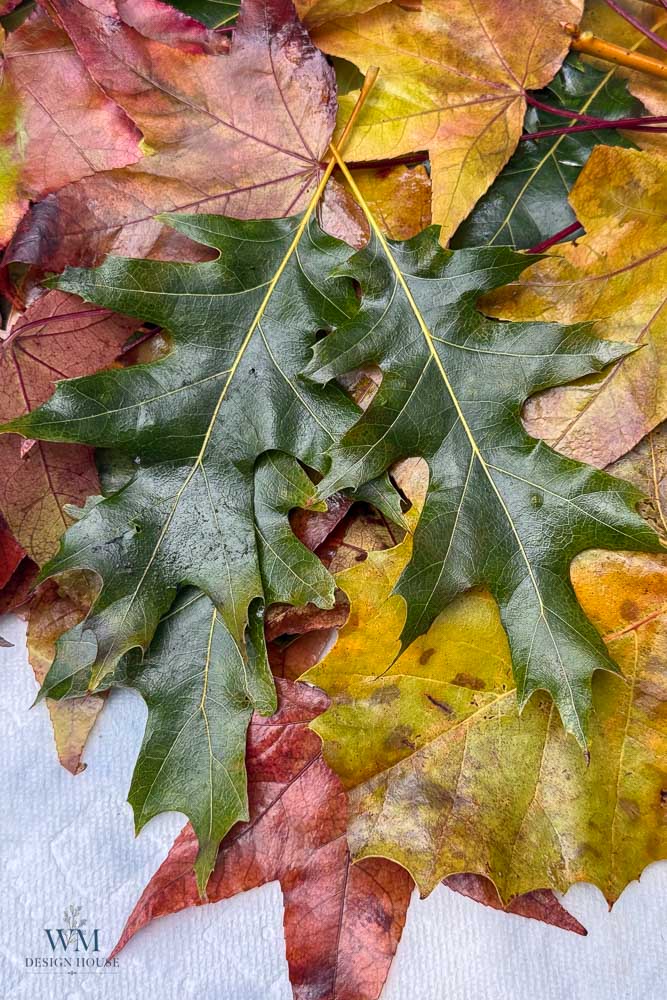
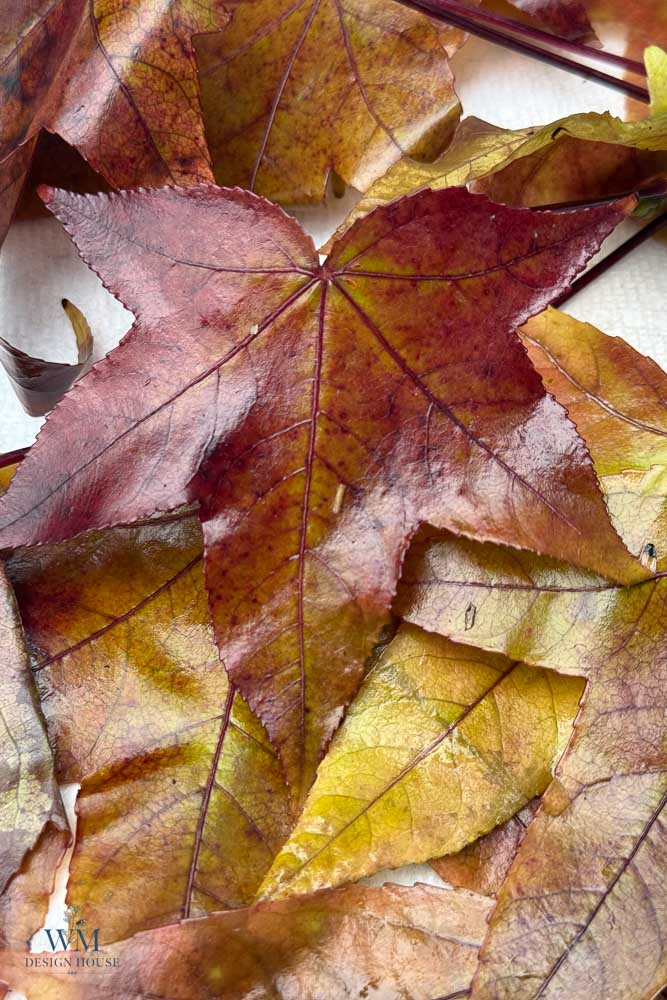
Blot dry
Lift the leaves out, lay them on paper towels, and pat off the extra solution.
You can give them the bend test, simply fold the leaf in half. It should remain soft and bendable.
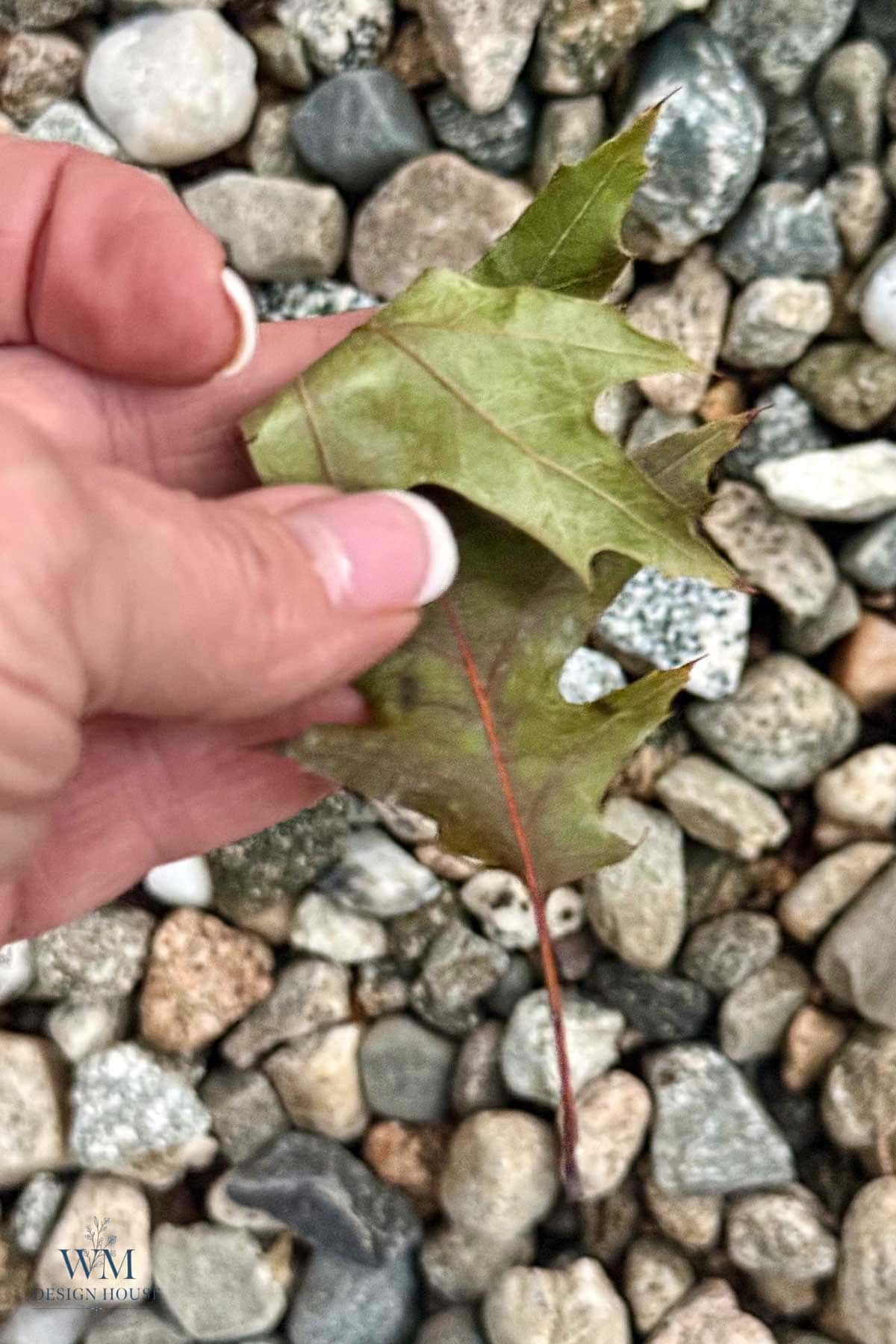
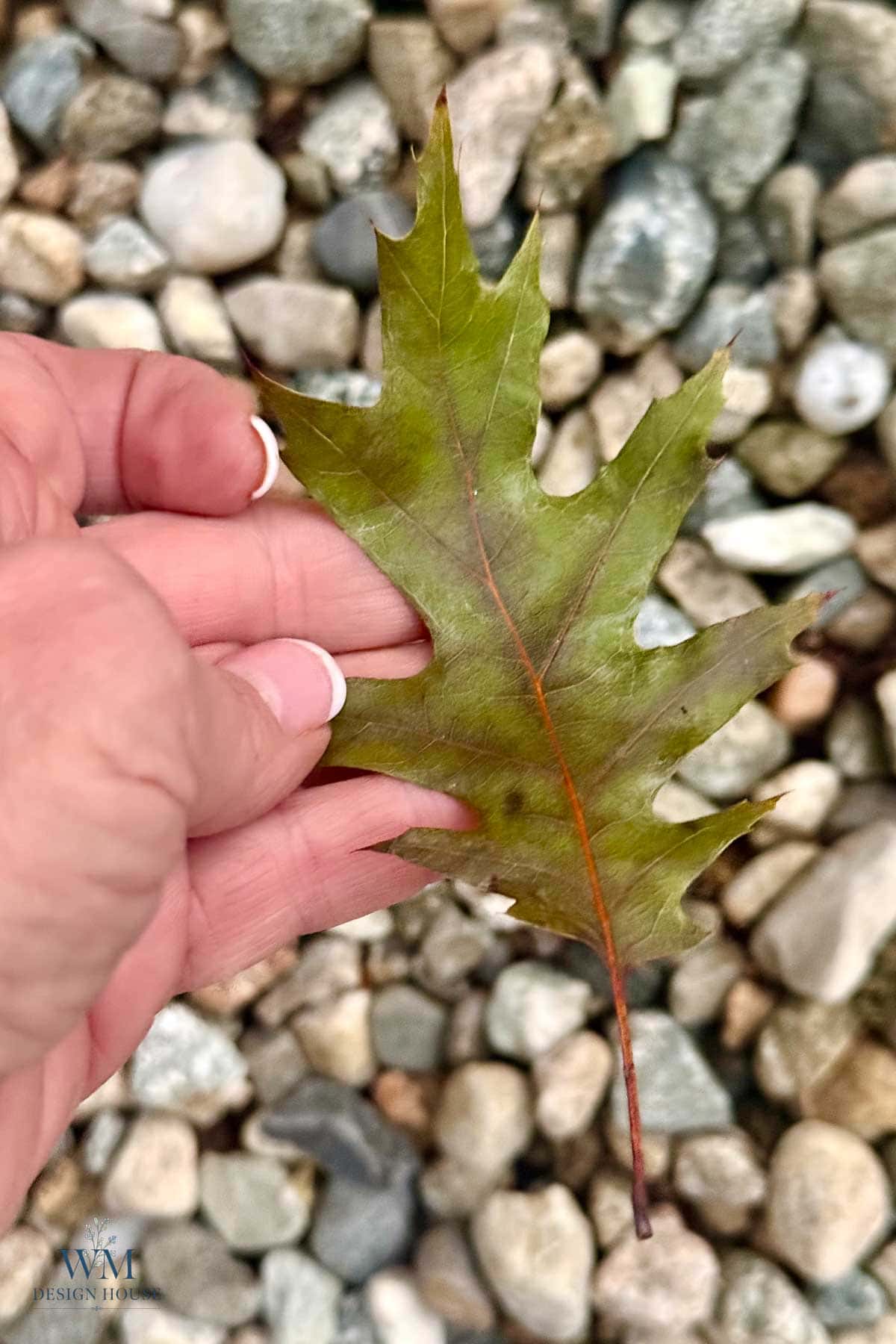
Method 2: Preserving Branches in a Jar
Whole branches take longer, but you end up with stems you can drop straight into a vase. This works especially well for eucalyptus, magnolia, and oak.
Cut fresh branches
About 18 inches long, and strip the leaves from the bottom 6 inches.
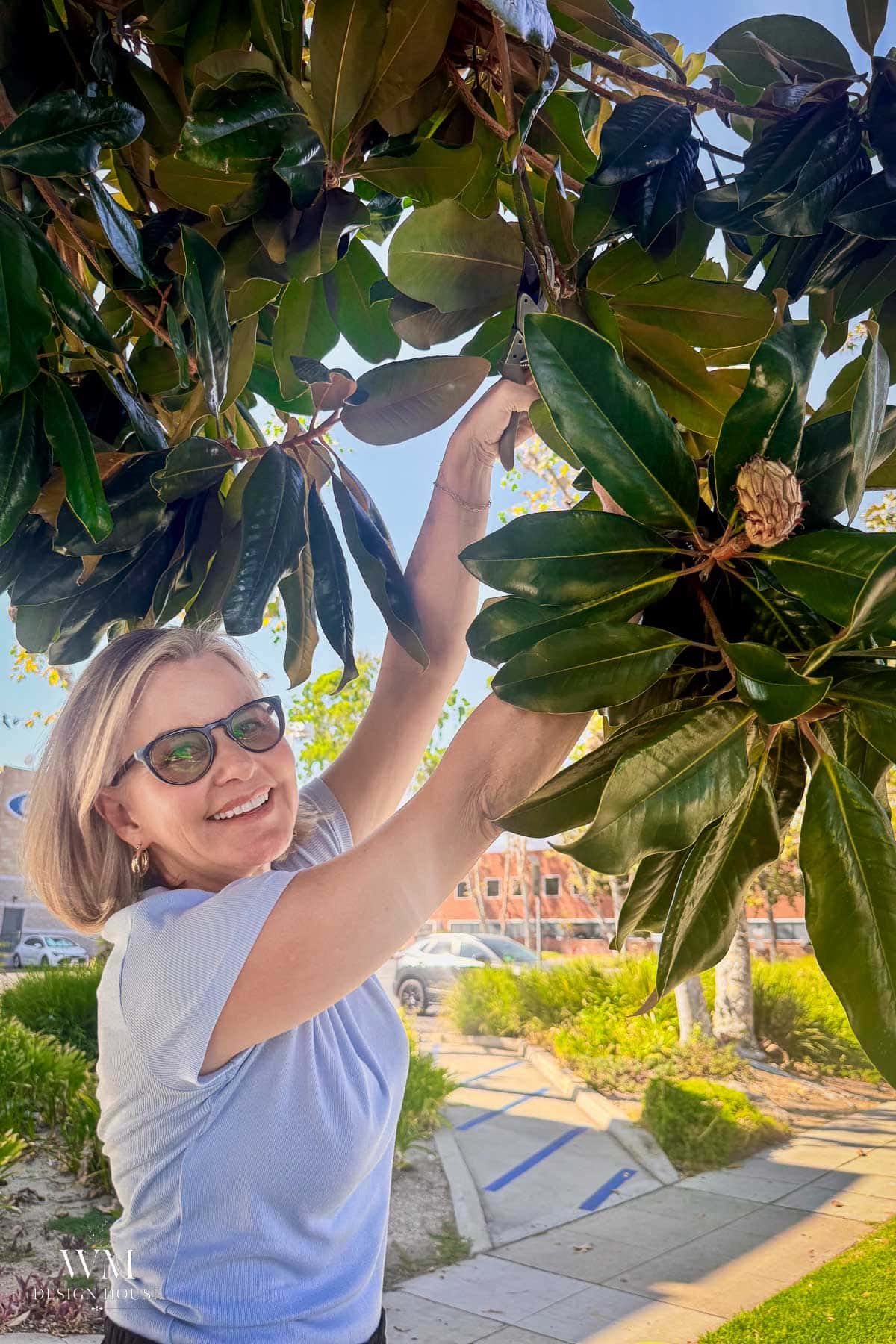
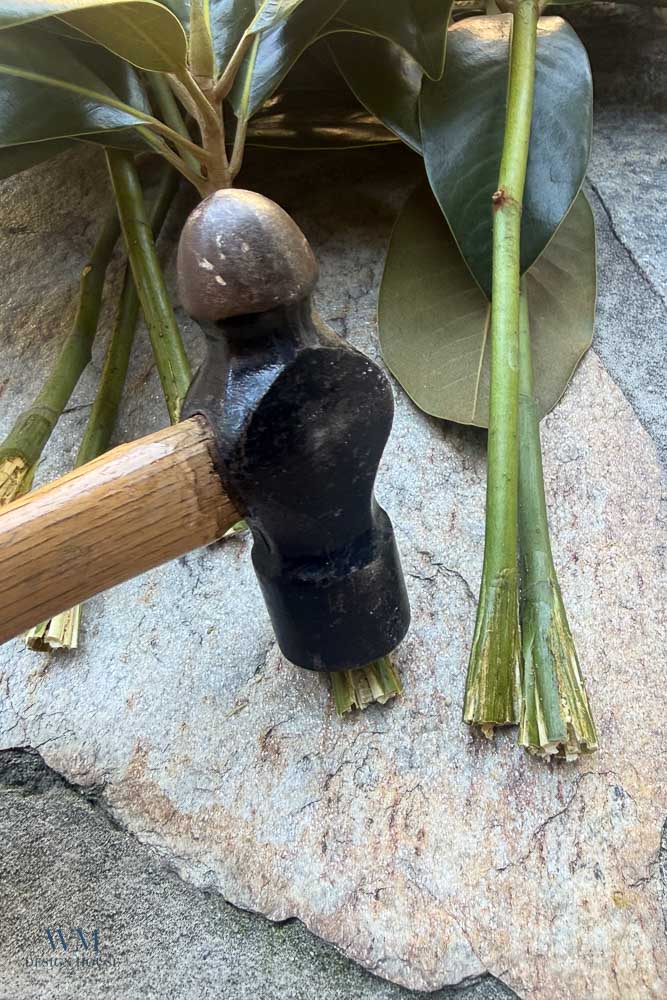
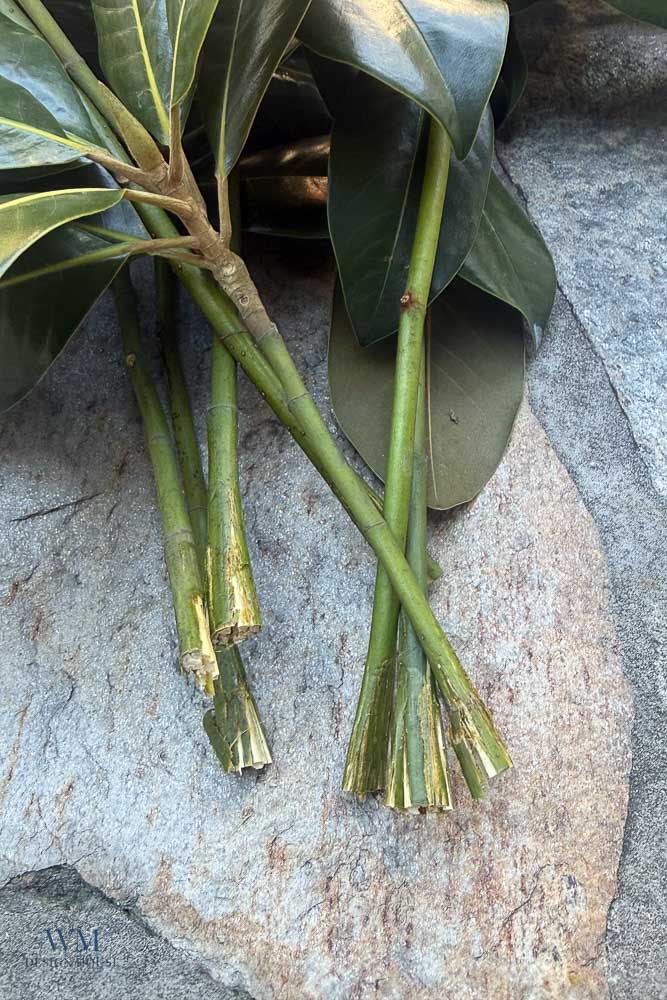
Open up the stem ends
Crush the bottom inch or two with a hammer, or split it with your pruners, so the branch can drink.
Mix a lighter solution
For branches, use 1 part glycerin to 3 parts hot water. Kansas State University tested this on eucalyptus and found the lighter mix preserved stems just as well as stronger ones, so there is no need to use more glycerin than that.
Stand the branches in about 3 inches of solution
In a very heavy jar.
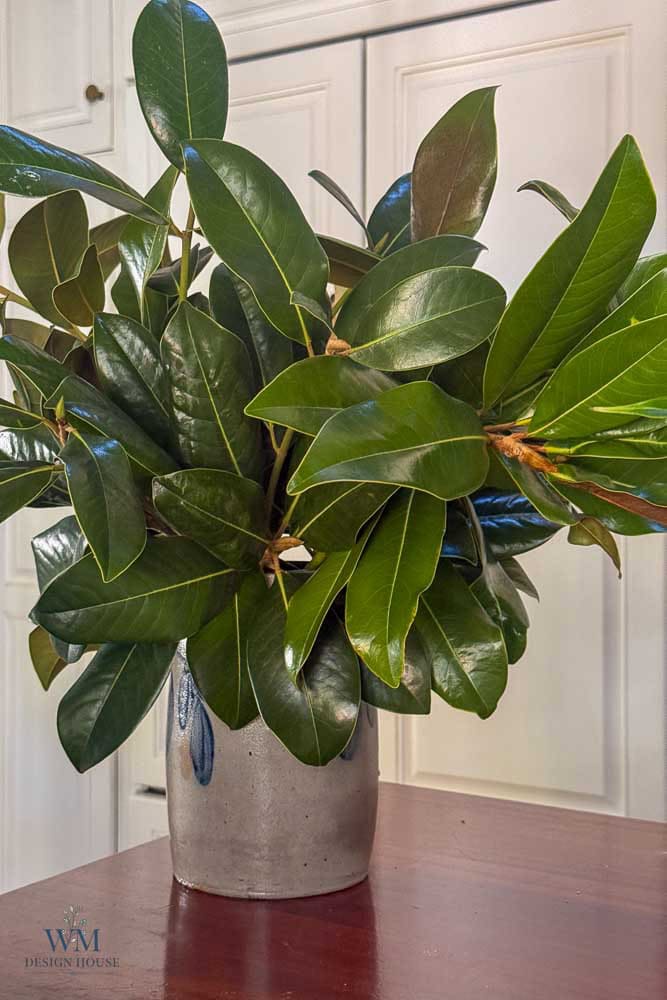
Wait 2 to 6 weeks
Keep the jar in a warm, dry spot out of direct sun, and top up the solution if the level drops. Thin-leaved branches finish faster. Thick, glossy leaves like magnolia can take a month or more.
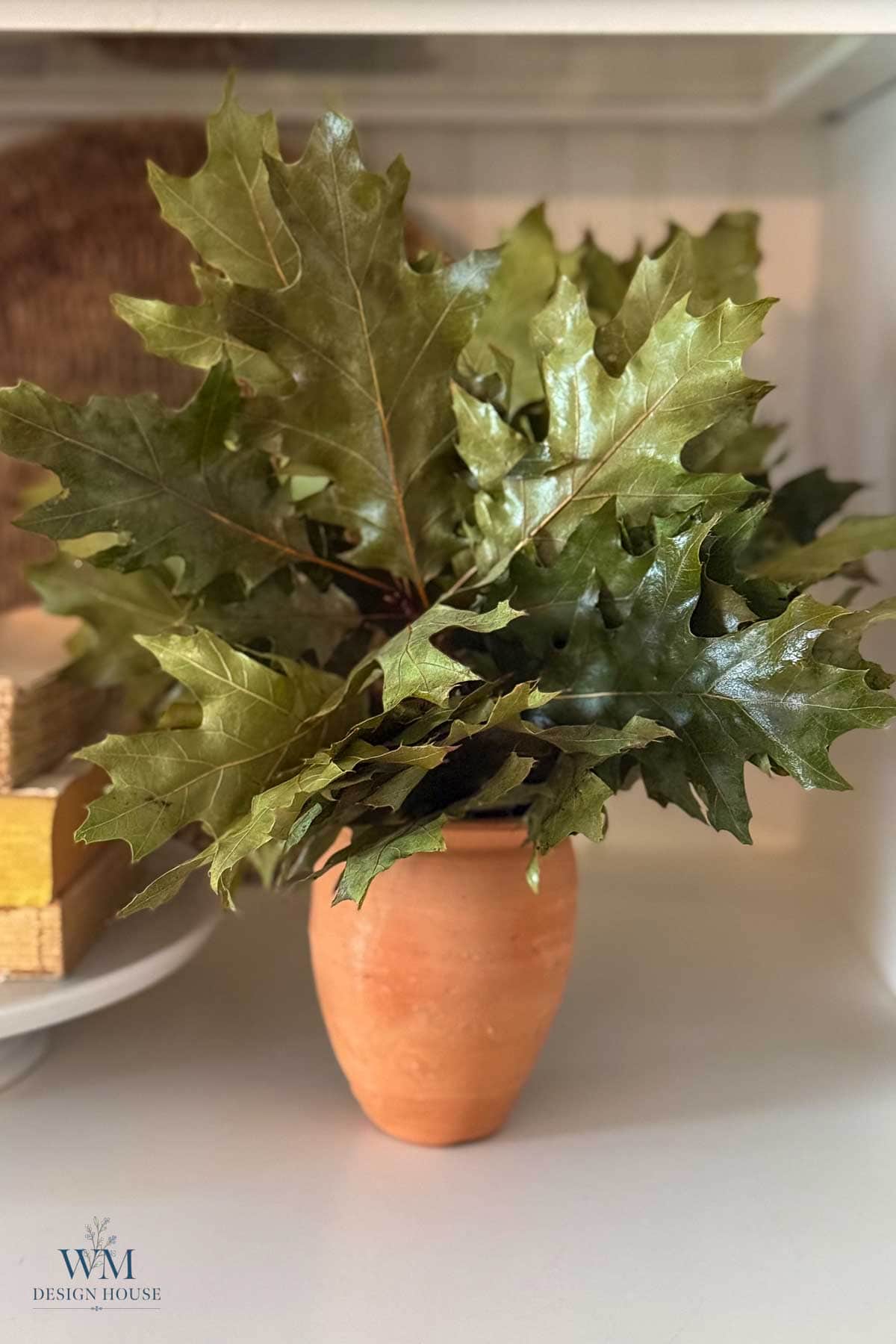
Here are mine after four weeks.
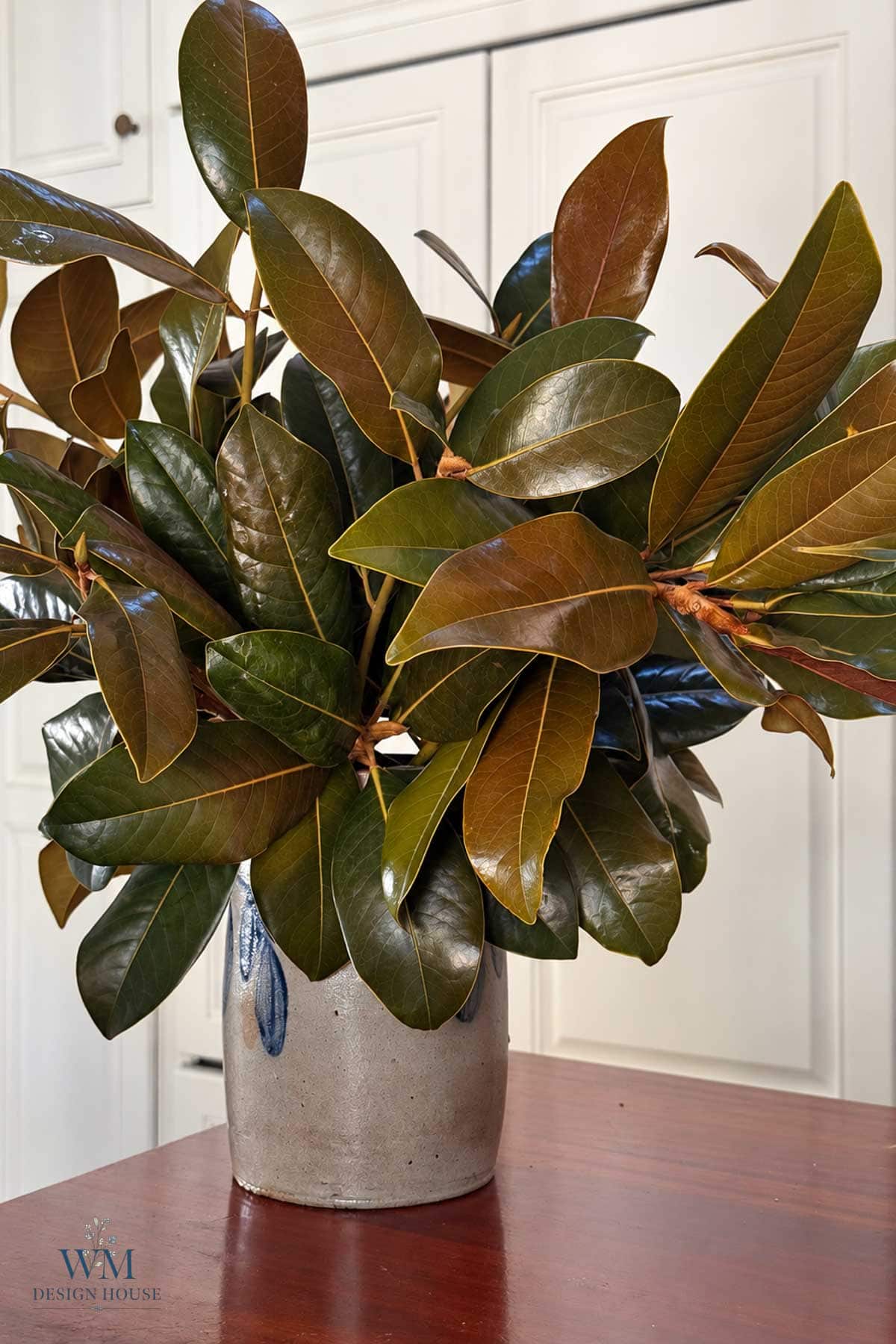
Know when they are done
The leaves change color from the stem outward and feel smooth and soft. Take the branches out, wipe the stems, and let them rest in an empty vase for a few days.
What to Expect: Color and Texture
I want to be honest about this part, because most tutorials skip it. Glycerin leaves do not look exactly like the day you picked them.
- Color deepens. Reds turn burgundy, oranges turn rust, and yellows drift toward bronze.
- Green fades. Green foliage usually ends up olive or brown, which is lovely for fall but worth knowing ahead of time.
- The finish is soft with a slight sheen, a little like thin leather.
Troubleshooting
The leaves curled
Lay them between paper towels and stack a few heavy books on top for several days.
The leaves feel sticky or oily
They absorbed more than they needed. Wipe them with a soft cloth and let them rest on paper towels for a day or two.
The leaves are still stiff
They need more time. Put them back in the solution and check again in two days. If they were dry when you started, they may never soften.
H3: The leaves turned brown and spotty
This usually means the leaf was too old or was not fully covered. Start a new batch with fresher leaves and make sure every leaf sits under the surface.
How I Used My Preserved Leaves
- On the table. Scatter leaves down a runner or tuck one into each napkin. See my 25 Fall Tablescape Ideas for more table inspiration.
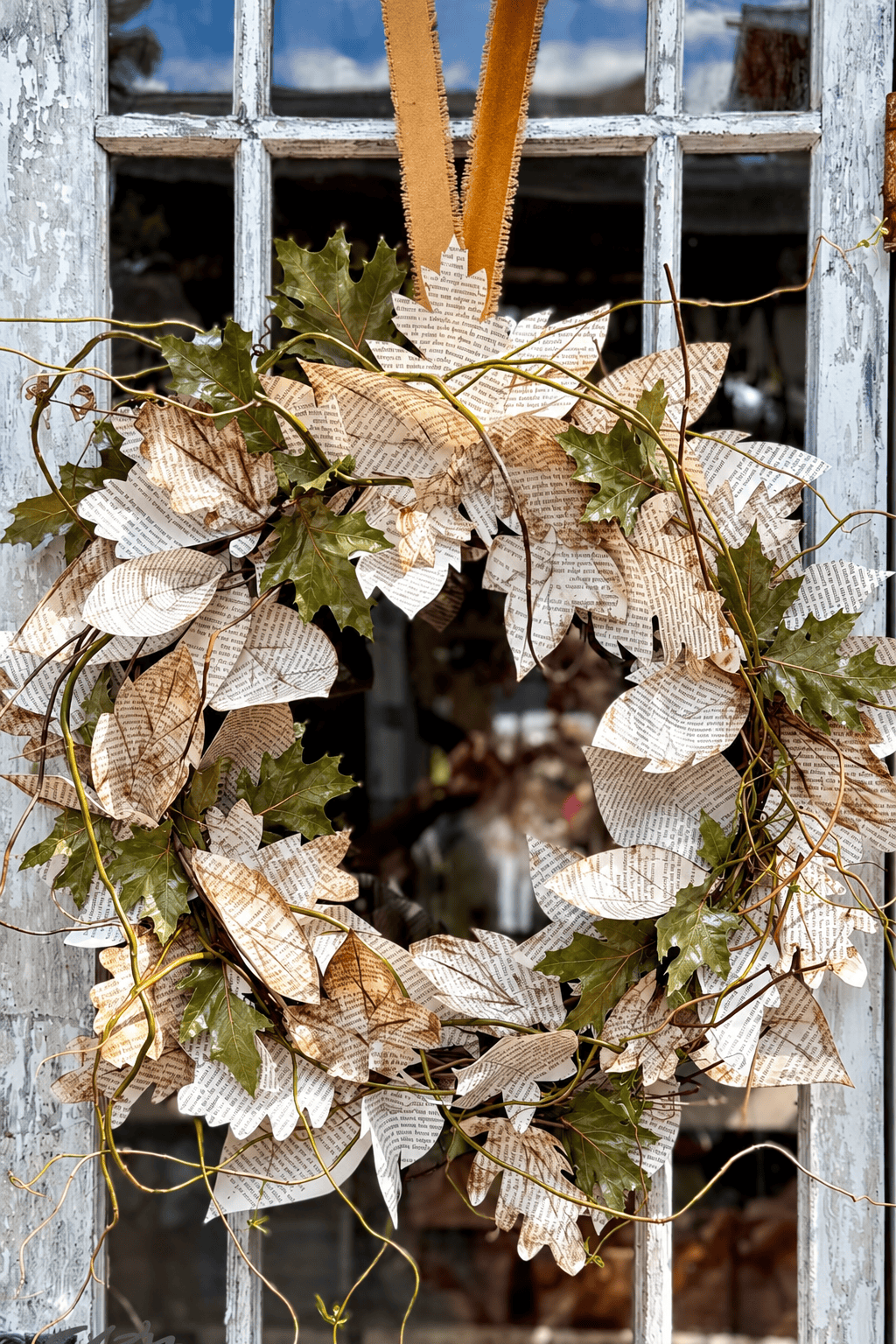
- On a wreath. Wire small clusters onto a grapevine base, the same way I built my book page leaf wreath.
- As a garland. String the leaves on twine across a mantel or window. If you like that look, here is a fun paper version.
- In a vase. Preserved branches need no water, so they pair well with dried flowers like my dried dahlias.
- Use them on your mantel. Create a mantel that is a feast for the eyes even if you have a TV above your fireplace.

More Ways to Preserve What You Gather
If you love decorating with things from the garden, these posts use the same idea:
- Three ways to dry dahlias.
- How to dry pumpkin stems and reuse them.
- 3 Ways to make dried orange slices.
- How to bake pinecones for crafts.
Give this a try while the leaves are at their best. A bottle of glycerin and a week of patience is all it takes, and you will have fall color to decorate with all season.
Frequently Asked Questions
Glycerin works best on foliage. Mississippi State University Extension recommends it for leaves and branches rather than flowers, since most petals are too delicate to take it up well. For blooms, air drying or silica gel gives better results.
Yes. Strain out any bits of leaf, store it in a covered jar, and use it for another batch or two. Replace it once it looks cloudy or dark.
Yes. Preserved foliage takes spray paint well, including metallic finishes, so you can turn fall leaves gold or copper for the holidays. Wipe off any surface residue first so the paint sticks.
A covered porch is fine, but keep them out of rain and damp air. In humid conditions the leaves can release beads of glycerin, and direct sun fades the color faster.
Lay them flat between sheets of tissue or paper towel in a shallow box and keep the box in a cool, dry closet. Stored this way they can be reused for several seasons.
It depends on the project. Ironing leaves in wax paper seals the surface and keeps color bright, but the leaf underneath still dries out and stays flat and fragile. Glycerin is the better choice any time you need to bend, wire, or handle the leaves.
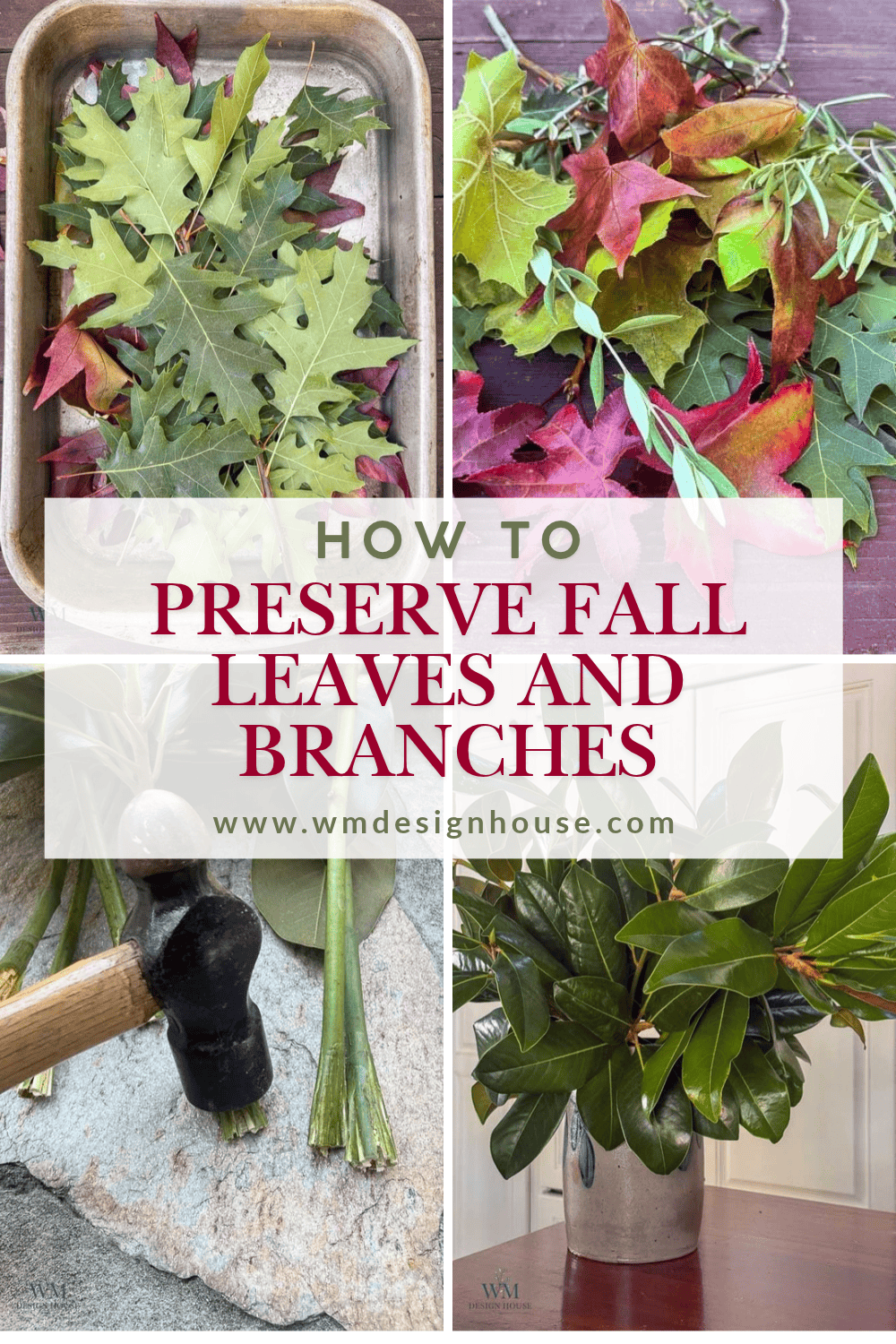
How to preserve leaves with gylcerine
Materials
- Vegetable glycerin buy the large bottle
- Warm water
- Measuring cup
- Shallow baking dish or pie plate plus a second one to nest on top
- Tall heavy jar or vase (for branches)
- Pruners
- Hammer
- Paper towels
- Fresh fall leaves or cut branches

Instructions
- Gather leaves that are freshly turned and still flexible, or branches cut the same day. Discard anything spotted, torn, or already dry.
- Wipe each leaf clean and blot it dry with a paper towel.
- Mix 1/2 cup glycerin with 1 cup warm water and stir until the glycerin dissolves completely.
- Arrange the leaves in a shallow dish in loose layers so the liquid can reach every surface.
- Pour the solution over the leaves until they are fully submerged, then nest a second dish or a few clay pots on top to keep them under the surface.
- Place the dish out of direct sunlight and leave it for 3 to 6 days, checking on day 3. Leaves are done when they bend easily without creasing.
- Remove the leaves, lay them on paper towels, and pat away any excess solution. Let them rest overnight before using.
- For branches, cut stems about 18 inches long, strip the lower 6 inches of leaves, and crush or split the cut end with a hammer or pruners.
- Mix 1 part glycerin with 3 parts hot water and pour about 3 inches into a heavy jar.
- Stand the branches in the jar, keep it in a warm spot out of the sun, and top up the solution as it drops. Allow 2 to 6 weeks; thick leaves like magnolia take the longest.
- When the leaves feel smooth and have changed color to the tips, remove the branches, wipe the stems, and let them air out in an empty vase for a few days before arranging.
Wrapping Up
Preserving leaves with glycerin asks very little of you: an afternoon of gathering, a bottle from the pharmacy, and a few days of patience. In return you get foliage that bends without breaking, works on the table, the mantel, and a wreath, and packs away in a box to come out again next year. If you try it, I would love to know which leaves took the solution best in your part of the country, so leave a comment and let me know how your batch turned out.


More about me!

Hello, I’m Wendy – a dedicated homemaker with a deep passion for decorating, gardening, cooking, and crafting. I find joy in harmonizing beautiful elements to fashion a space that is both comfortable and inspiring. I will help you create a beautiful home, one project at a time.