
Dried orange slices are easy to make at home. You can dry them in the oven, in a dehydrator, or in an air fryer. I have used all three methods for years, and this post gives you the exact temperature and time for each one.
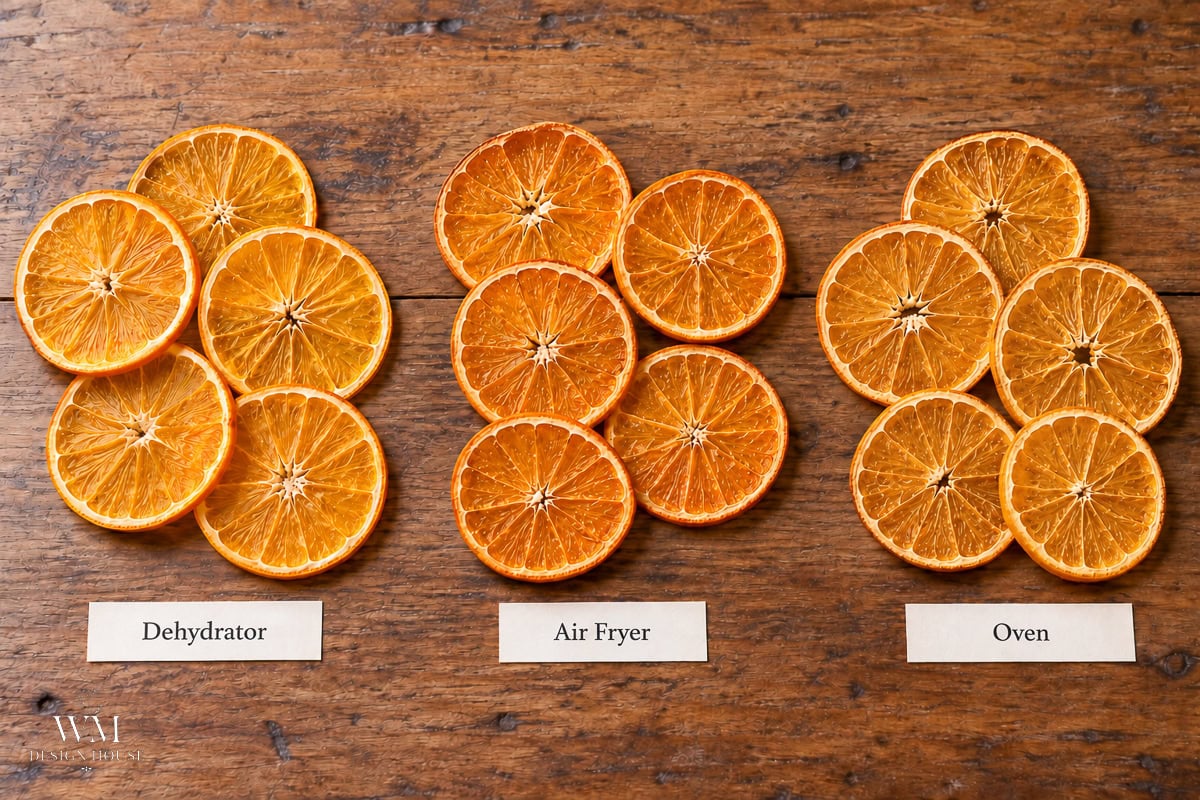
It also covers the part most tutorials skip: how to keep the slices bright orange instead of brown.
Dehydrated orange slices are pretty enough to hang on a Christmas tree and tasty enough to drop into a glass of iced tea. And wait until you see what I made with them!
On my blog WM Design House, I may sometimes use affiliate links, which means a small commission is earned if you purchase via the link. The price will be the same whether you use the affiliate link or go directly to the vendor’s website using a non-affiliate link.

Best Oranges for Dehydrating
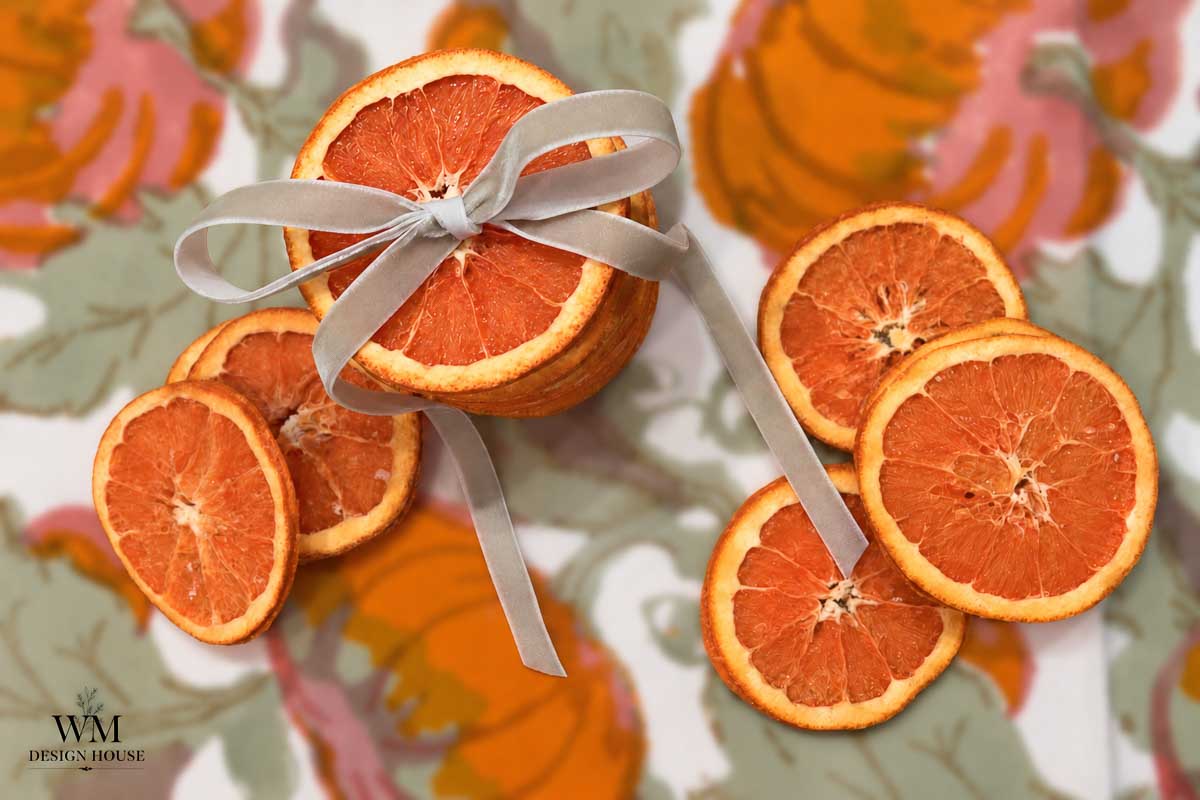
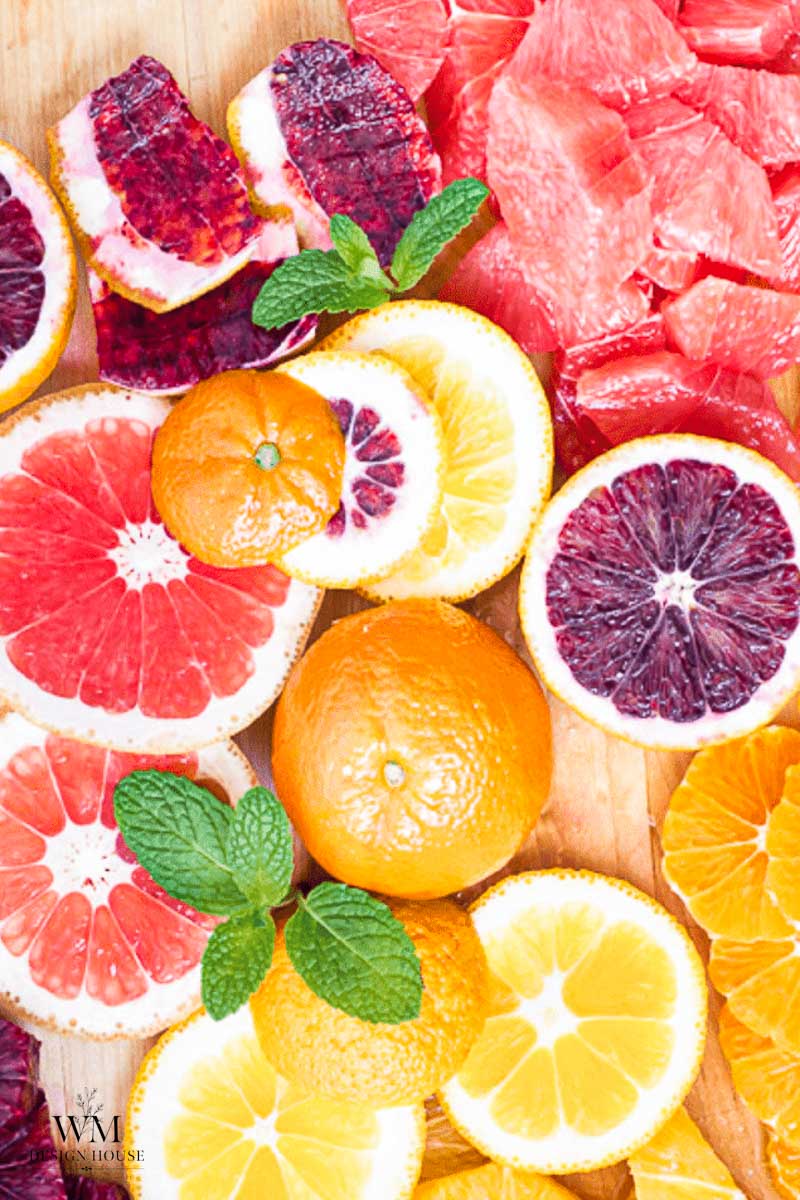
Navel and Cara Cara oranges are my favorites for drying. They are large, round, and thick-skinned, so the slices hold their shape. Navels dry to a light golden orange. Cara Caras dry to a deep pink-orange and are the most vibrant of the three.
Blood oranges are stunning when dried. The flesh turns a jewel-toned red. They are already dark, though, so they can go from ruby to brown quickly. Watch them closely.
Any citrus works with these same steps. I have dried lemons, limes, and pink grapefruit the same way.
Whatever you choose, pick firm fruit with thick skin. Soft or thin-skinned oranges release more juice and take longer to dry.
Supplies for Dried Orange Slices
- Oranges (Navel, Cara Cara, Valencia or Blood Orange)
- Mandoline slicer or a sharp serrated knife
- Paper Towels
- Food dehydrator, oven, or air fryer
- Rimmed Baking Sheet (oven method)
- Parchment Paper
- Airtight jar or container for storage
- Lemon juice
- Salt
- Water
How to Prep Oranges for Drying
The first four steps are the same no matter which method you use.
1. Slice the oranges evenly
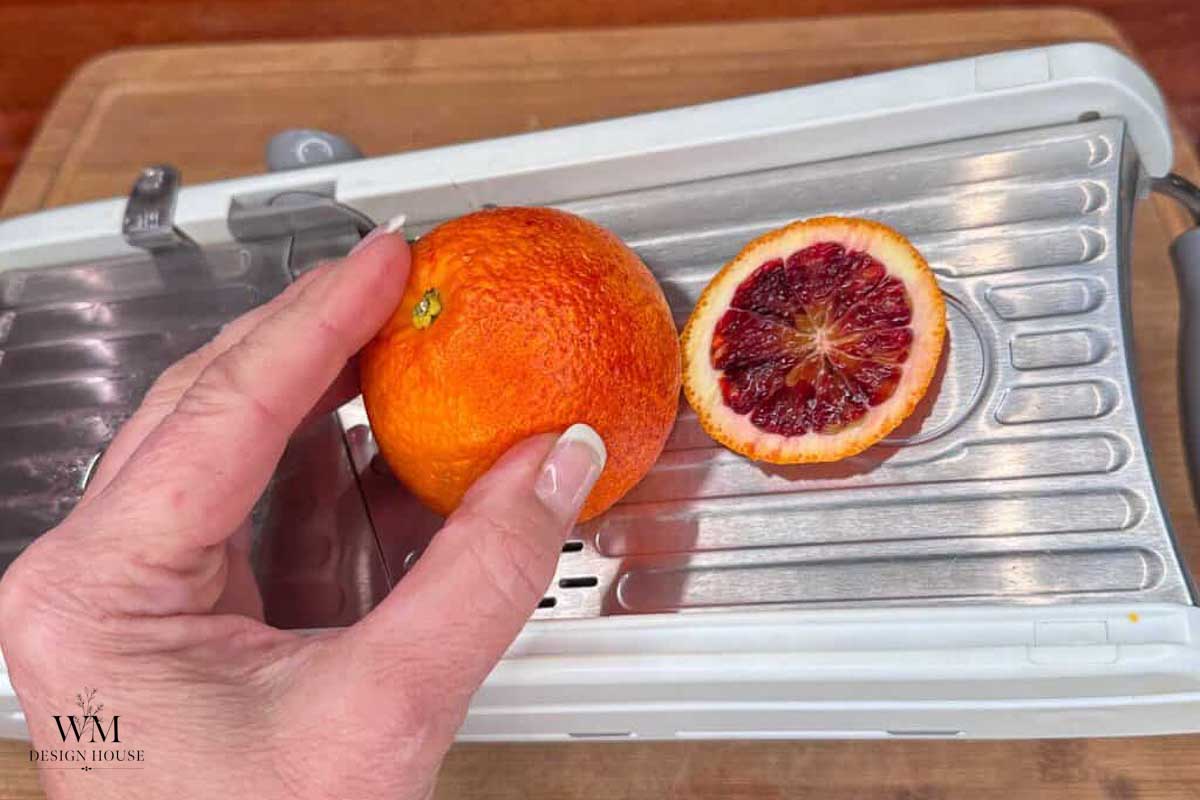
Cut the oranges into rounds between 1/8 and 1/4 inch thick. Even thickness matters more than exact thickness. If one slice is thicker than the rest, it will still be wet when the others are done.
A mandoline gives you even slices every time. A sharp serrated knife works too. Just take your time.
Thinner slices dry faster and let more light through. Thicker slices hold up better on a garland. I cut mine closer to 1/4 inch for decor and closer to 1/8 inch for tea and cocktails.
2. Soak the slices in lemon water
Fill a bowl with 4 cups of water, 4 tablespoons of lemon juice, and 1/4 cup of salt. Add the slices and let them soak for 20 minutes.
The lemon juice slows browning before the slices ever see heat. The salt pulls out some of the moisture so they dry faster. This is the first of two steps that keep the color bright. The second is the sugar.
Drain the slices and move on to blotting.
3. Blot the Slices
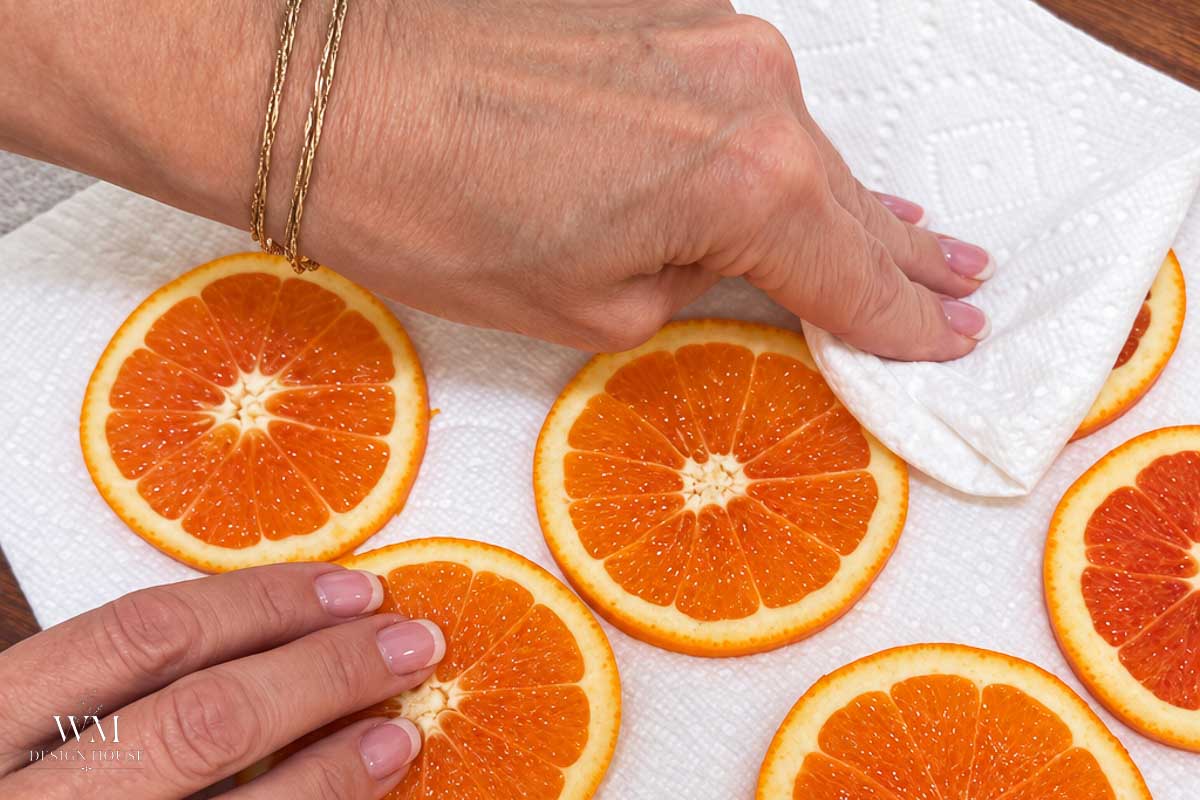
Lay the drained slices on a double layer of paper towels. Cover with another paper towel and press gently. Swap in fresh towels and repeat two or three times. You want the slices as dry as you can get them before the sugar goes on.
Blotting cuts the drying time and keeps the slices from sticking to the tray. It is the step most people skip, and it is the one that makes the biggest difference.
4. Dust with confectioners sugar
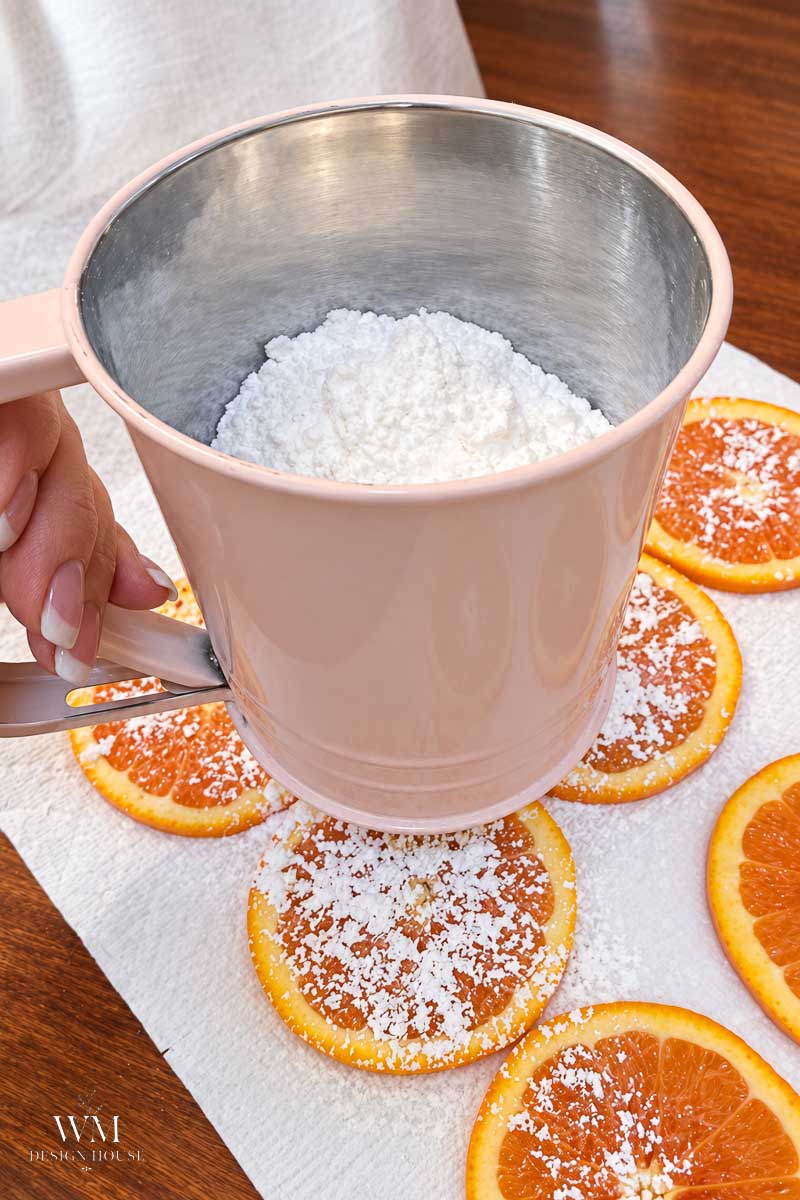
Lay the blotted slices on a paper towel. Use a small sifter or strainer to dust one side with a light, even coat of confectioners sugar.
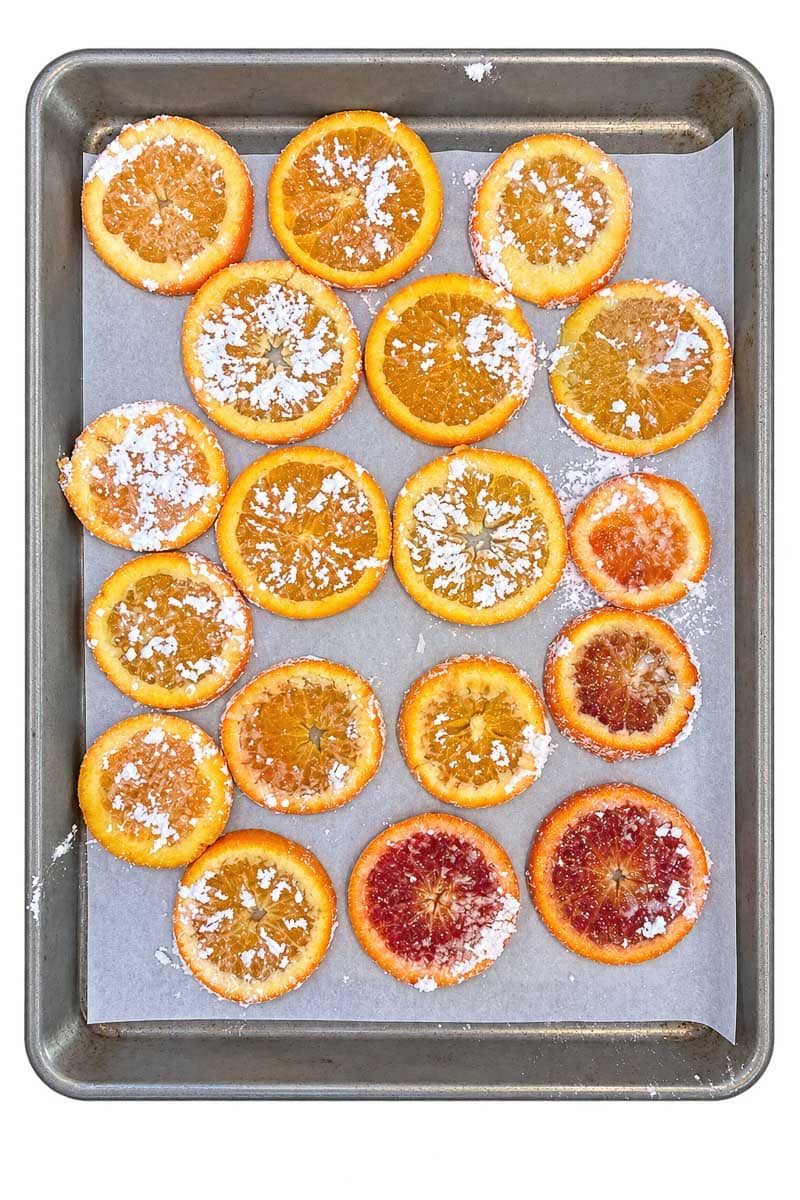
Flip the slices onto the tray you will dry them on, whether that is your baking sheet or the dehydrator tray. Dust the other side.
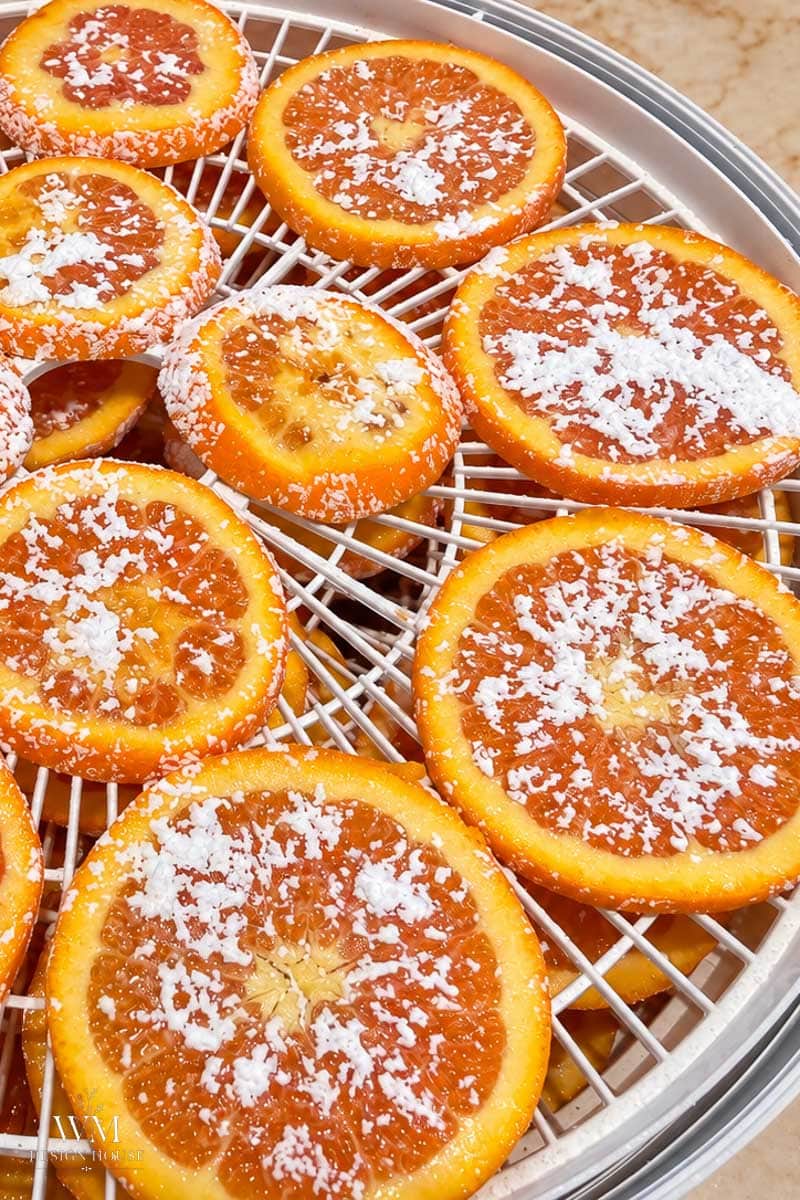
The sugar melts into a thin glaze as the slices dry. It helps them hold their color longer and gives the finished slices a soft shine, like stained glass.
You do not need much. About 1/2 cup covers a full tray. If some sugar is still visible on the peel when they are done, wipe it off with a damp paper towel.
Skip this step if you want unsweetened slices for tea or snacking.
Dried Orange Slices in the Oven
The oven is the method everyone has. It is also the method most likely to turn your slices brown, so keep the heat low and check often.
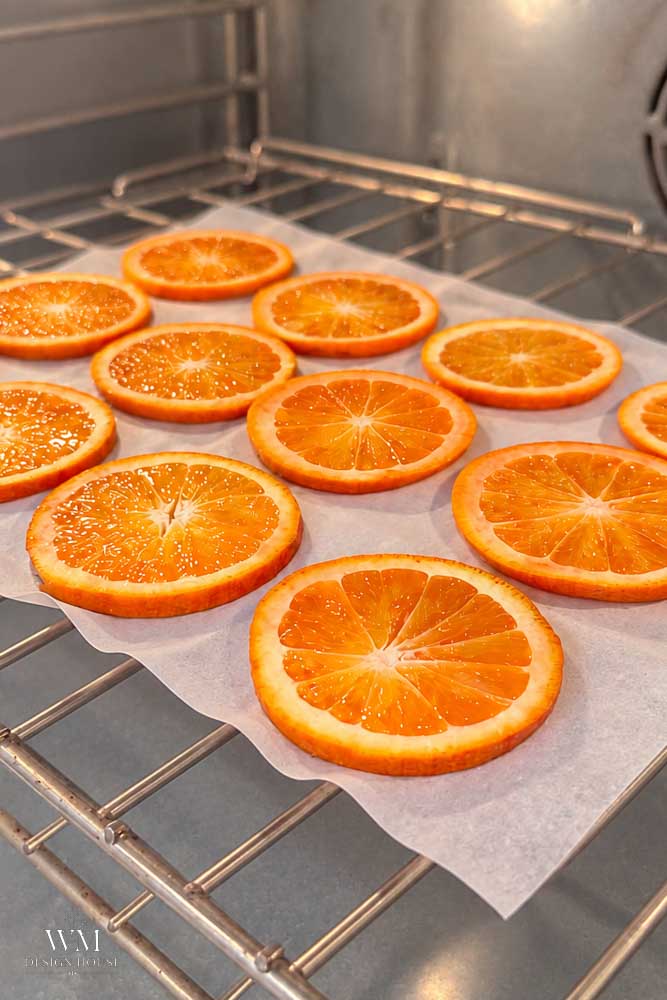
- Heat the oven to 175 degrees F. Every oven runs differently. Anywhere from 175 to 225 degrees F will work, but lower is safer.
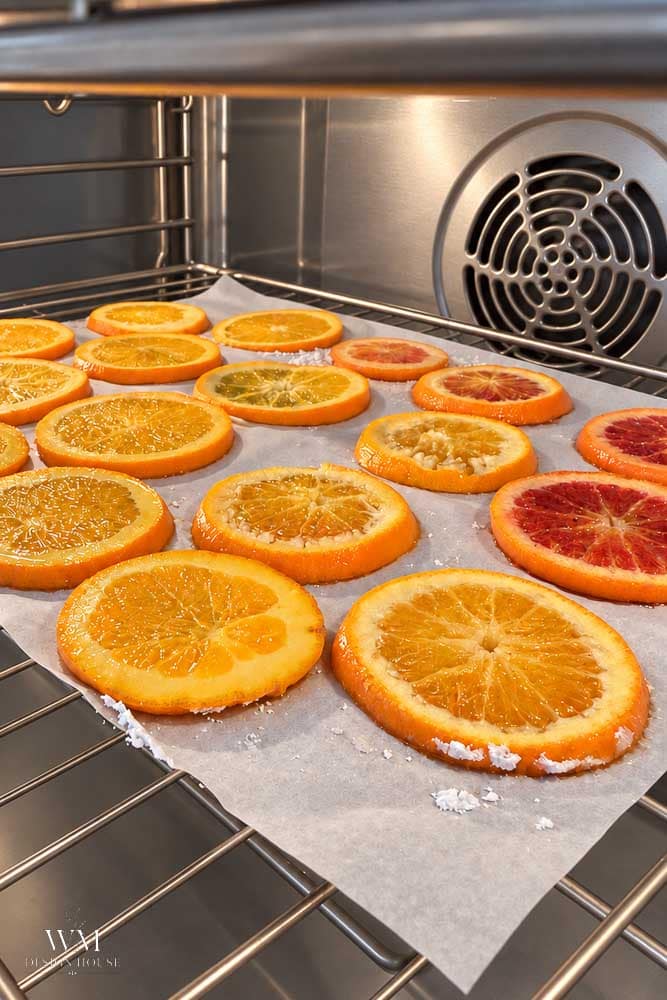
- Lay parchment paper directly on the oven rack. Drying on the rack instead of a sheet pan lets air reach both sides of the slices.
- Lay the sugared slices in a single layer on the parchment. Do not let them overlap.
- Bake for 4 to 6 hours. Flip the slices every hour so both sides dry evenly.
- Pull any slice that is done early. Thinner slices finish first, and leaving them in is how they brown.
- Cool on a cooling rack overnight.
If you have a convection setting, use it. Moving air dries the slices faster at the same temperature.
Dried Orange Slices in the Dehydrator
A dehydrator gives you the most even color with the least attention. You can start a batch before bed and wake up to finished slices.
- Set the dehydrator to 135 degrees F. If yours has presets instead of a dial, use the fruit setting.
- Arrange the sugared slices on the trays in a single layer.
- Dry for 6-12 hours. Thin slices finish closer to 6. Thick slices and juicy varieties can take 12.
- Flip once at the halfway point if you are awake. If not, they will still dry fine.
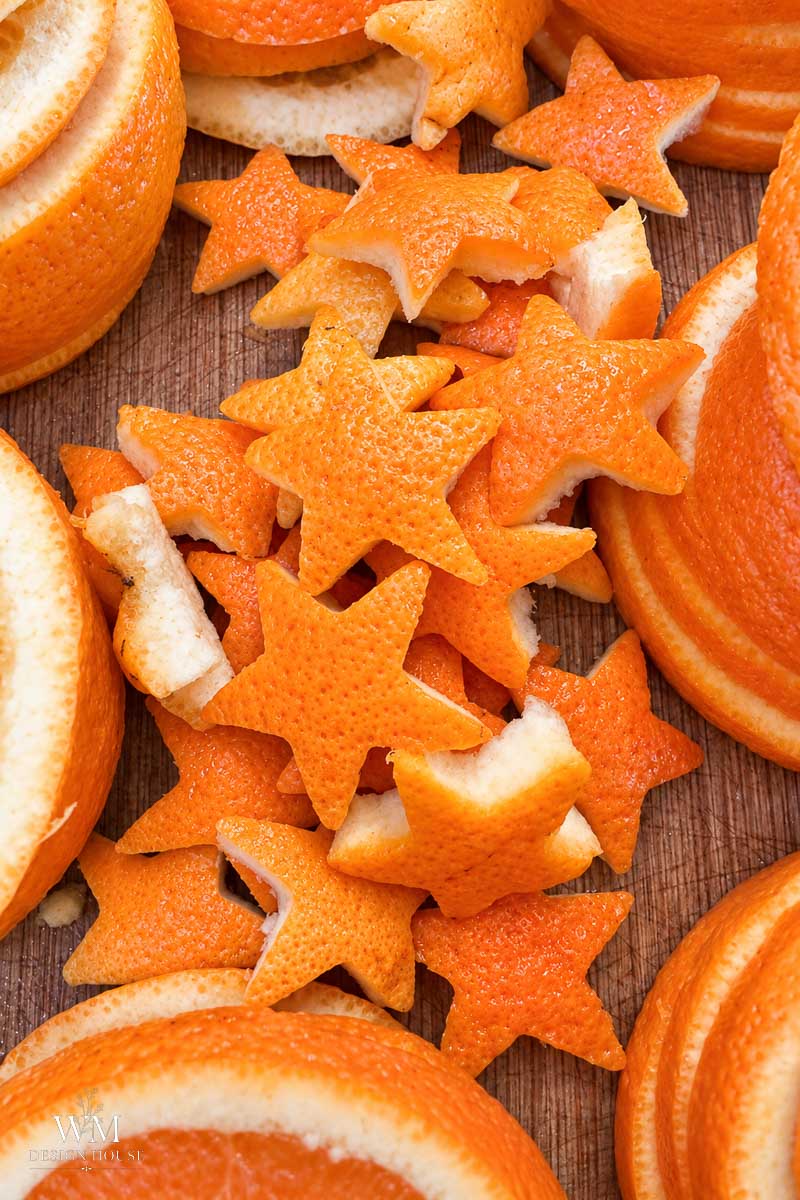
I also cut a few stars from the leftover orange peel and dry them on the same trays. They make the sweetest little ornaments.
Dried Orange Slices in an Air Fryer
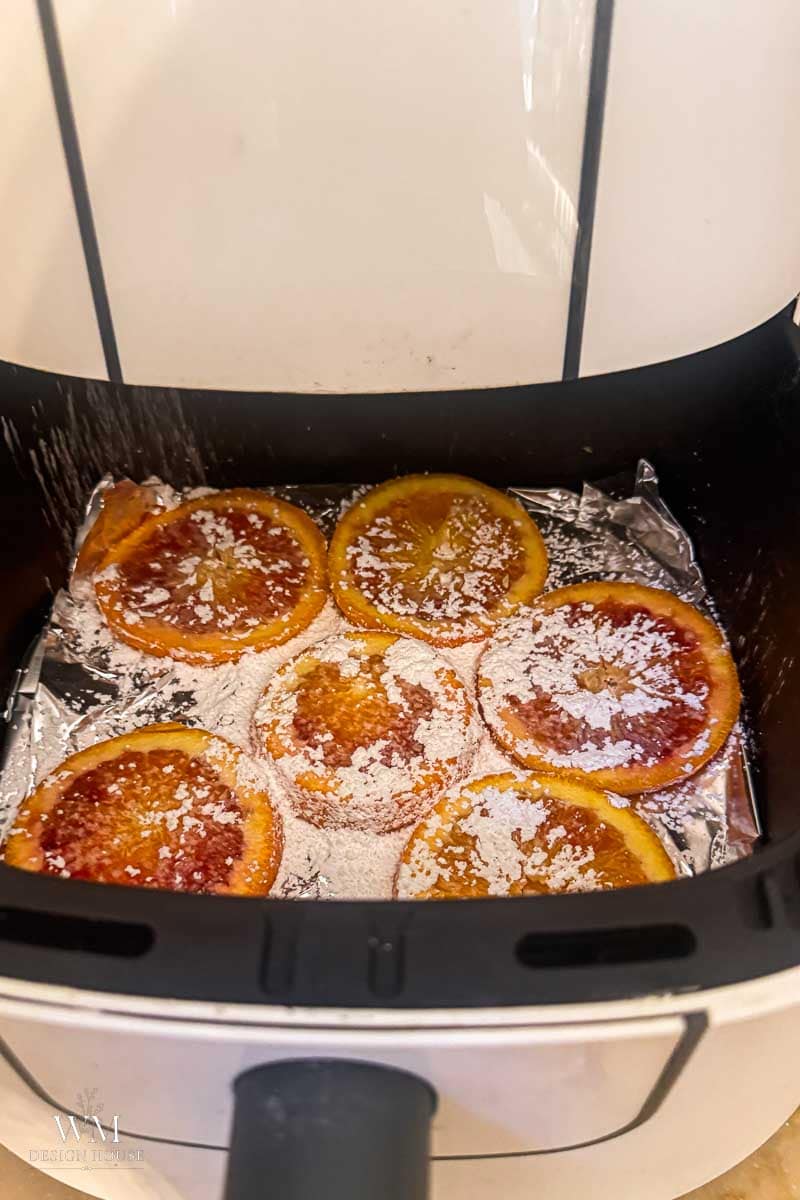
The air fryer is the fastest method by far, and it is the one I reach for most now. The fan circulates hot air, so the slices dry in a fraction of the oven time.
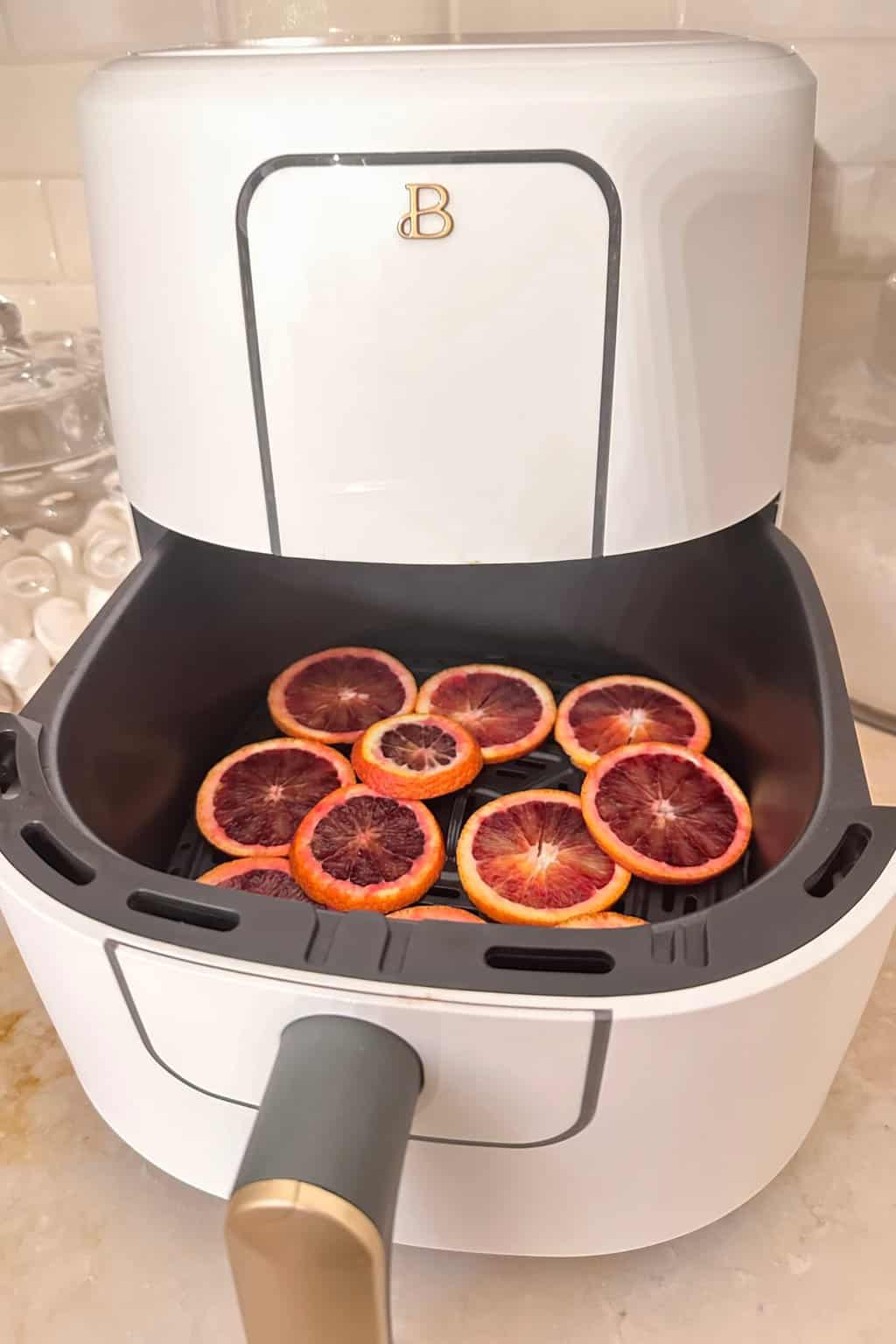
- Set the air fryer to its lowest temperature, usually 135 to 140 degrees F. Newer models have a dehydrate setting. Use it.
- Lay the sugared slices in a single layer in the basket or on the tray. Do not overlap them. Air needs to move around each slice.
- Run for 2 to 3 hours. Check at the 90 minute mark and flip.
- Work in small batches. An air fryer basket holds one orange, maybe two. That is the trade-off for the speed.
If your air fryer only goes down to 170 or 180 degrees F, it will still work. Cut the time to about 90 minutes and check every 20 minutes after the first hour.
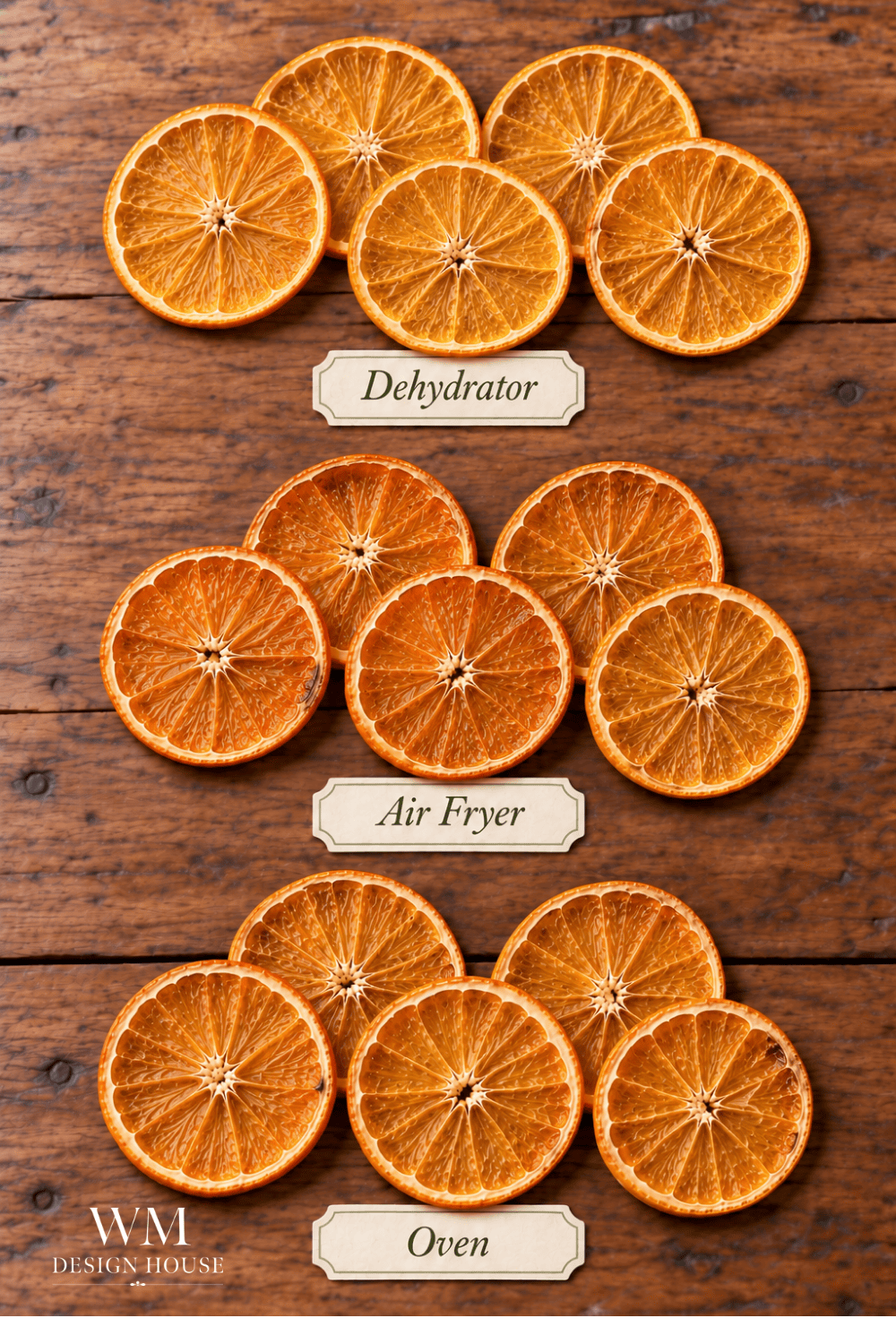
Which Method Is Best?
All three work. Here is how I decide.
| METHOD | TEMP | TIME | BEST FOR |
| Oven | 175 F | 4 to 6 hours | No special equipment. Watch closely for browning. |
| Dehydrator | 135 F | 6-12 hours | Big batches, most even color, hands off. |
| Air Fryer | 135 to 140 F | 2 to 3 hours | Fastest. Small batches. Bright color. |
For eating, I use the dehydrator or the air fryer. The lower heat keeps more of the fresh orange flavor and a truer color. For decor, any method is fine. The oven runs hotter, so oven slices take on a warm, slightly caramelized tone. Some people prefer that look on a wreath.
How to Keep Dried Orange Slices From Turning Brown
Brown slices are the most common complaint I hear. These seven things fix it.
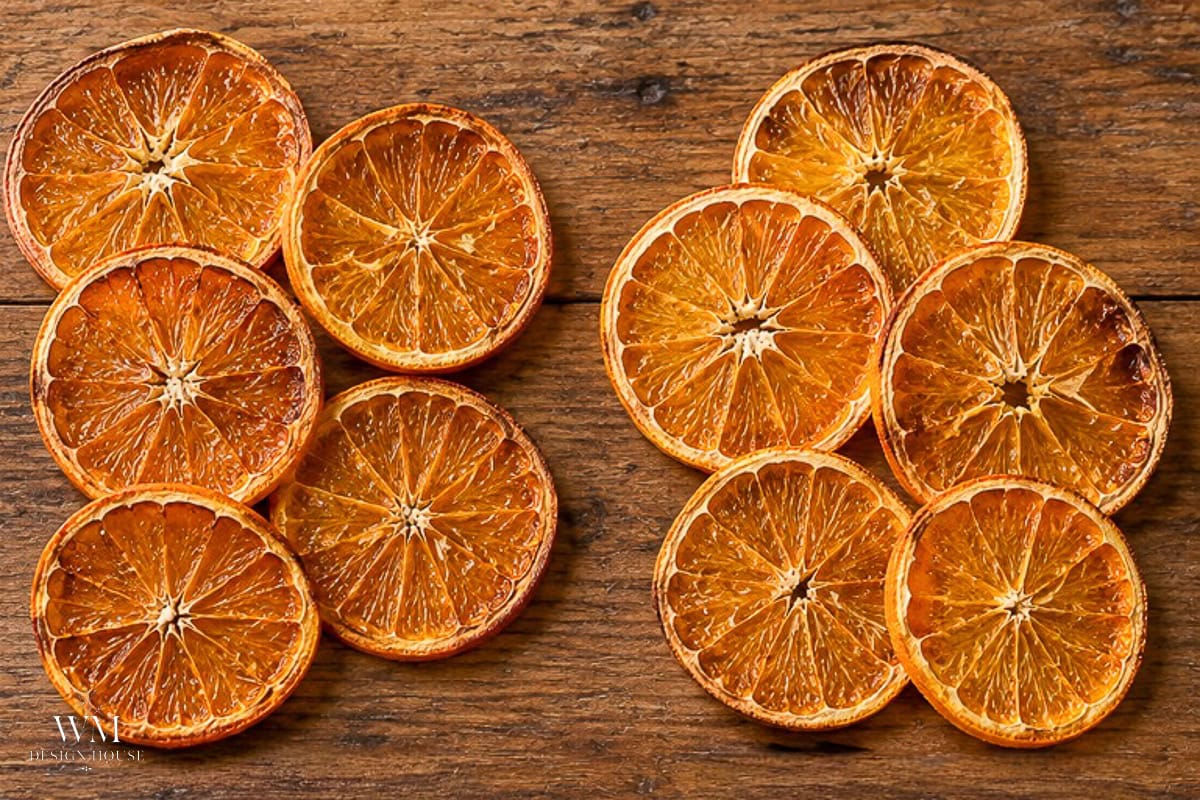
- Slice evenly. Thin spots burn before thick spots dry.
- Soak in lemon water. Twenty minutes in the lemon and salt bath slows browning before the slices ever hit the heat.
- Blot well. Surface juice caramelizes and darkens.
- Keep the heat low. In the oven, 175 degrees F or lower. Higher is faster and browner.
- Pull them early. Take slices out when they are almost dry and let them finish on a rack on the counter for a day or two. This is the single best trick for color.
- Use a dehydrator or air fryer. Lower temperature plus moving air equals brighter slices.
And one more. The confectioners sugar dusting in the prep steps is the trick that keeps them bright the longest. It seals the cut surface so the flesh does not oxidize as fast, and it is why my slices still look good in year two.
How to Tell When Orange Slices Are Done
Let a slice cool for a minute, then bend it. A finished slice is stiff and leathery with no give in the center. The flesh should feel dry to the touch, not tacky.
If it folds softly or feels sticky, it needs more time. Put it back in 30 minute increments.
For slices you will hang or float in a drink, dry them until fully brittle. Those last the longest. For snacking, stop a little earlier so they are chewy.
Let every batch cool completely before storing. Warm slices in a sealed jar will sweat, and that moisture is what causes mold.
How to Store Dried Orange Slices
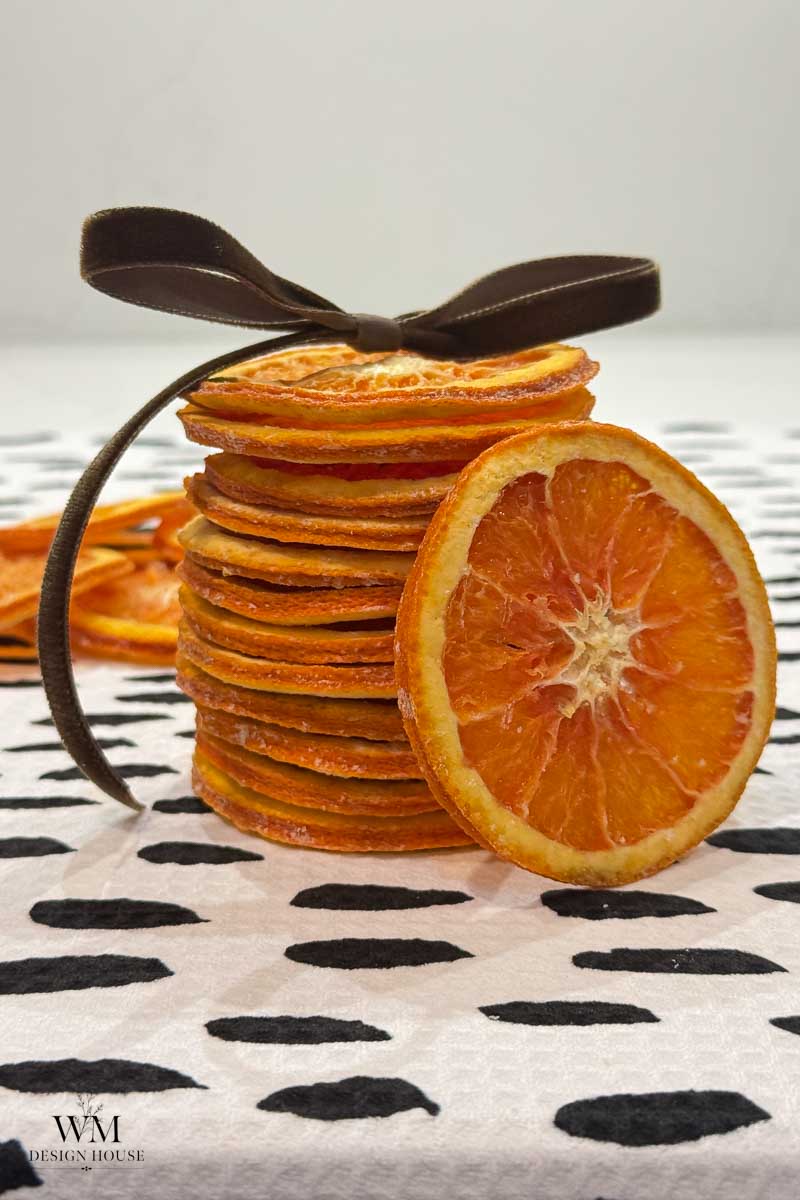
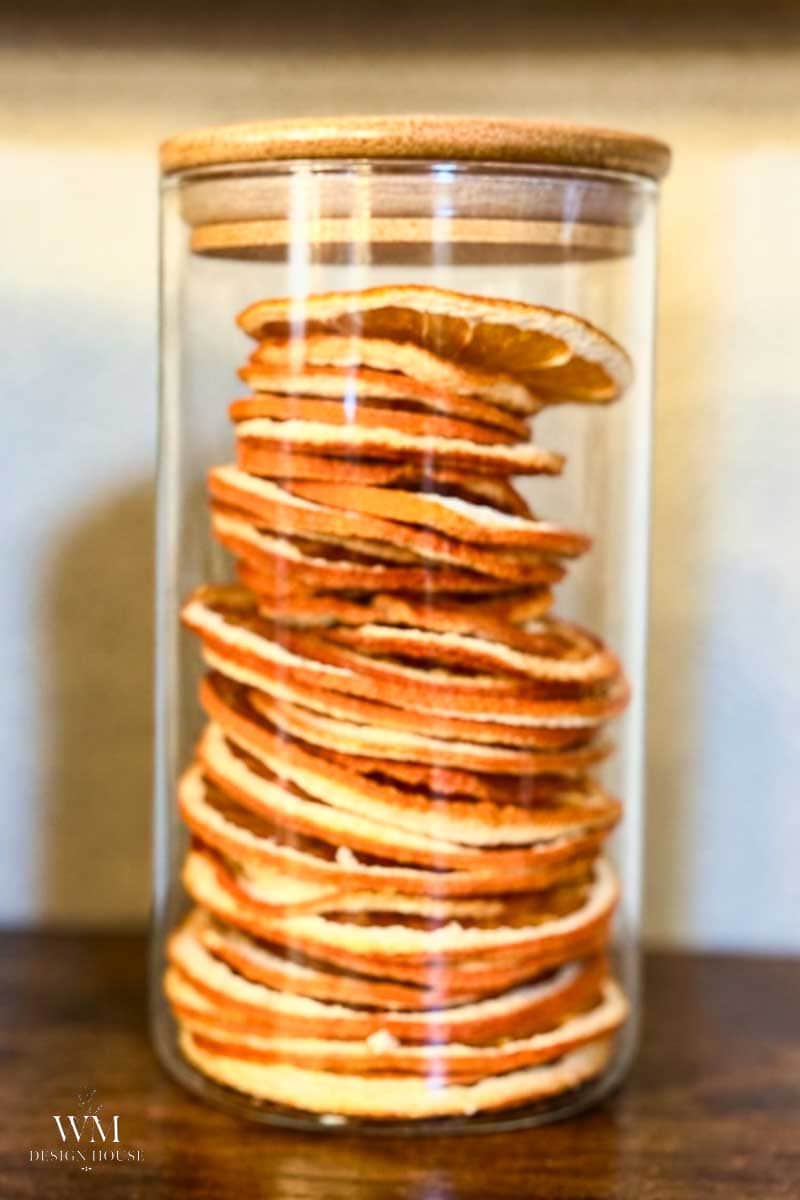
Store fully dried slices in an airtight container in a cool, dark place. A glass jar with a tight lid, a sealed food container, or a zip-top bag all work. I keep mine in the back of the pantry.
For decor, they last for years. The color softens after the first year or two, but they are still usable.
For eating, use them within a year for the best flavor.
If you see fuzz or smell anything off, throw the batch out. Mold means the slices were not fully dry when you stored them.
Keep decor slices indoors. Humidity and morning dew will soften them and draw insects.
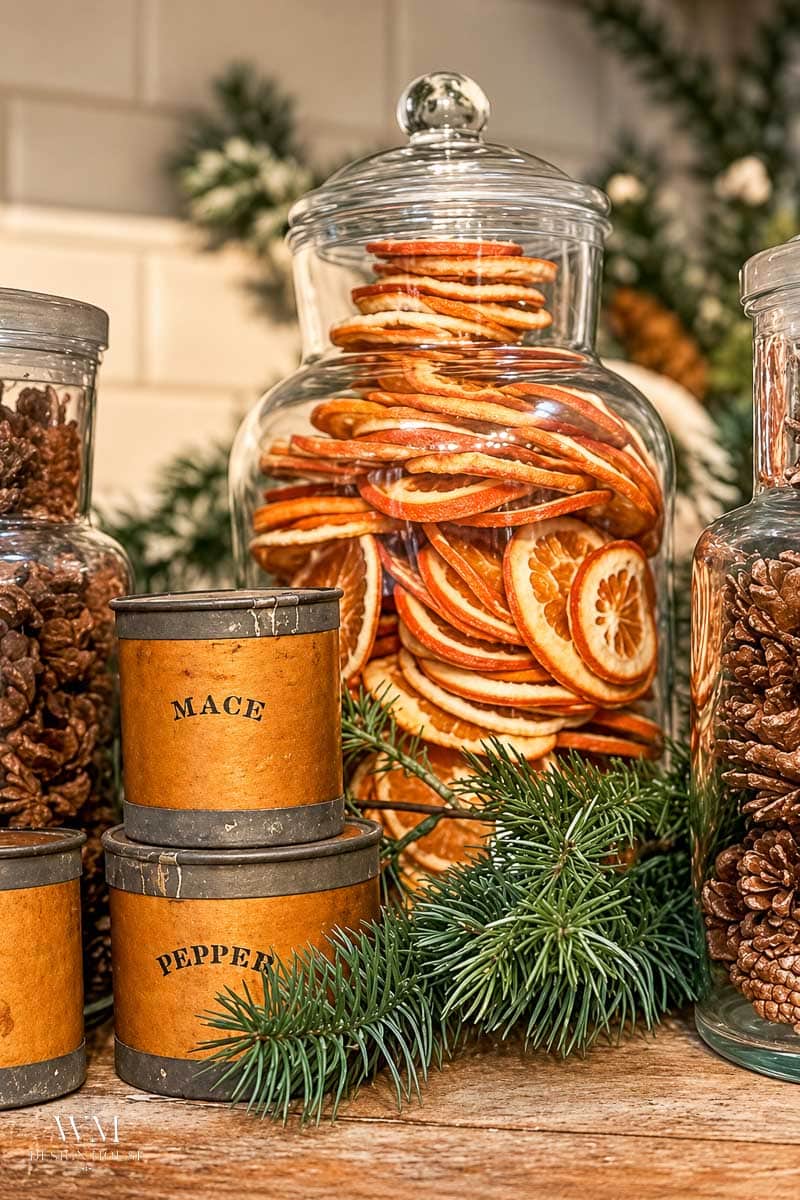
Ways to Use Dehydrated Orange Slices
This is where they earn their keep. Dried orange slices work in the kitchen all year and in your decor all winter.
In the kitchen
- Cocktail garnish. Float a slice on an old fashioned, a gin and tonic, or a pomegranate cosmopolitan. They do not water down the drink the way fresh fruit does.
- Iced tea and hot tea. Drop a slice in the glass or the pot. It adds a soft citrus flavor as it steeps.
- Charcuterie boards. Tuck a few into a cheese board for color and a sweet bite.
- Baking. Press a slice onto a mini butter cake, a loaf of bread, or a batch of cookies before baking.
- Snacking. Chewy dehydrated slices are a good grab-and-go snack. Dip half in dark chocolate for a treat.
- Simmer pot. Add a few slices to a pot of water with cinnamon sticks and cloves for a house that smells like the holidays.
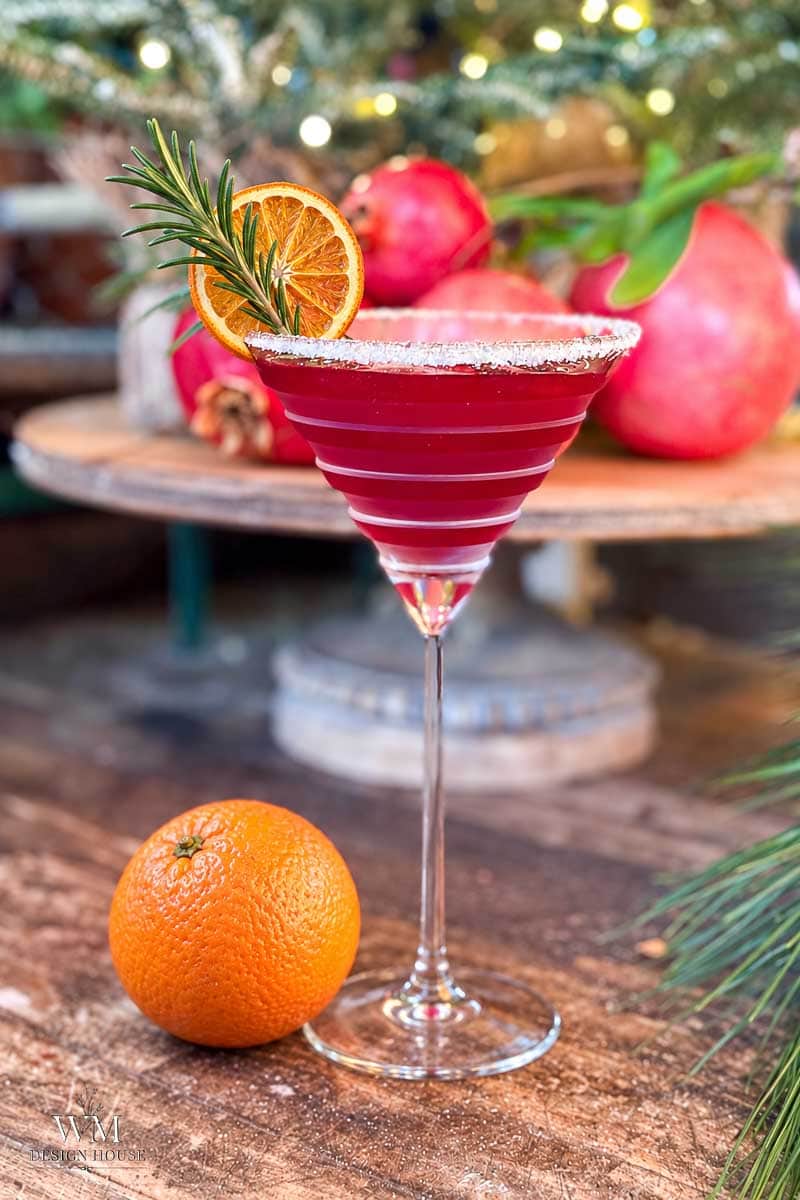
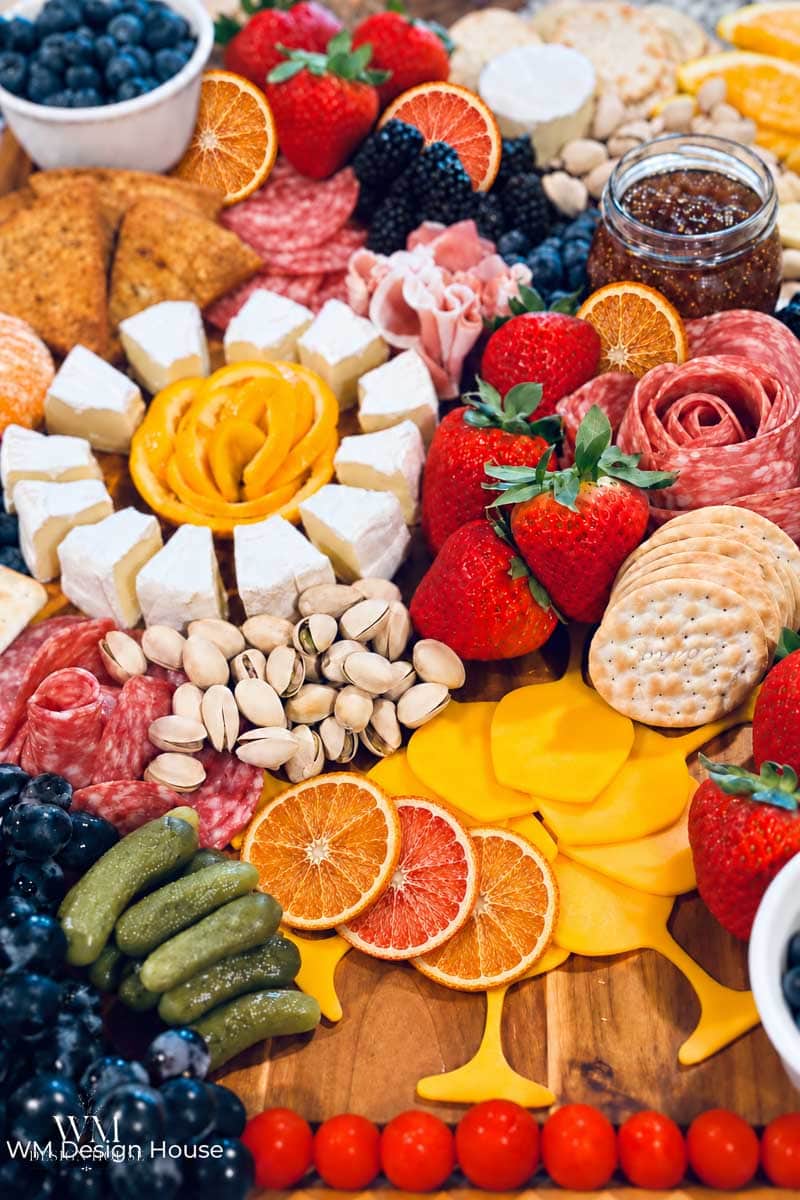

For decorating
- Christmas ornaments. Thread ribbon or twine through a hole near the peel and hang them on the tree. I have 13 dried orange ornament ideas to get you started.
- Garland. String slices with cinnamon sticks, bay leaves, and wooden beads.
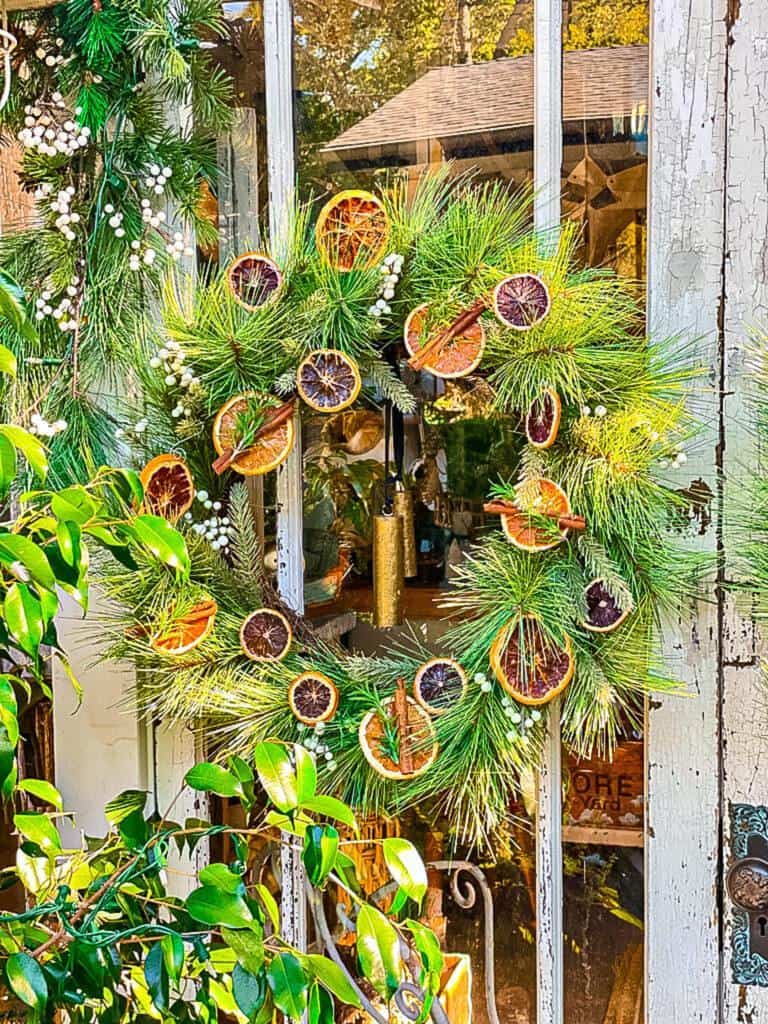
- Wreaths. Wire them into fresh or faux greenery.
- Centerpieces. Scatter them through greenery with pinecones and candles for a blue and orange Thanksgiving table or a Christmas mantel.
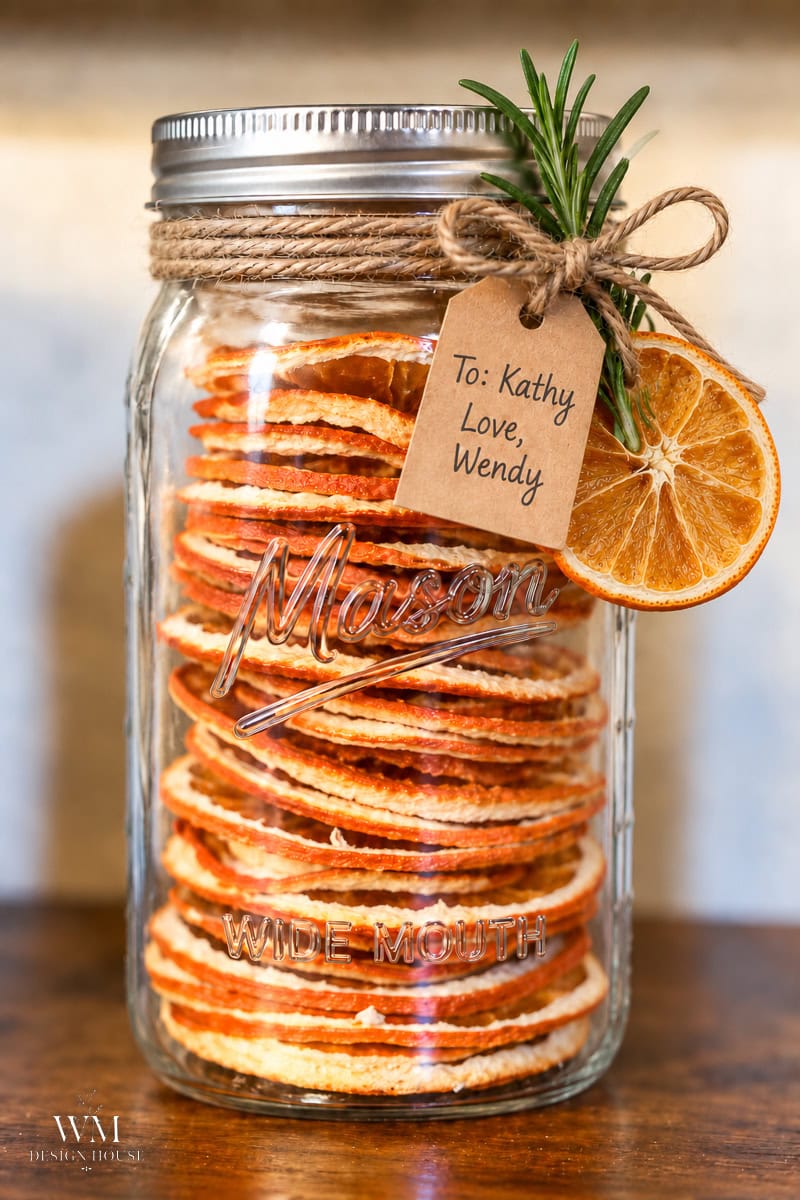
- Gift wrap. Tie a slice onto a package with twine or a wax sachet.
- Windows. Hang them in front of a window or string lights. They glow like stained glass when the light comes through.
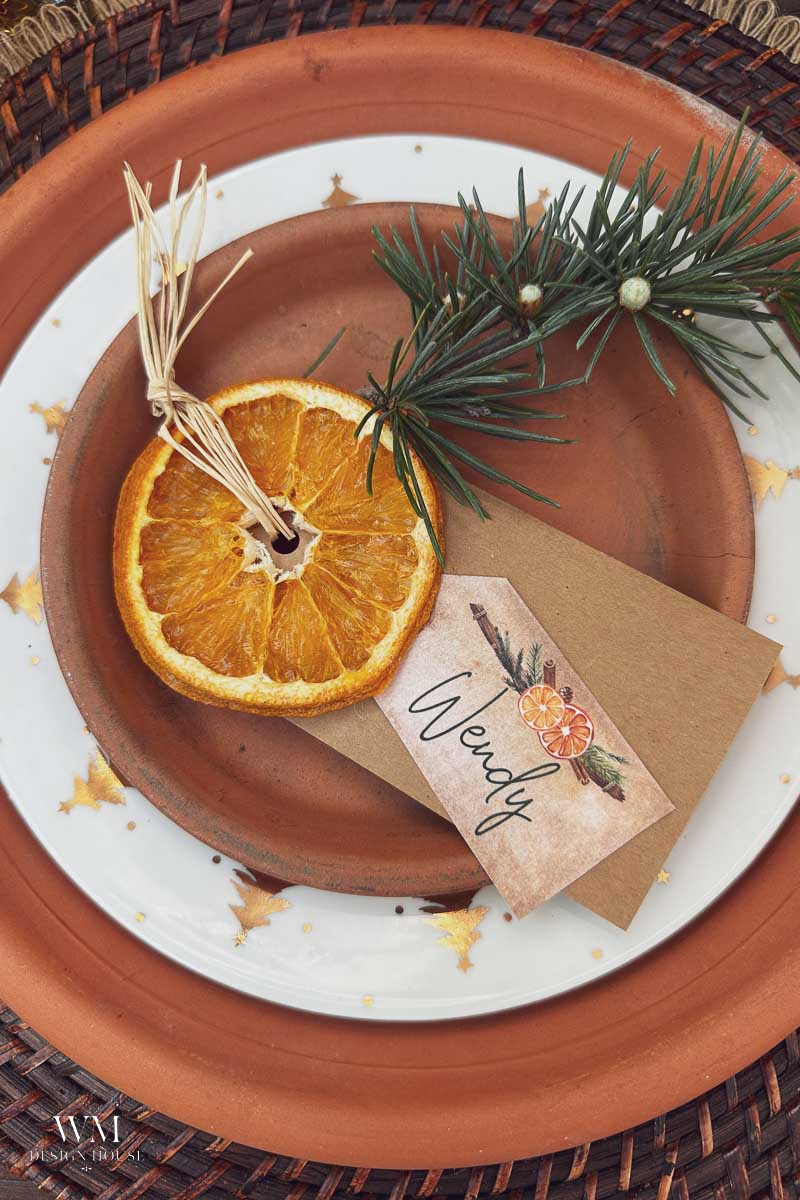
- Place card holders. Attach a slice to each place card for a holiday dinner.”
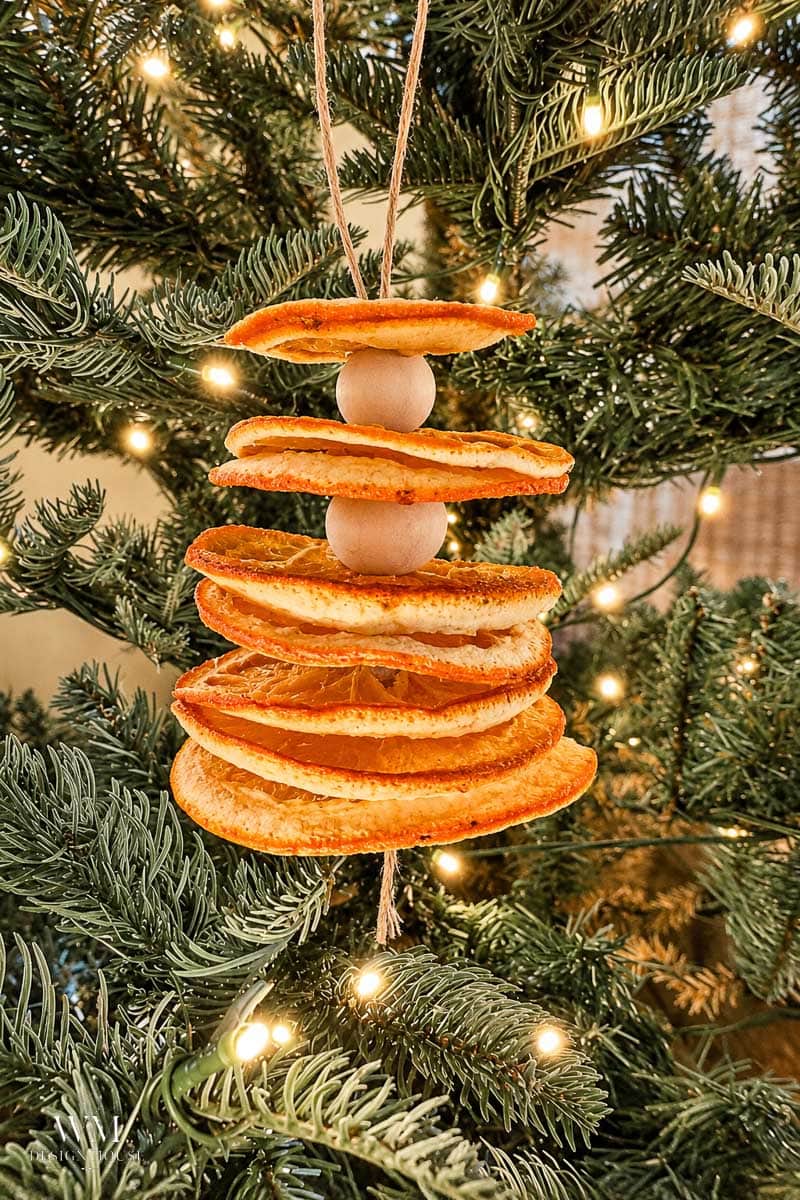

FAQ About Dried Orange Slices
Sticky or tacky slices are not finished drying. The sugars in the flesh stay gummy until the last of the moisture is gone. Put them back in for another 30 to 60 minutes, or set them on a rack on the counter for a day or two to finish air drying.
No. Leave the peel on. It holds the slice together, gives you the ring shape, and dries to a deeper orange than the flesh. The only time to remove it is if you plan to chop the dried fruit into granola or baked goods and do not want the chewier peel.
Only in a very dry climate. Slices on a rack in a warm, dry room can take a week or more, and in humid weather they will mold before they dry. Air drying works best as a finishing step after the oven or dehydrator, not as the whole process.
Not when they are stored right. The sugar melts into the fruit during drying and is not loose on the surface. Keep the slices in a sealed container and you will not have a problem. Loose slices left out in a humid room can draw ants, sugar or not, so store them sealed between uses.
It is better not to. Once they have hung on a tree or sat on a mantel for weeks, they have collected dust and handled a lot of touching. Compost them or toss them into a simmer pot instead. Keep a separate jar of slices for eating.
Dried Orange Slices (Oven, Dehydrator, or Air Fryer)
Equipment
- 1 Mandoline or serrated knife
- 1 Paper towels
- 1 Small strainer
- 1 roll of parchment paper
- 1 Rimmed baking sheet
- 1 Food dehydrator orair fryer
Materials
- 3 Large Oranges Navel, Cara Cara, or Blood Orange
- 1/2 cup Confectioners Sugar
Lemon Water Soak
- 4 Cups Water
- 4 Tbsp. Lemon Juice
- 1/4 Cup Salt

Instructions
- 1. Slice the oranges into rounds 1/8 to 1/4 inch thick.Keep them even.2. Soak the slices in 4 cups water, 4 tablespoons lemon juice, and 1/4 cup salt for 20 minutes.3. Lay the slices on paper towels, cover with more papertowels, and press gently to blot the juice.4. Place the slices on the drying tray or rack. Dust bothsides lightly with confectioners sugar using a small strainer.5. Oven: Heat to 175 degrees F. Arrange in a single layeron a parchment lined baking sheet. Bake 4 to 6 hours, flipping every hour,until stiff and dry to the touch.6. Dehydrator: Set to 135 degrees F. Arrange in a singlelayer on the trays. Dry 6 to 12 hours, flipping once, until stiff and dry to the touch.7. Air fryer: Set to the lowest temperature or thedehydrate setting, 135 to 140 degrees F. Arrange in a single layer in thebasket. Run 2 to 3 hours, flipping at 90 minutes, until stiff and dry to thetouch.8. Pull any slices that finish early so they do not brown.9. Cool completely on a rack. Store in an airtight container in a cool, dark place.
Notes
What are your favorite uses for dehydrated citrus? Tell me in the comments. I would love to hear how you use them.
If you dry a batch this week, start with the ornament ideas next. And if it is the middle of summer, make a pitcher of iced tea and drop a slice in every glass. That is my favorite way to use them from June through August.


The Latest from the Gram….
-
Pumpkin Shaped Bundt Cake with Pumpkin Spice Latte Flavor
This pumpkin shaped bundt cake is two pumpkin spice bundt cakes stacked together and covered in a sweet glaze. It looks like it came from a bakery. It is surprisingly easy to make.
-
How to Make the Easiest Outdoor Pumpkin Topiary
Make an outdoor pumpkin topiary with painted buckets, a dowel, and cinnamon. Easy step by step DIY for a stack of pumpkins on the porch.
-
No Sew Fabric Pumpkins: Easy Neutral Pumpkin Decor Made with Fabric Squares
373 shares Facebook Pinterest Save Threads Learn how to make no sew fabric pumpkins with a foam pumpkin, a pile of fabric squares, and a knitting needle. There is no thread, no stitching, and no sewing machine. You simply poke each square into the pumpkin until it is covered in soft, ruffled fabric. This is…

I was just thinking about drying some oranges. Thank you for the sugar tip and for showing the results of each drying method. Love this post! pinned
Thank you for sharing this Wendy. I tried drying oranges for the first time last year, and I see the reason why they did not turn out. I cut them by hand, and after 5 hours in the oven, they still were not dry, so I moved them over to dehydrate on our Ninja, and guess what? I overdried them! LOL. They turned dark, and I was embarrassed to use them for ornaments, so I hung on to them, and used them in a different way. Trial and error here, as always… I am loving the orange peel star ornaments, that is an adorable idea! They will add so much color to the tree. Hope you have a fantastic week!
Thank you so much Cara, it took me some time to master the perfect way to dry oranges. However, I love the air fryer drying method this year, so simple and easy. I hope you have a fabulous Thanksgiving with your family.
I look forward to making these every year and I have never thought to make them in the air fryer! I also have the same air fryer and isn’t it beautiful?
Yes, and it is so easy!
I love how you used different types of oranges in your wreath. Very nice.
Thank you Kristie. I enjoy drying lots of different varieties of oranges.
Beautiful and informative post, Wendy! I’ve never done this and think this is the year. Thanks for all the great tips!
Thank you, Lora. I can’t wait to see what you create with your oranges. Have a great weekend.
There are so many good tips in this post. I particularly liked the info on a dehydrator vs an oven. Also, the slicers you linked are helpful. The blood oranges look amazing when dried!
Thank you Anna. I am glad you found my tips helpful. I really find the dehydrator to be very helpful.
This is one of my favorite things to do each year. I love simple Christmas decorating. Thanks for your tips Wendy!
Thank you Cindy. I can’t wait to see what you do with them this year.
Wendy, happy Sunday!
I made these a few years ago and still have them in my Christmas box! I love the natural element and color! Not to mention they are so easy to make.
Thank you so much, Renae. I hope you are enjoying your weekend.
I have been drying oranges for several days and can’t wait to use them.
Oh, I cannot wait to see what you do with hem this year Rachel.
One of my favorite things to do at the holidays. I love how you used different colored oranges…great idea!!
Thank you, Jennifer. the pink grapefruit drys so lovely too. I cannot wait to see what you do with yours this year.