
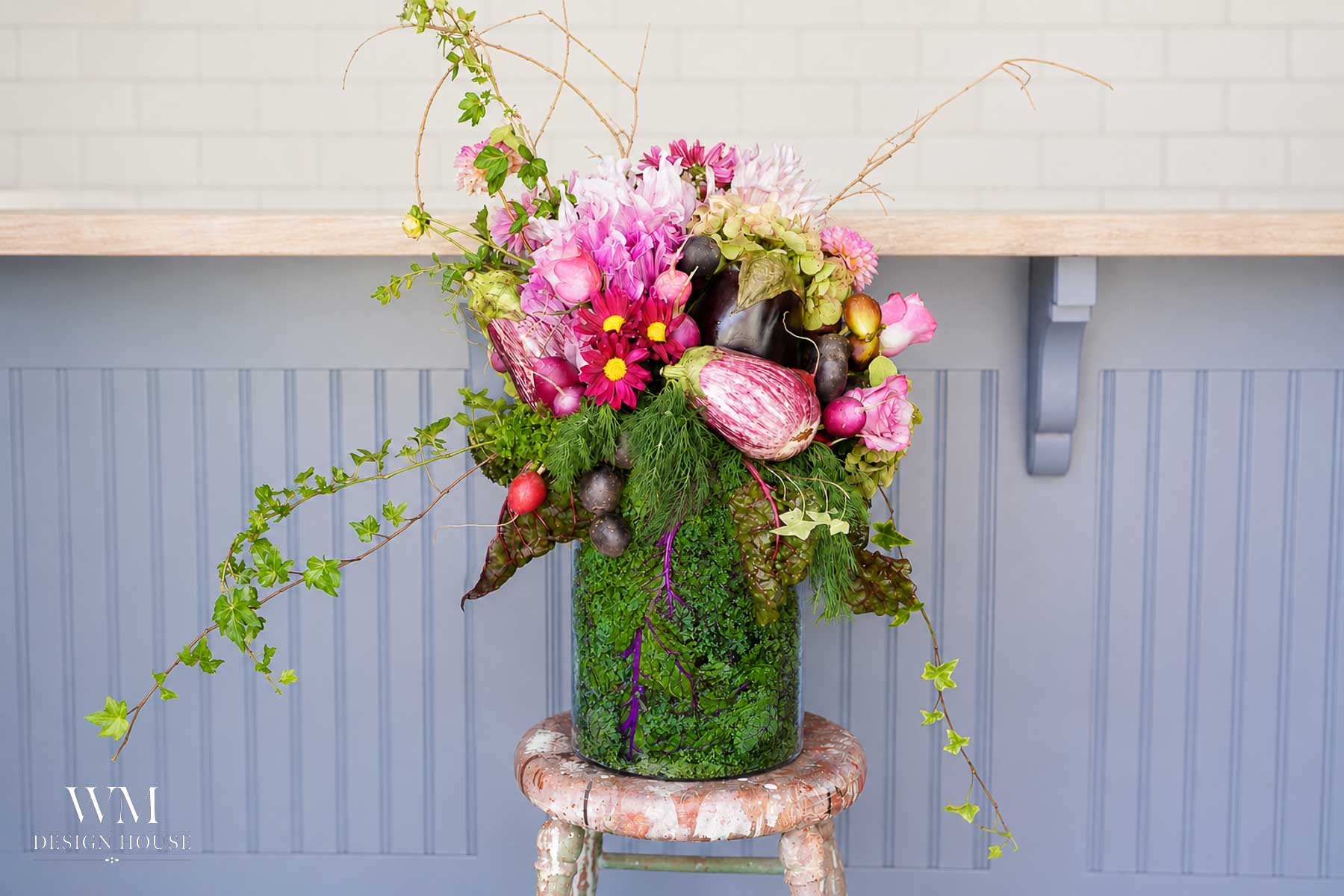
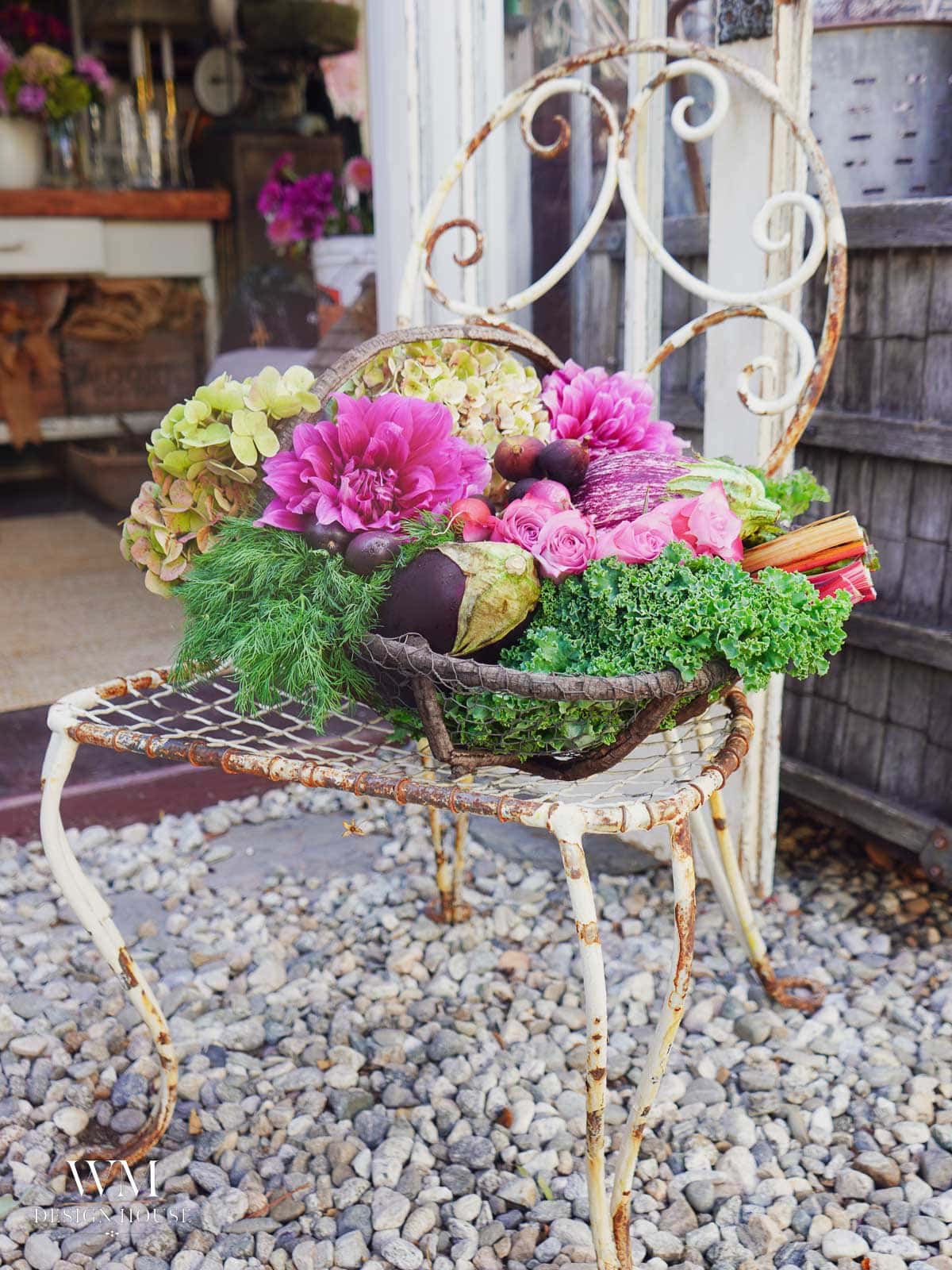
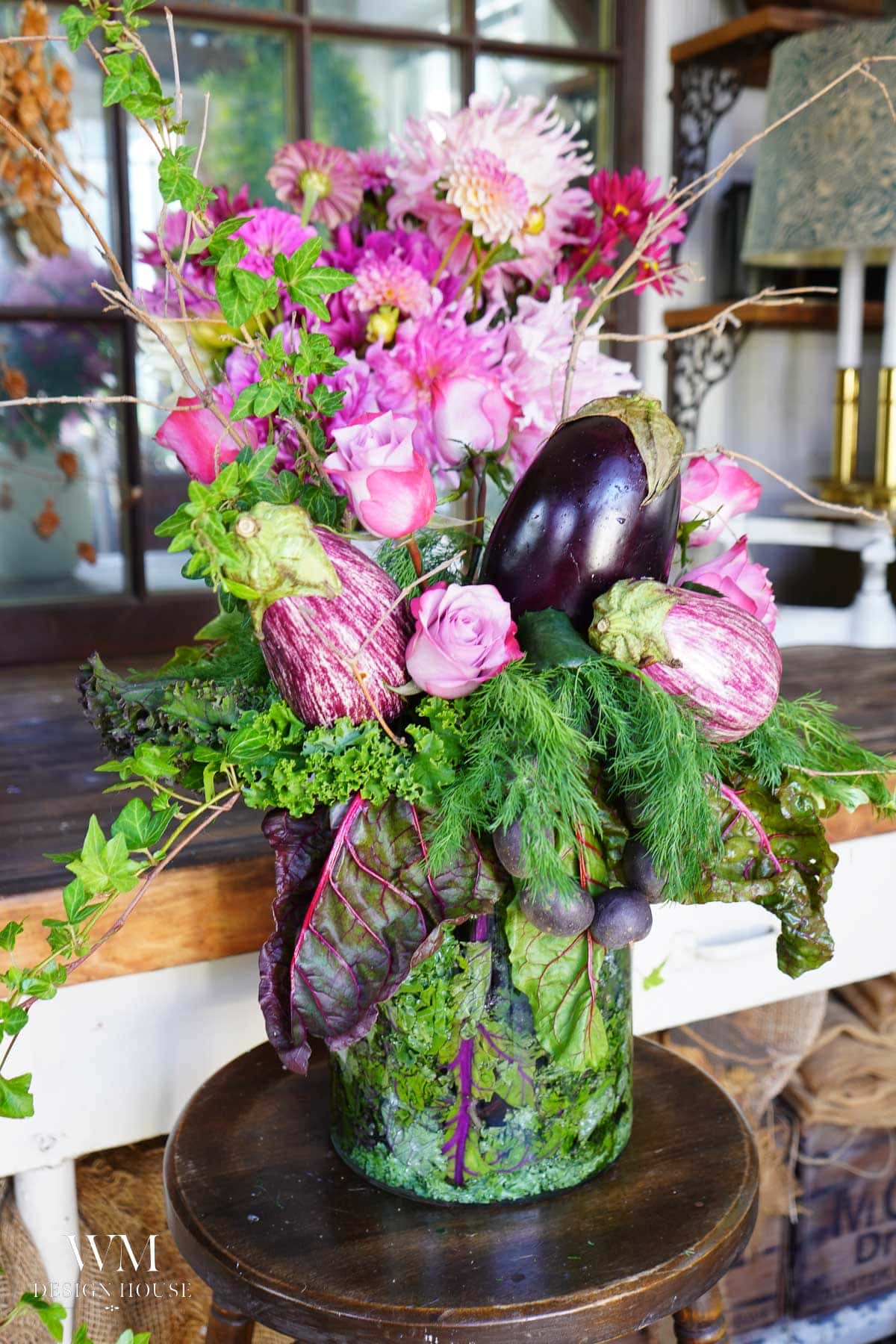
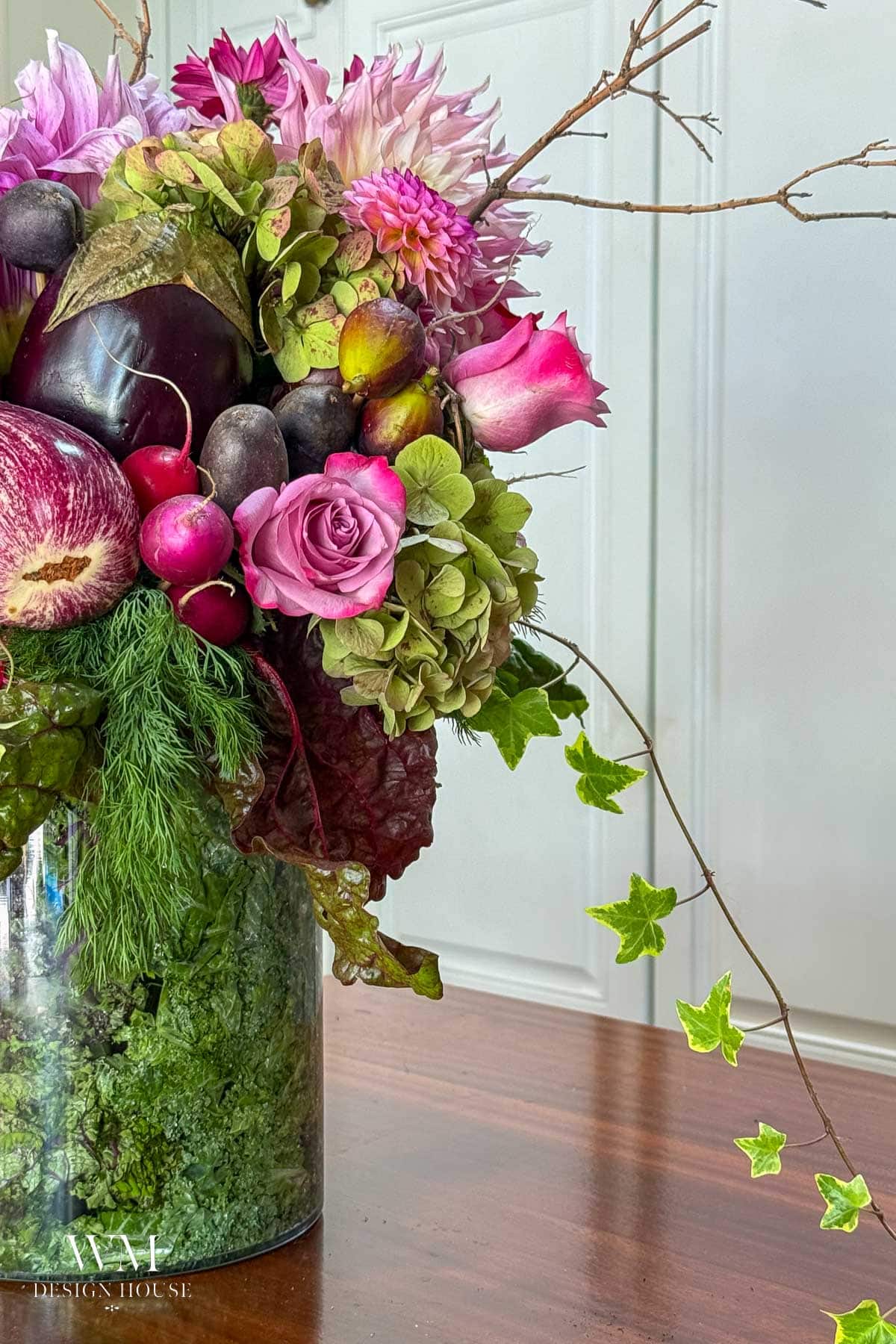
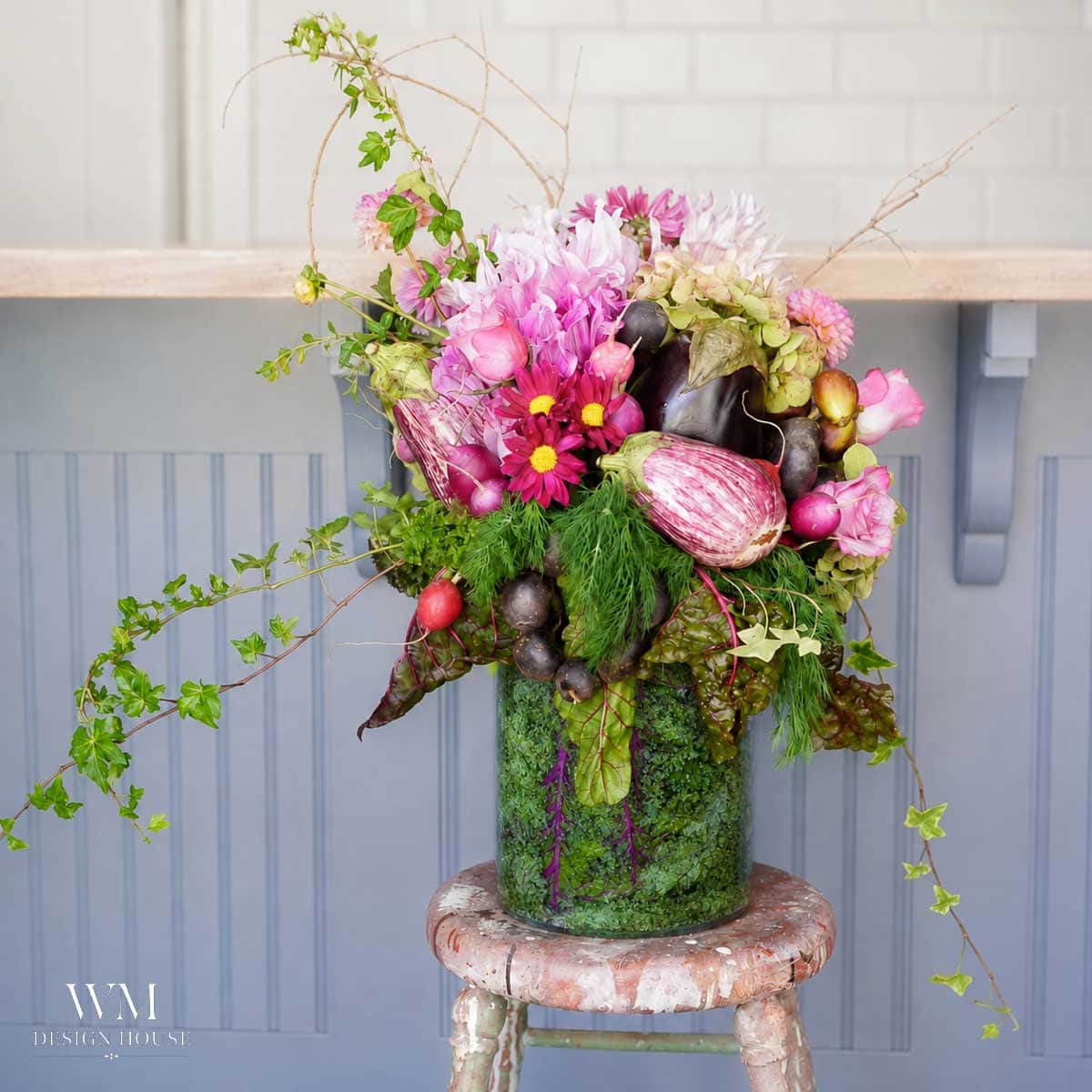
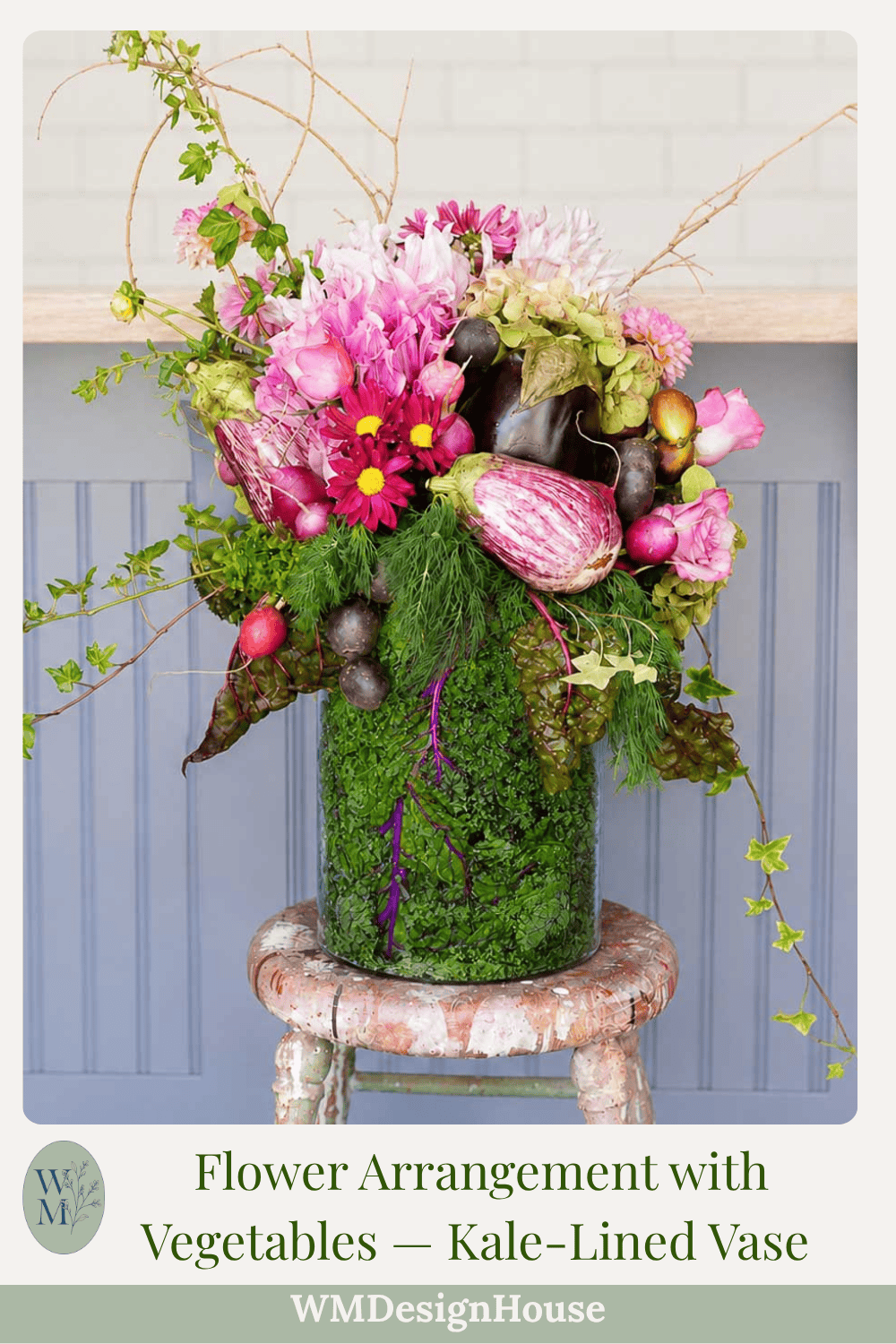
If you have never made a flower arrangement with vegetables, I am here to tell you it might just become your new favorite way to set a table. This month, the Handcrafted Society challenged us to create something with a “veggie aesthetic,” and after falling down a delightful Pinterest rabbit hole, I landed on an arrangement that carries us right from late summer into fall — a clear vase packed with ruffled kale, filled with moody dahlias and roses, glossy eggplants, and the prettiest Easter egg radishes you have ever seen.
On my blog WM Design House, I may sometimes use affiliate links, which means a small commission is earned if you purchase via the link. The price will be the same whether you use the affiliate link or go directly to the vendor’s website using a non-affiliate link. Read my full disclosure policy here.
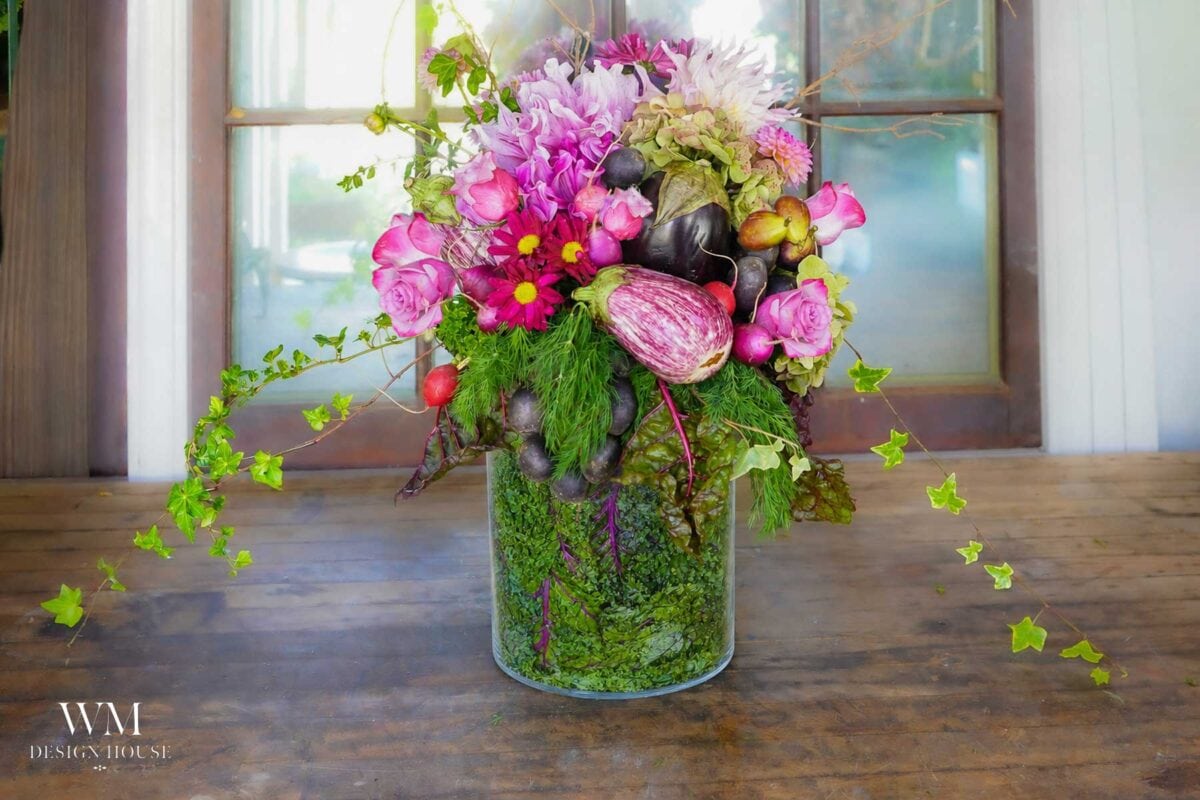
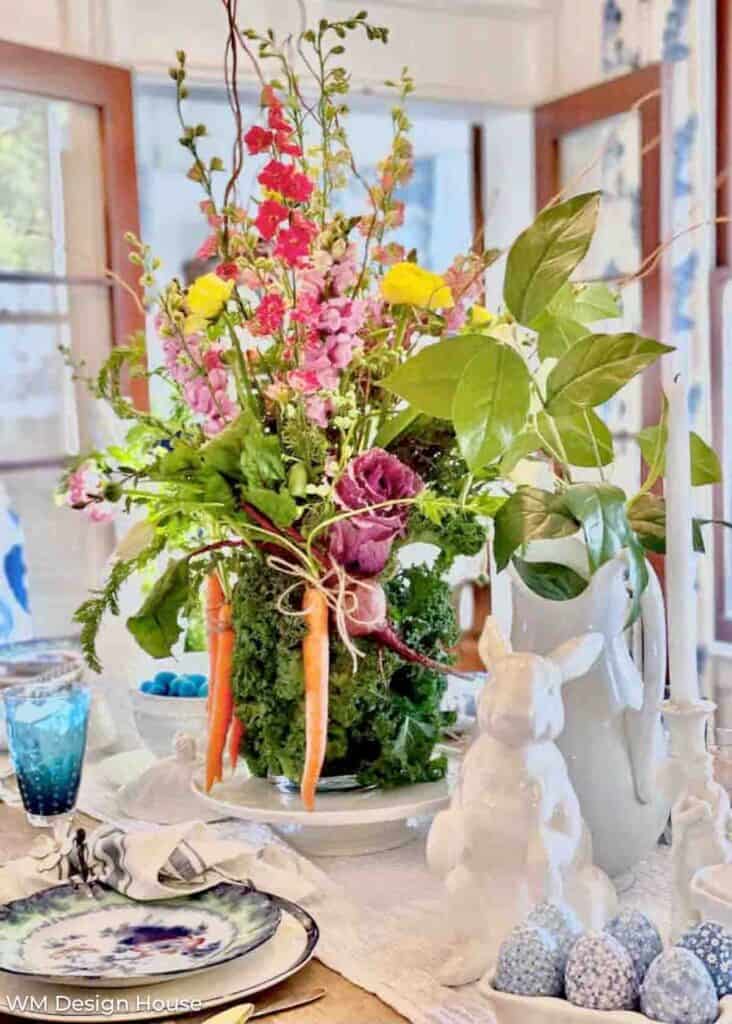
You have probably seen the famous carrot floral arrangements floating around Pinterest — a glass vase full of submerged carrots with a cheerful bouquet on top. I adored that idea, but I wanted something with a little more drama for August. So instead of bright orange, I went rich and jewel-toned: a vase lush with green and purple kale, and an arrangement above in plums, magentas, and creamy whites, with ivy trailing everywhere like it grew there on its own. It is part vegetable bouquet, part fall preview, and part homegrown from my own garden.
The Inspiration for This Vegetable Bouquet
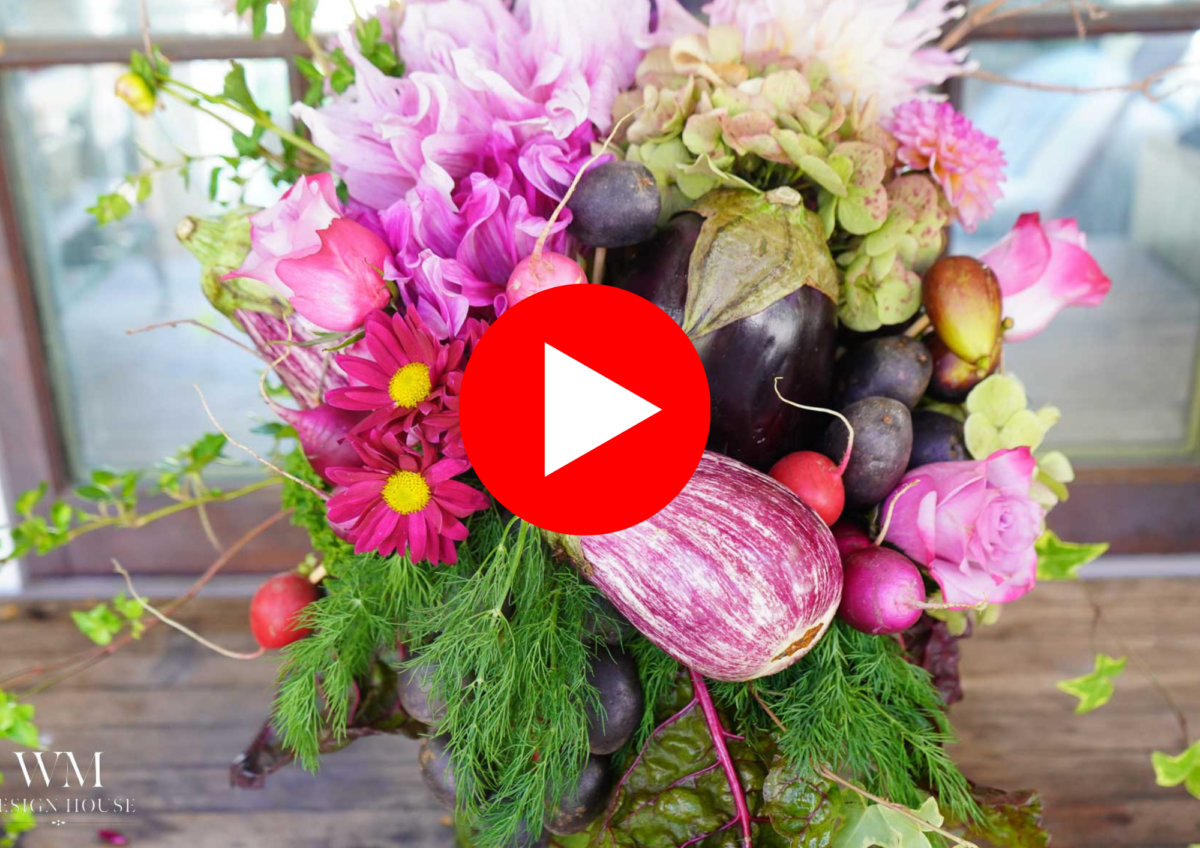
Vegetable arrangements have quietly become one of my favorite ways to decorate for every season. I made a green version with cabbage and Brussels sprouts for St. Patrick’s Day, and a cabbage-vase centerpiece that might still be my most-asked-about arrangement. So when this month’s theme landed, I knew exactly where I was headed. This time, we are taking the idea into fall. Click the image below to watch the whole arrangement come together in under a minute, then keep scrolling for the full step-by-step tutorial.
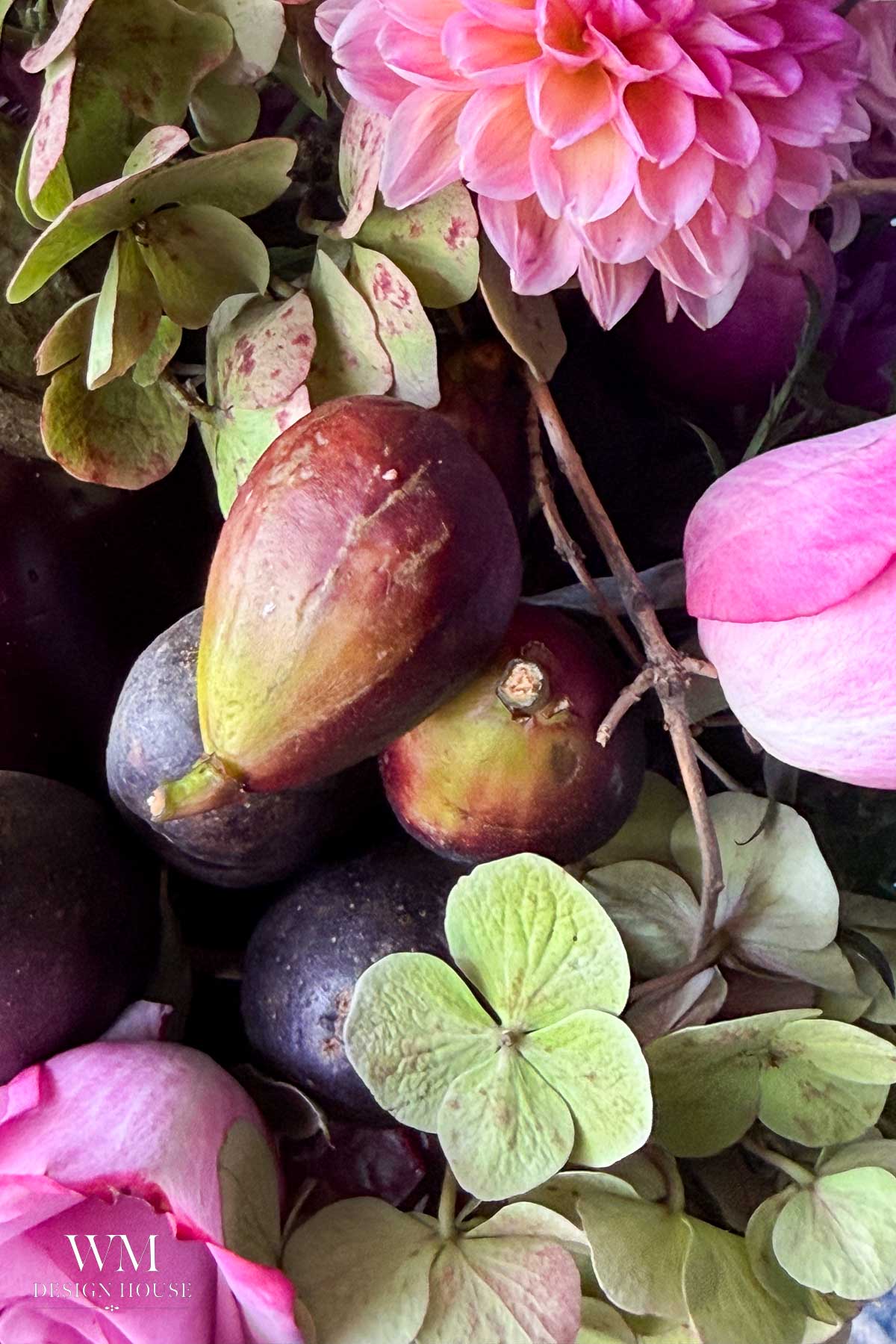
My inspiration image paired dusty purple blooms with whole vegetables, dark kale, and figs. It captured that moment when late summer produce starts leaning toward autumn, and I still had deep purple dahlias blooming in the garden. I wanted to recreate that mood with my own twist on the vase itself: filling the glass with leafy greens ties the vessel to the arrangement, so the whole vegetable design feels intentional from tabletop to top bloom.
The Handcrafted Society
This arrangement is part of the Handcrafted Society’s August challenge, and our theme this month is the veggie aesthetic. If that sounds like a niche idea, think again: vegetables are having a full-blown moment. Pinterest named “Cabbage Crush” one of its official 2026 trends (and yes, I made my cabbage flower arrangement before cabbage was cool), the Royal Horticultural Society declared vegetables the new table décor, and searches for vegetable bouquets, edible centerpieces, and savory florals keep climbing. Even Pinterest’s color of the moment, a moody Plum Noir, looks like it was pulled straight from an eggplant. So this month, my talented friends and I are each putting our own spin on vegetable style — visit them all below to see where the veggie aesthetic took them!

What You’ll Need for Your Vegetable Centerpiece
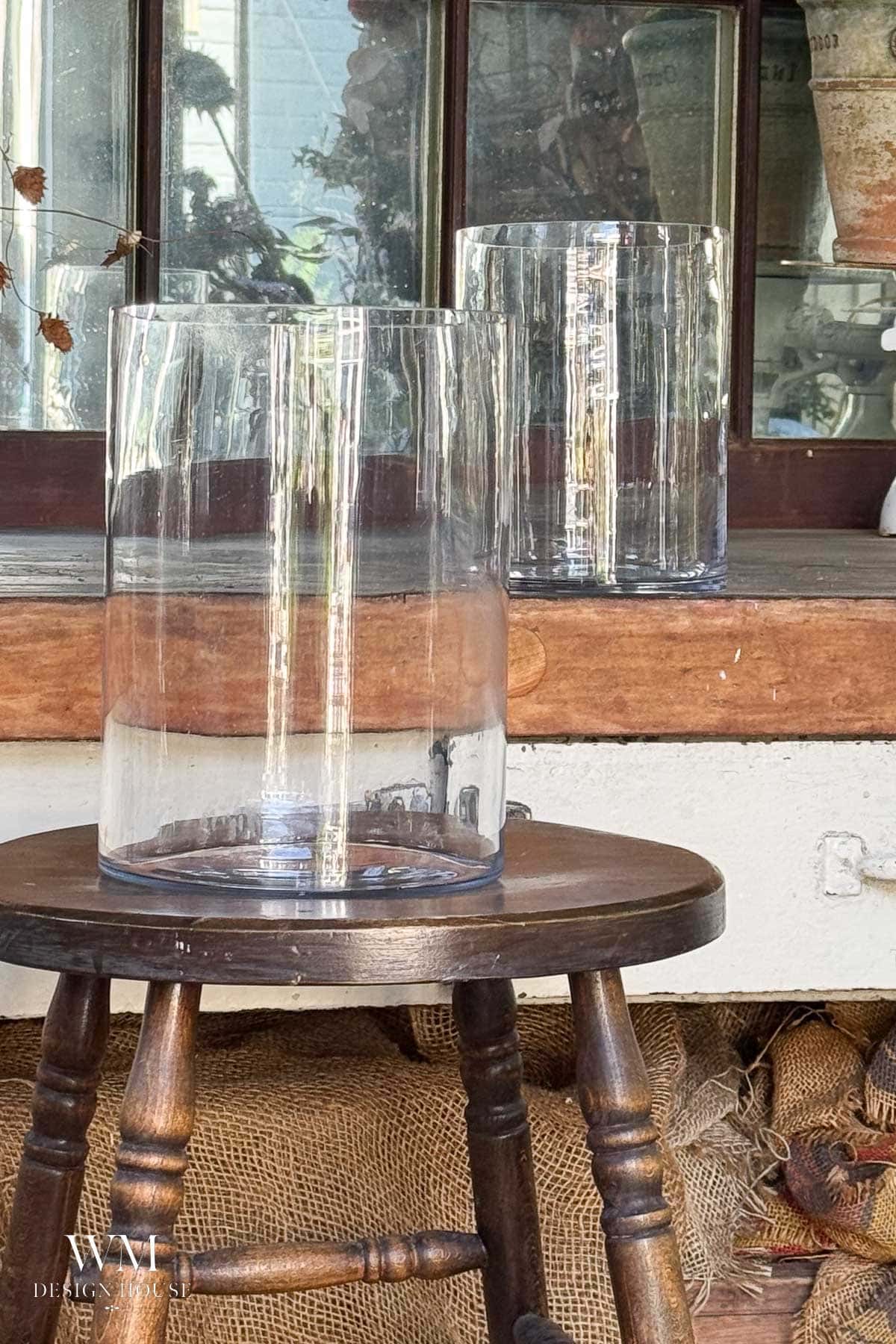
- Clear cylinder vase — a straight-sided glass cylinder, 8–10 inches tall
- Second, smaller cylinder — a slightly smaller cylinder or jar that fits inside with a 1–2 inch gap (the vase-in-vase trick)
- Kale — a generous bunch of green and purple, for lining the vase and for texture up top
- Rainbow chard — a few leaves, tucked in for streaks of pink veining
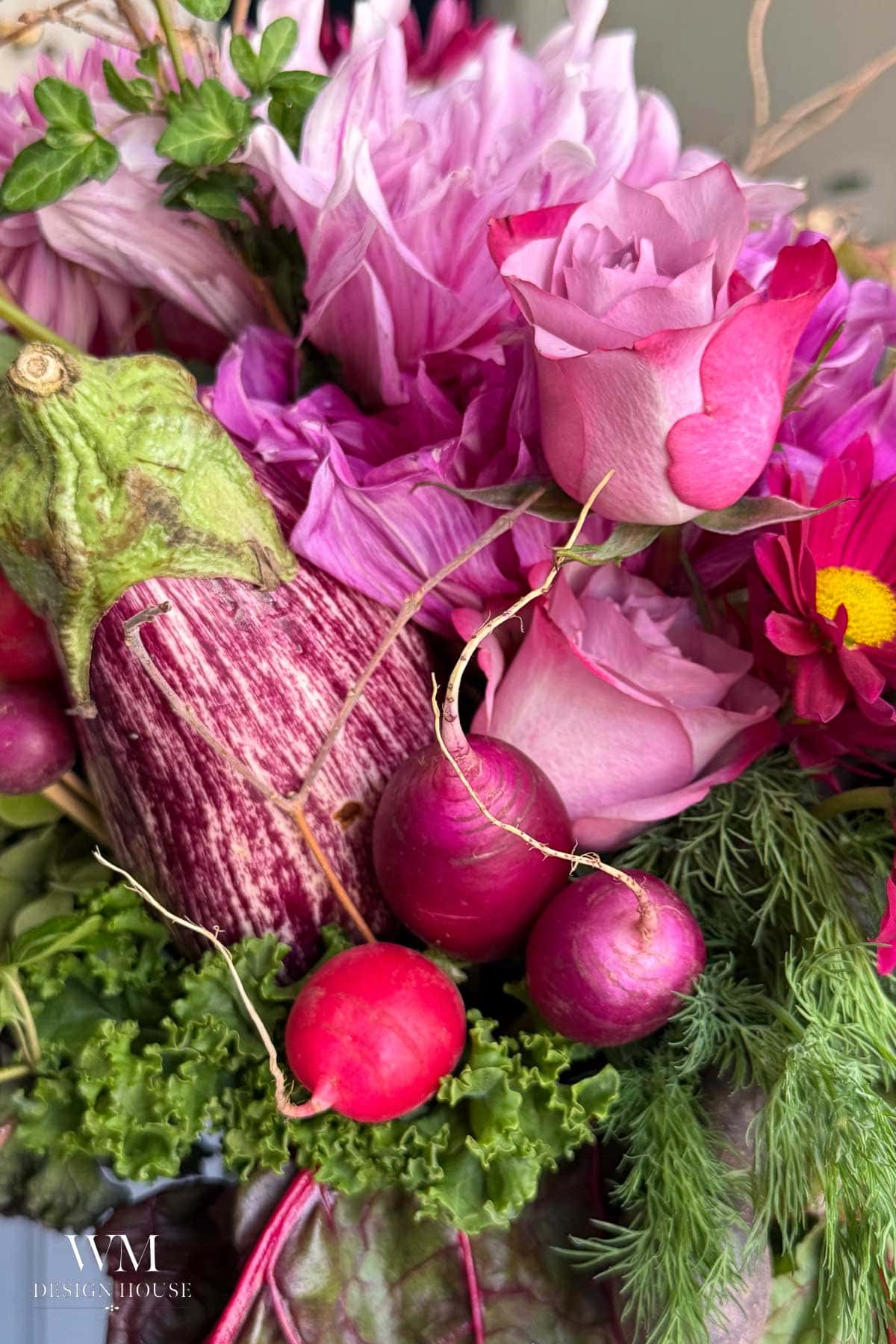
- Eggplants — 1 large dark purple, plus 2 small striped graffiti eggplant if you can find one (they steal the show)
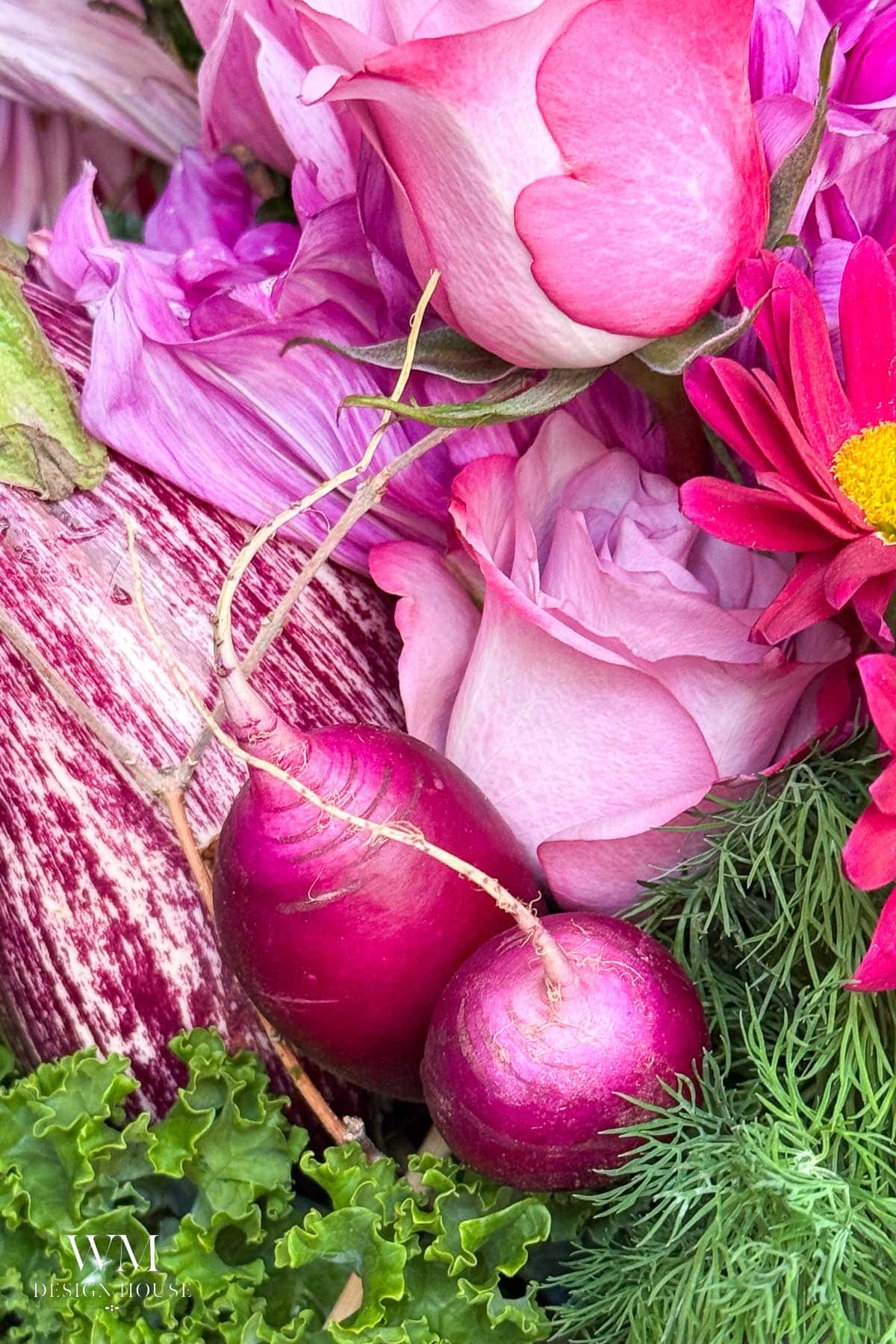
- Easter egg radishes — 1 bunch, those pink, purple, and white beauties
- Small purple potatoes — a handful, skewered in little stacks
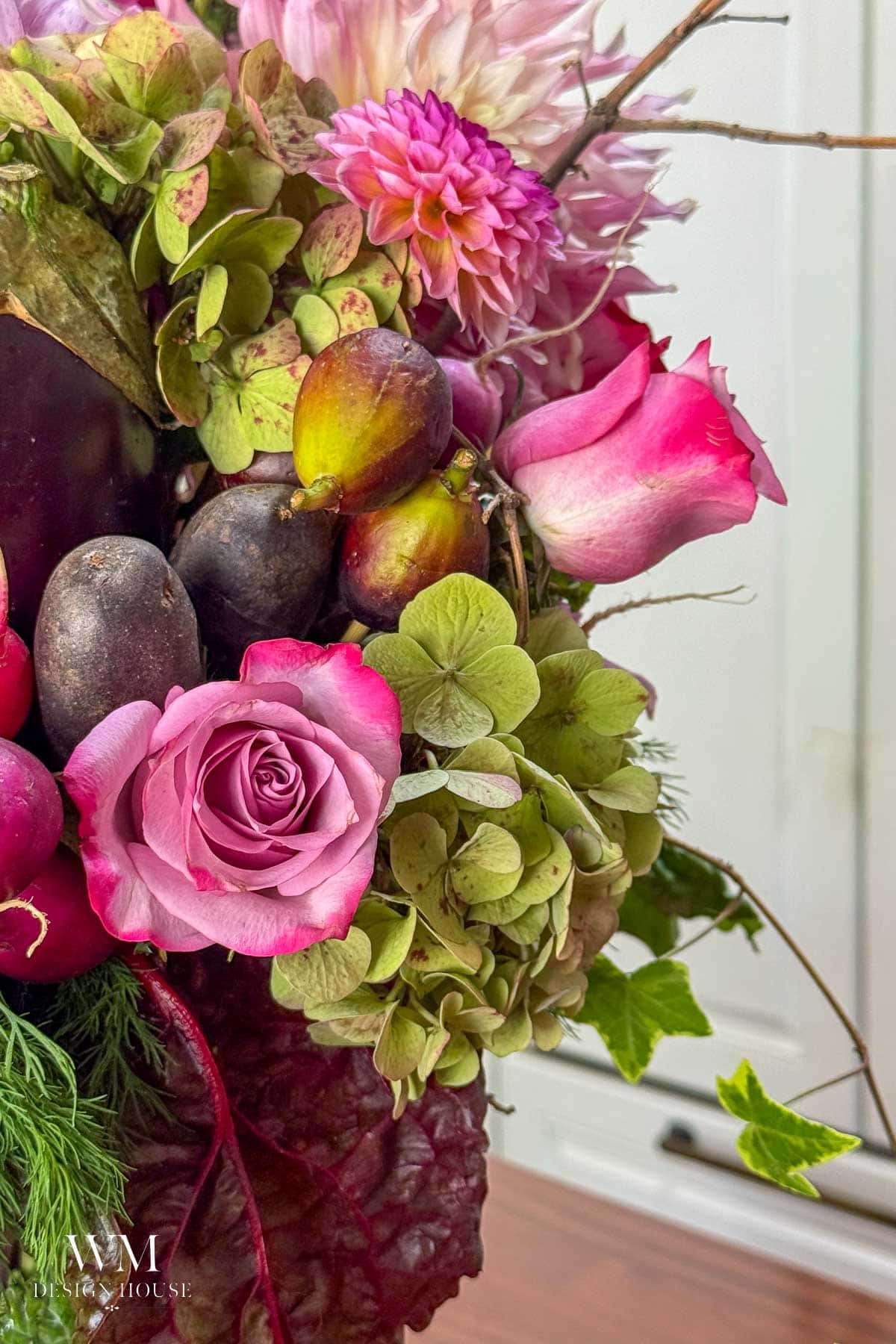
- Fresh figs — 4–6 for tucking in
- Fresh dill — a generous handful for feathery softness
- Dahlias — in rich plums and magentas
- Roses — a handful of stems in deep pink or lavender
- Hydrangea — a few heads for a full, rounded foundation
- Daisies — a few stems for fresh sparkle
- Zinnias — a few stems from the garden
- Ivy — a few long trails, plus a couple of bare twigs for height and movement
- Wooden skewers
- Floral snips
- Soft vegetable brush
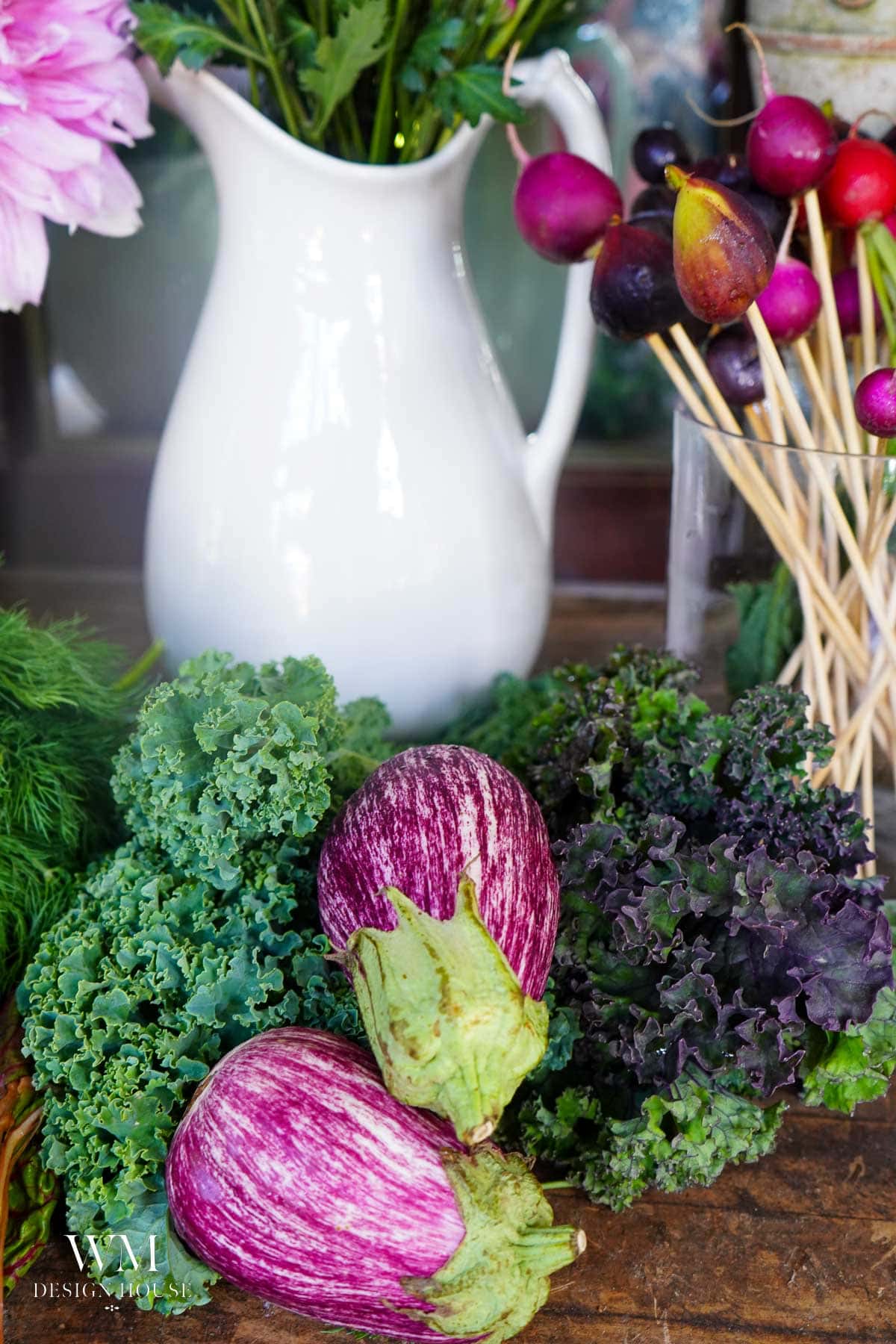
Choosing Your Vegetables and Flowers
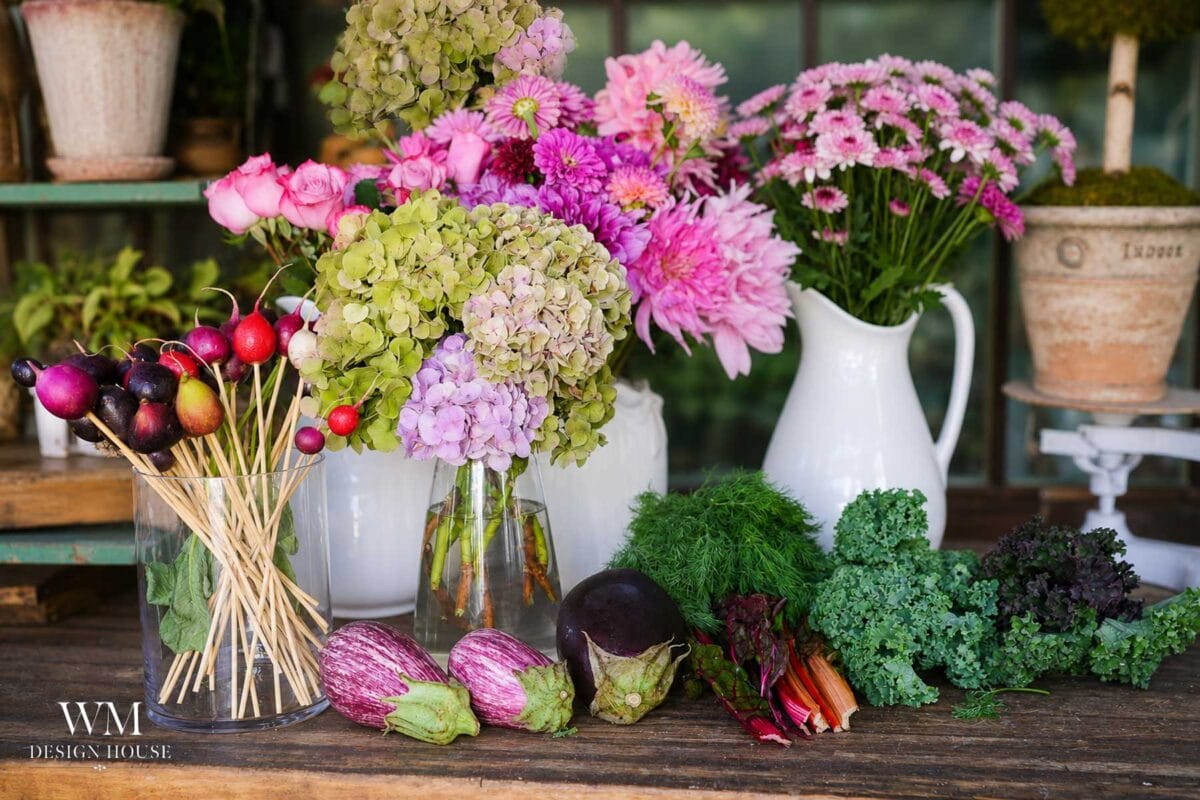
Everything on this list is sitting at the market in August, which is exactly why I love this project right now. The eggplants are the focal “blooms” of the arrangement, so choose them the way you would choose dahlias: glossy, firm, and blemish-free. If your market has the little striped graffiti eggplants, grab them; that purple-and-white marbling is worth the hunt. I purchased mine at Whole Foods. For the vase, a full, fresh bunch of purple kale matters most, because those sturdy, ruffled leaves are what make the lining work. And do not skip the dill. Those feathery fronds soften everything and photograph like tiny fireworks.
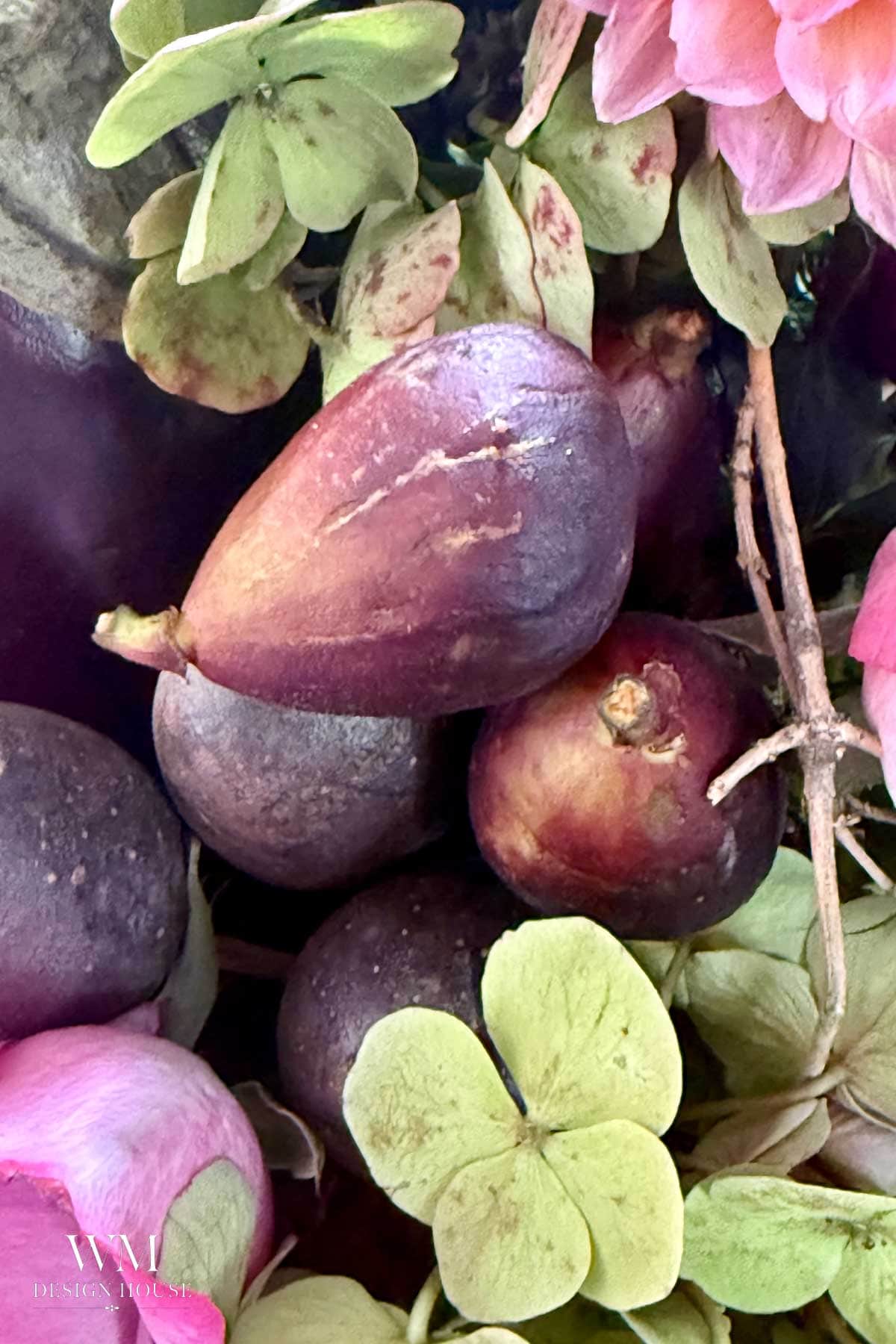
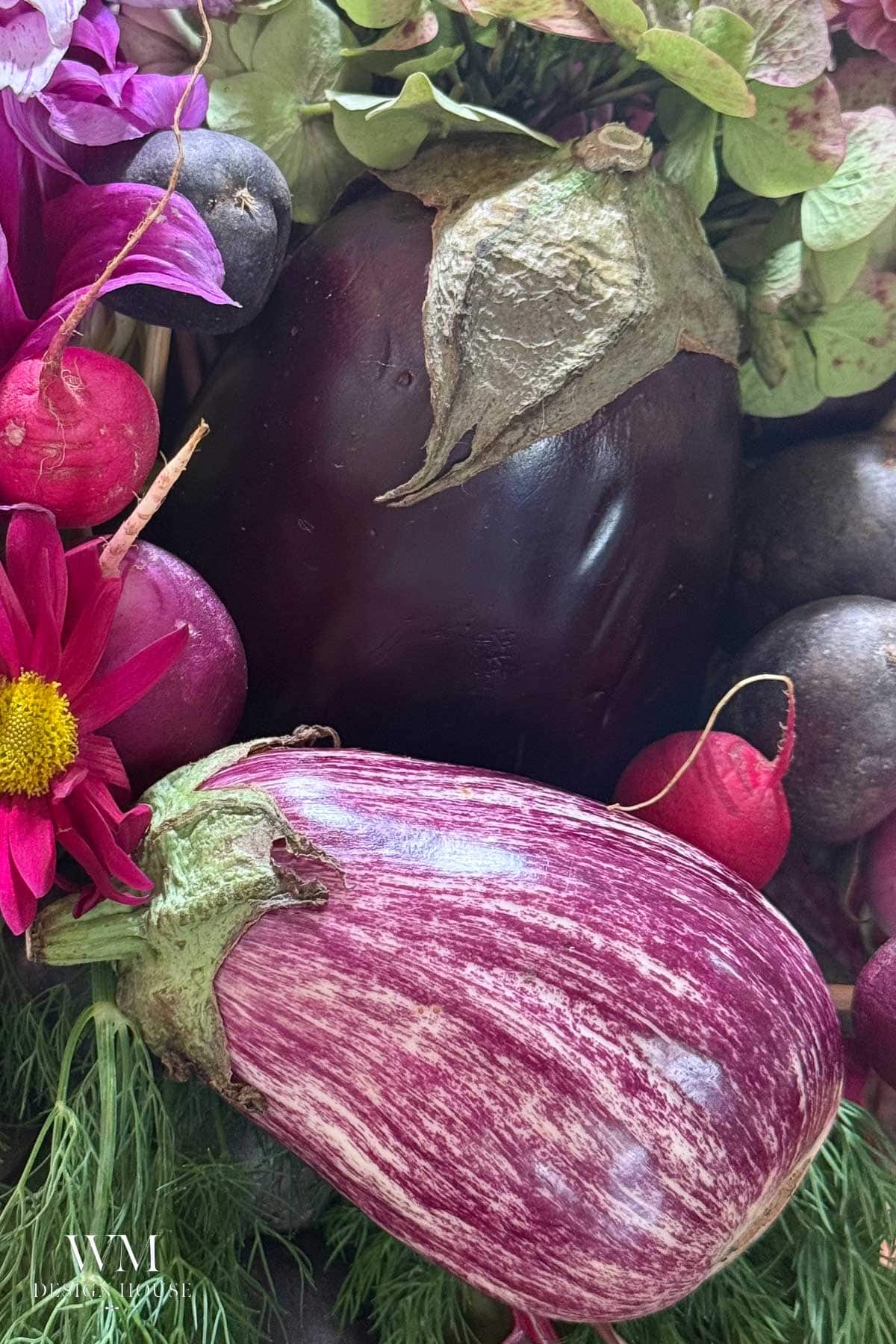
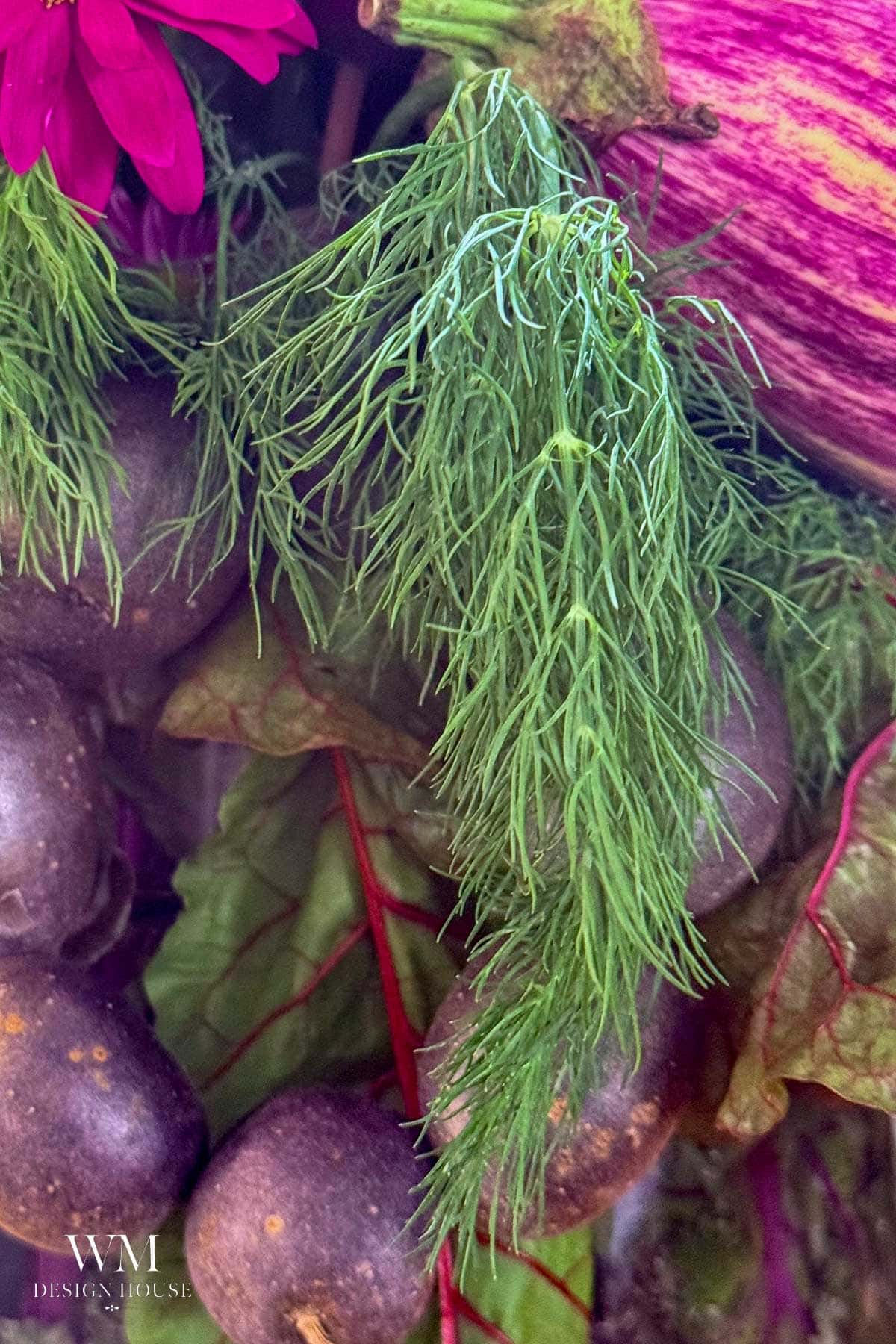
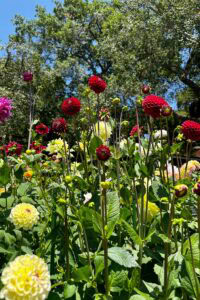
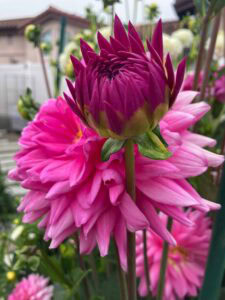
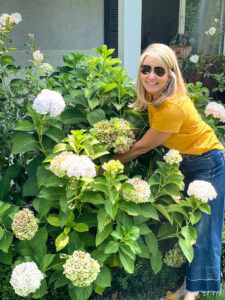
And here is my favorite part: the dahlias and hydrangeas in this arrangement came straight from my own garden. There is something extra special about pairing homegrown blooms with market vegetables. The whole arrangement feels like it grew up together. If you want blooms like these right outside your back door, I have a full guide to growing dinnerplate dahlias and everything you need to know about growing hydrangeas.
How to Line the Vase with Kale for a Vegetable Centerpiece
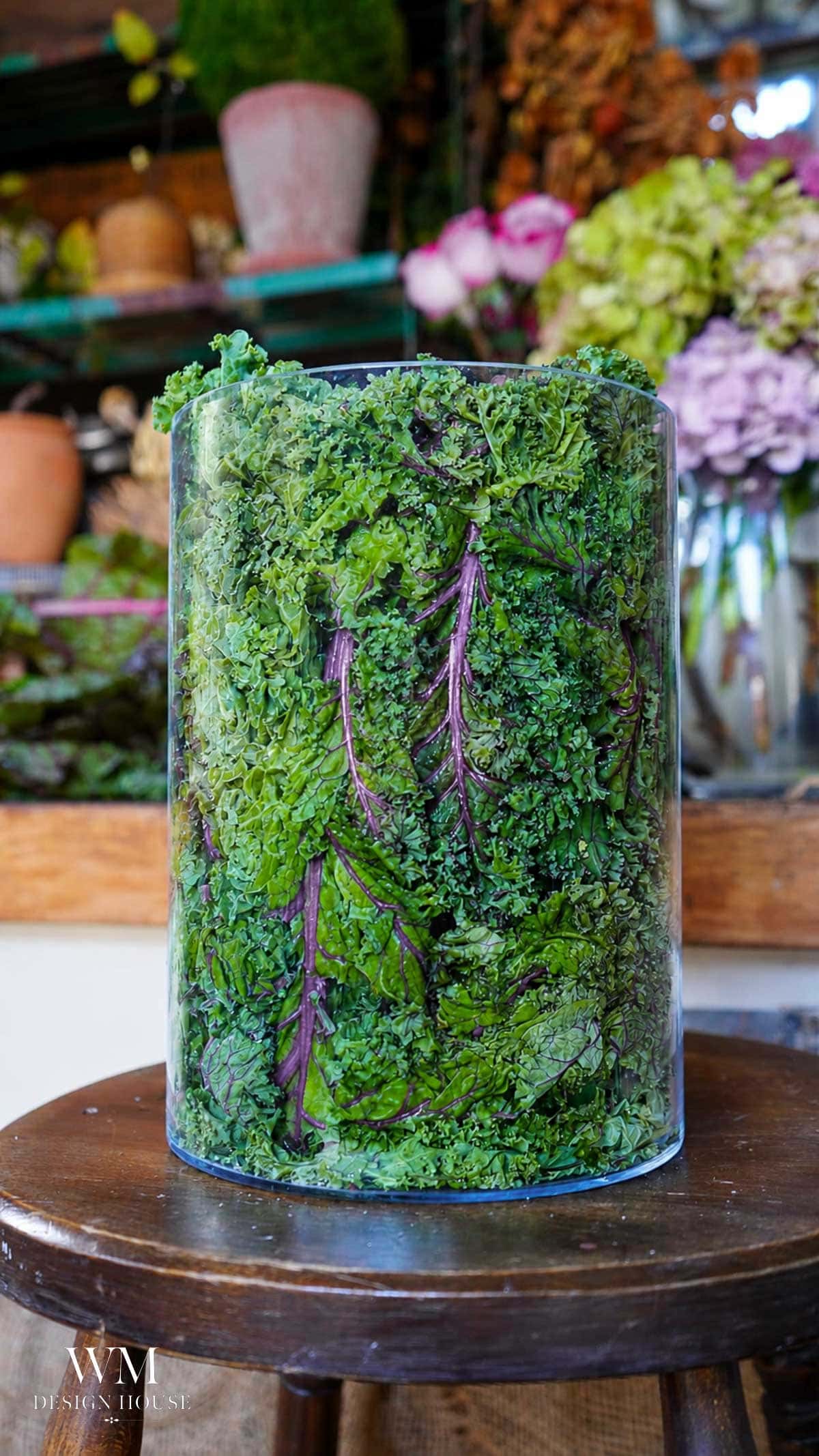
A little honesty first: my original plan was to line the vase with rainbow chard. It is beautiful in theory, but the stems were too soft to stand on their own, and I was fighting with them Kale turned out to be the hero: those sturdy, ruffled leaves pack beautifully, hold their shape for days, and fill the glass with the most gorgeous texture.
- Wash and dry the kale.
- Place the smaller cylinder inside the larger one to create your working gap.
- Tuck kale leaves into the gap between the two walls, ruffled edges pressed against the outer glass, packing them snugly. A tight fit is what keeps everything looking lush instead of droopy.
- Fill the outer gap with cool water and the inner cylinder with clean water for your flower stems.
The vase-in-vase method is the secret to keeping everything fresh for days. The greens stay hydrated in their own chamber, and when the flower water needs changing, you can refresh it without disturbing your lining.
Building the Flower Arrangement with Vegetables
If you are newer to flower arranging, my step-by-step guide to making gorgeous floral arrangements covers all the basics, and the same principles apply here, with vegetables standing in for some of the blooms.
Step 1: Skewer the Vegetables First
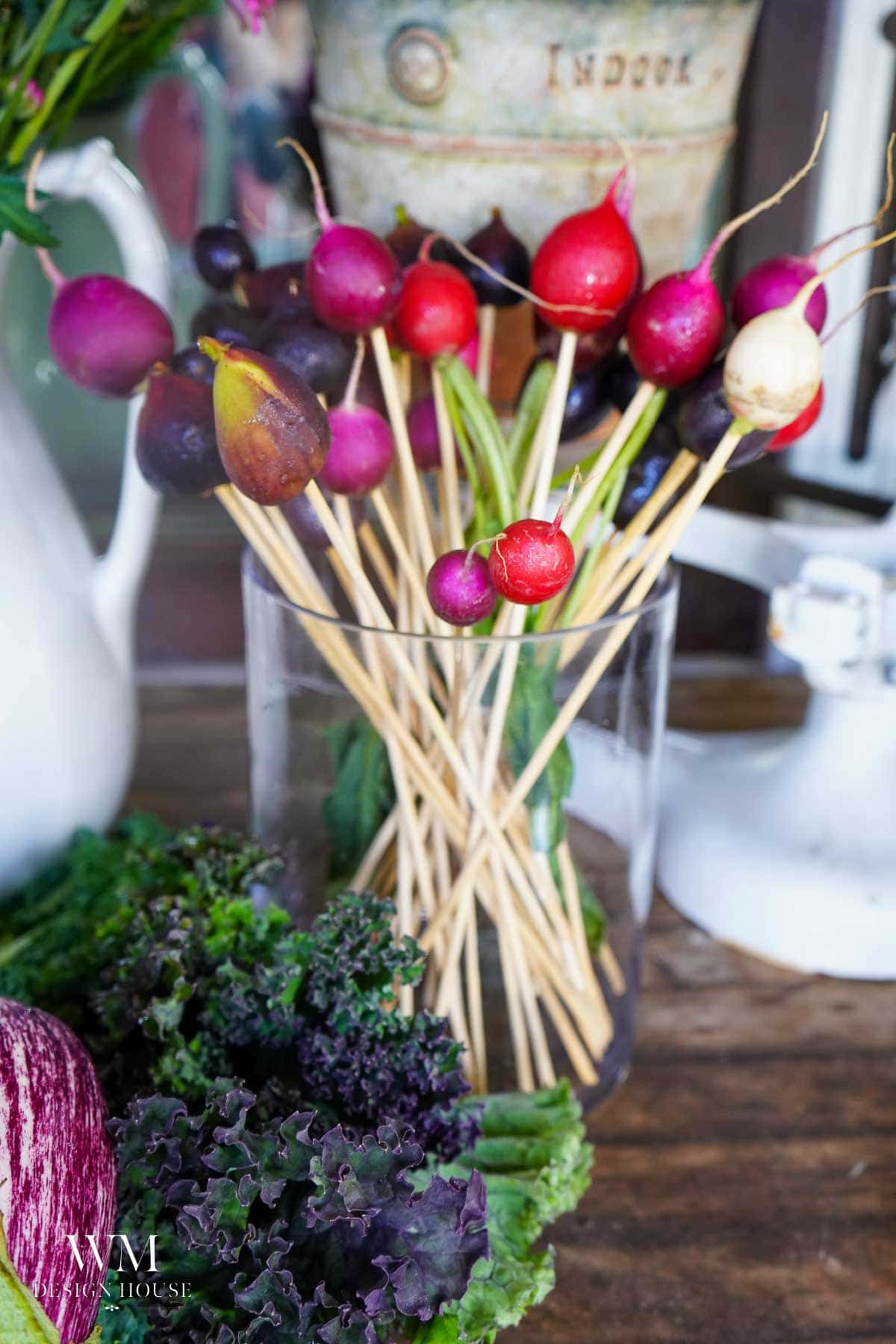
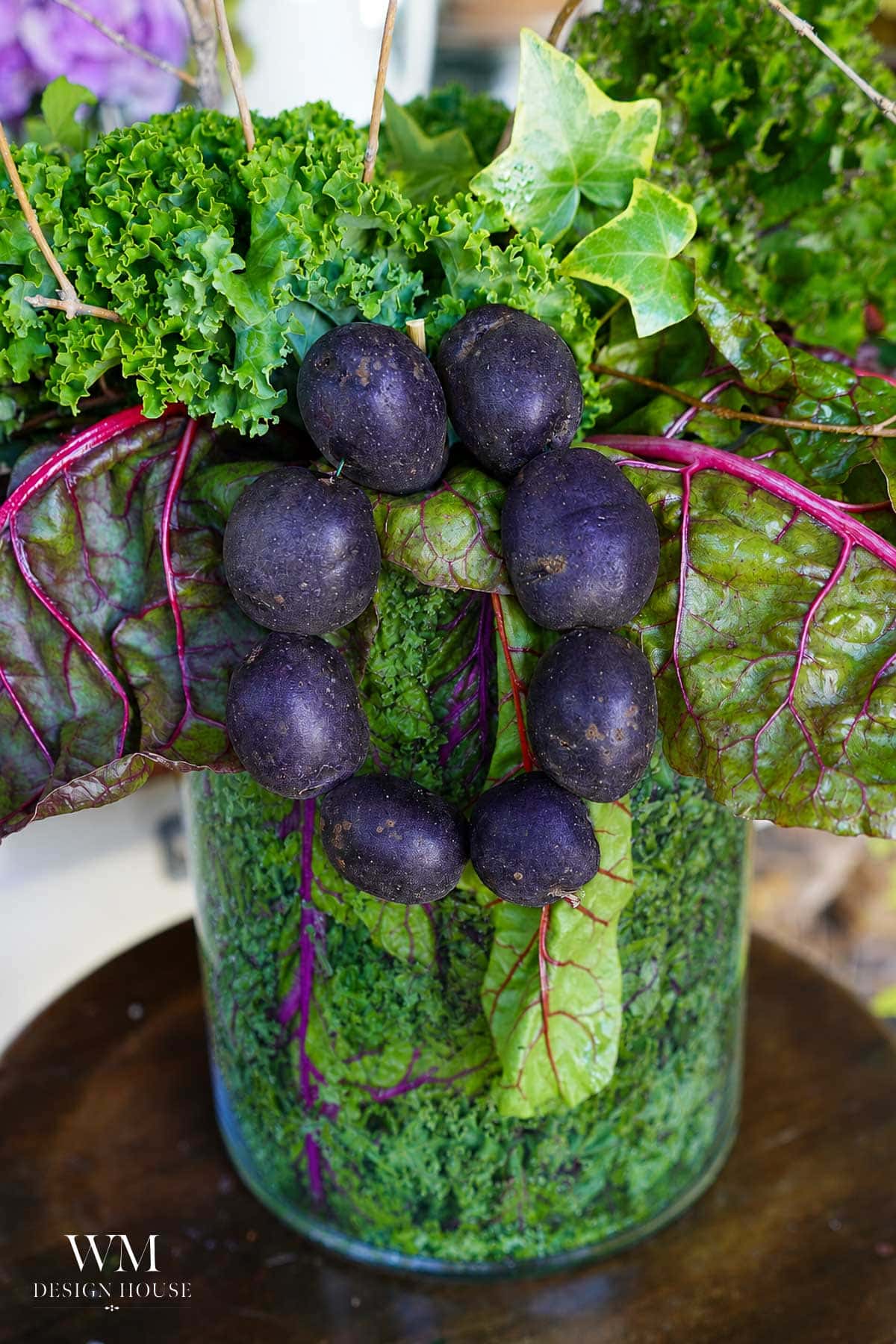
Push two wooden skewers into each eggplant, crossing them at an angle. Eggplants are heavier than they look, and the double skewer keeps them from drooping. Thread the small potatoes, radishes, and figs onto skewers as well. For an added visual, I wired a few purple potatoes together to hang from the front of the vase. I simply poked a metal skewer through each potato to create a pilot hole, then ran wire through the holes to form this sweet ring of potatoes.
Step 2: Set the Foundation
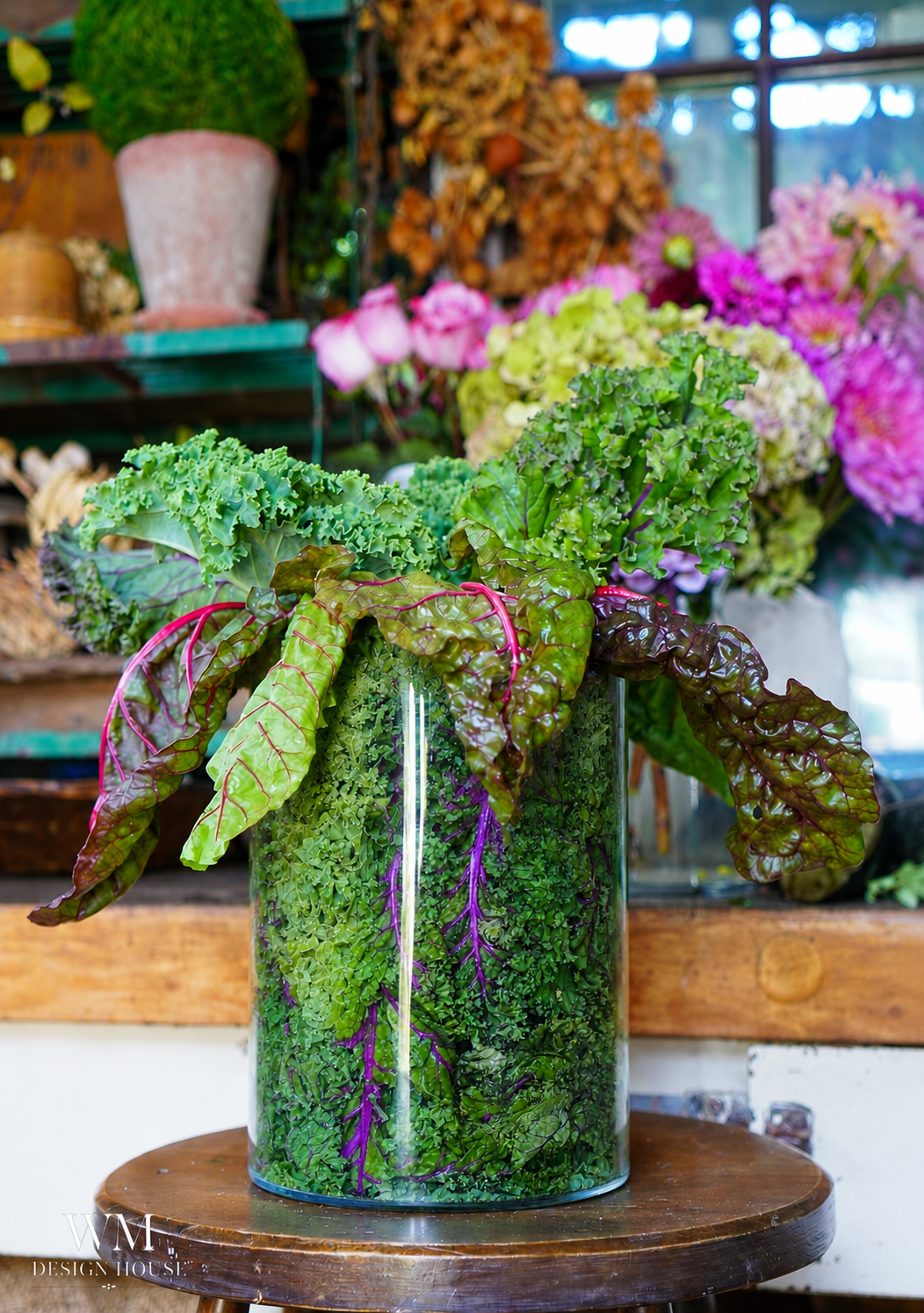
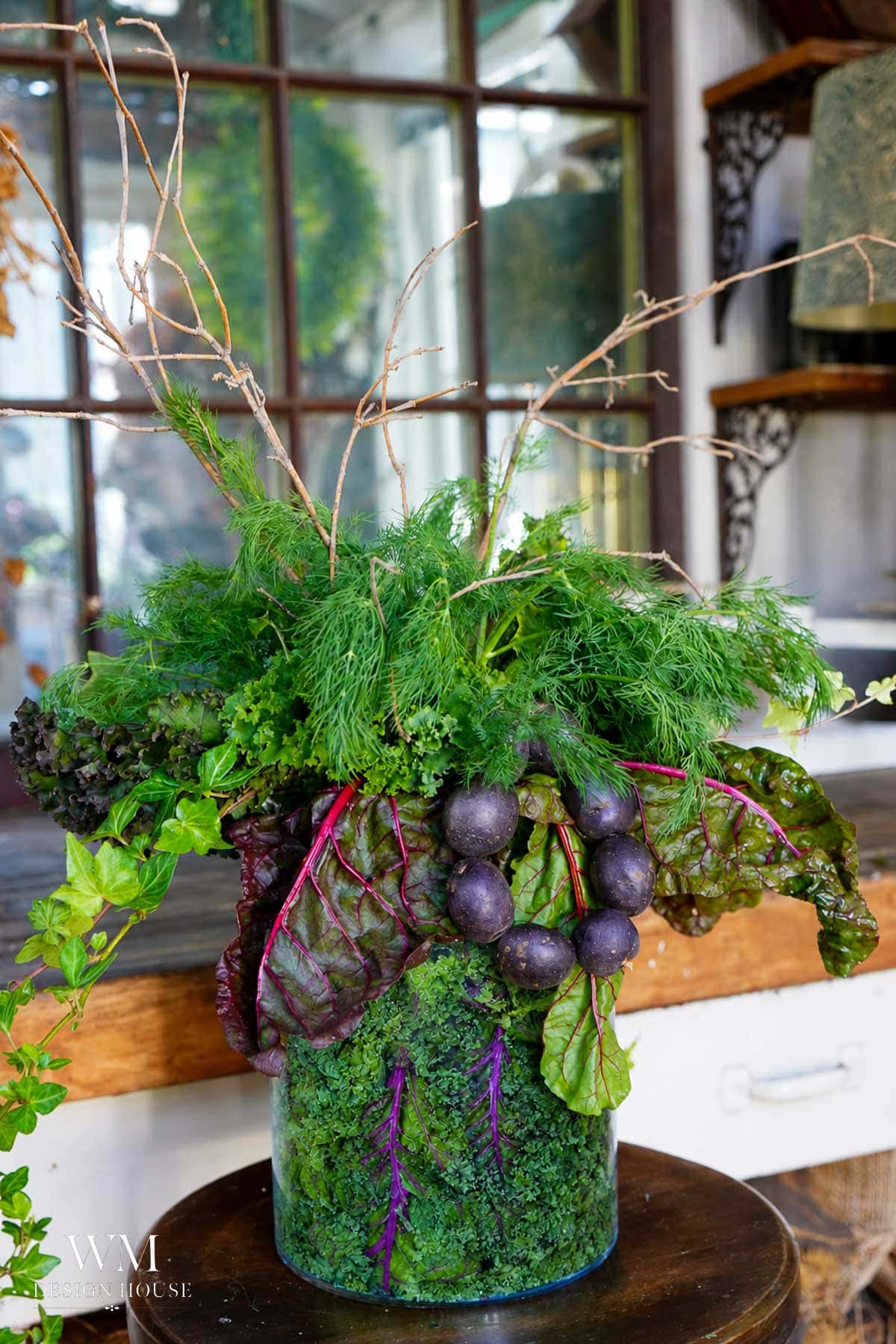
Start with your main greens to build the base. I began with fresh kale and rainbow chard leaves, letting a few of the chard leaves drape over the rim so those pretty pink veins show. Then I layered in fresh dill, long strands of ivy, and a few bare twigs for height and movement. Once the greens were in place, I attached my ring of potatoes to the front of the vase.
Step 3: Add the Stars of the Show
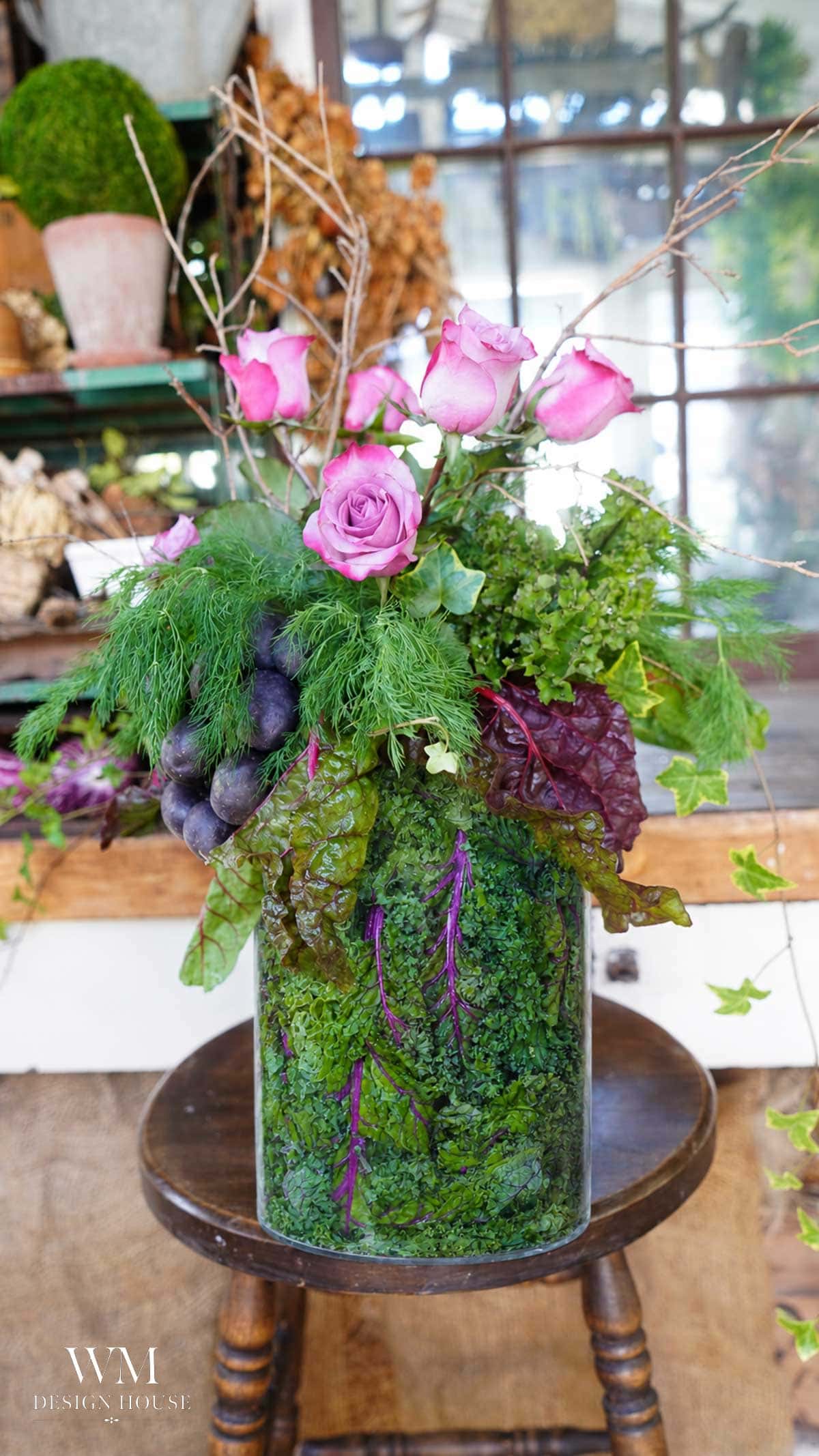
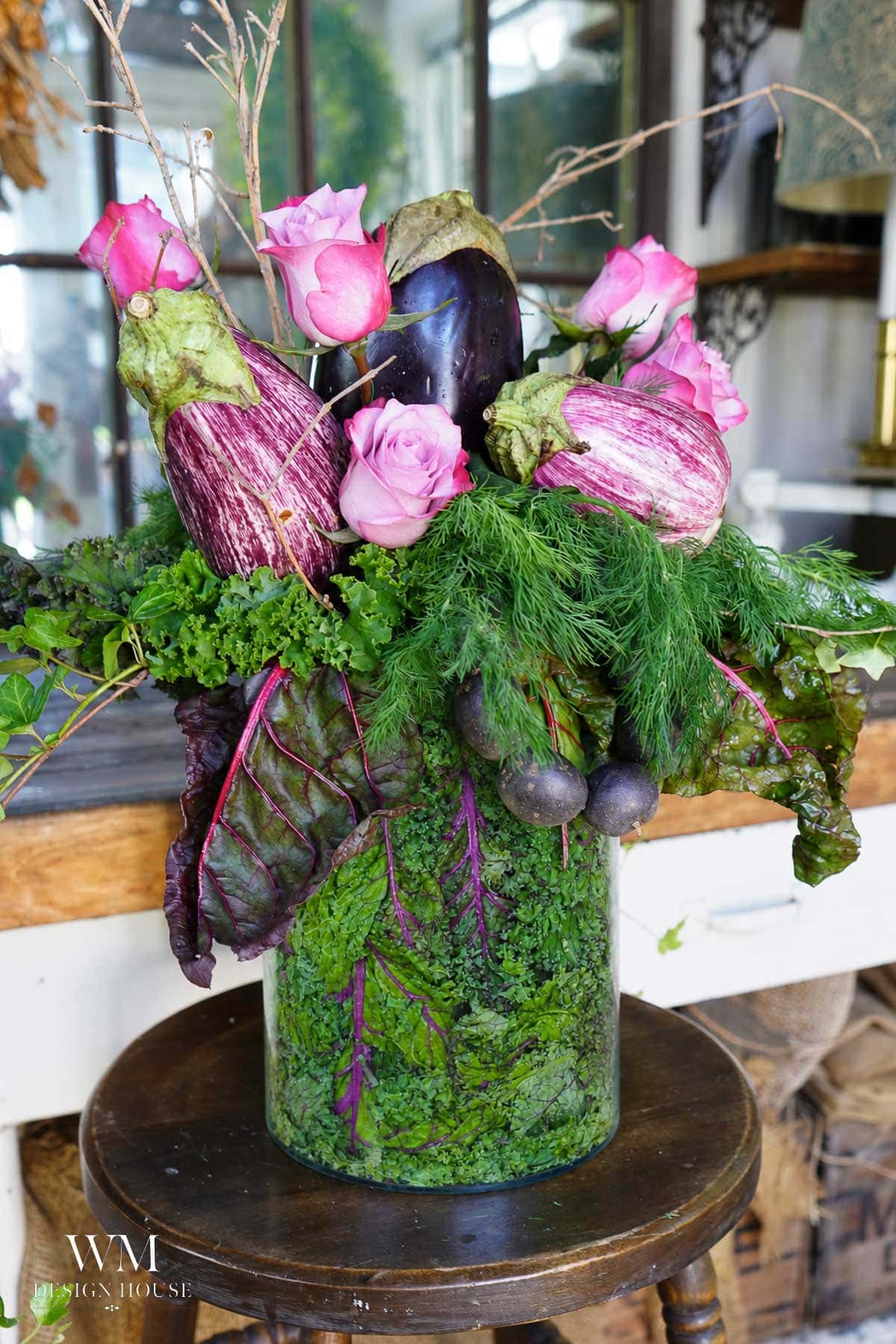
I wanted the roses and eggplants to be the focal point of the arrangement, so those went in next: about six roses and my three eggplants. Place the eggplants in natural positions, tilting each one a slightly different direction. You want the arrangement to have movement and carry your eye around the whole design, not stop it in one place.
Step 4: Add the Dahlias and Other Flowers
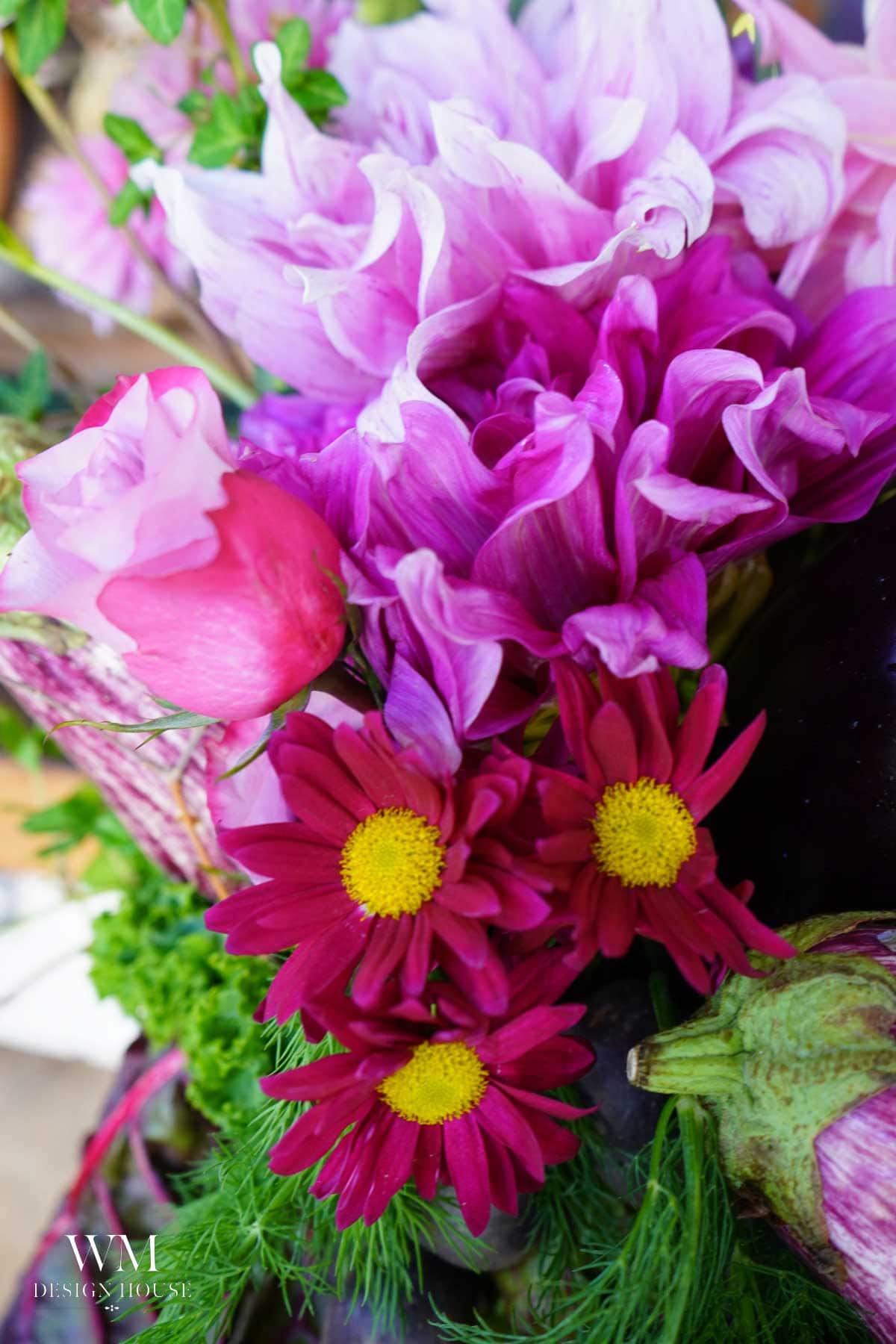
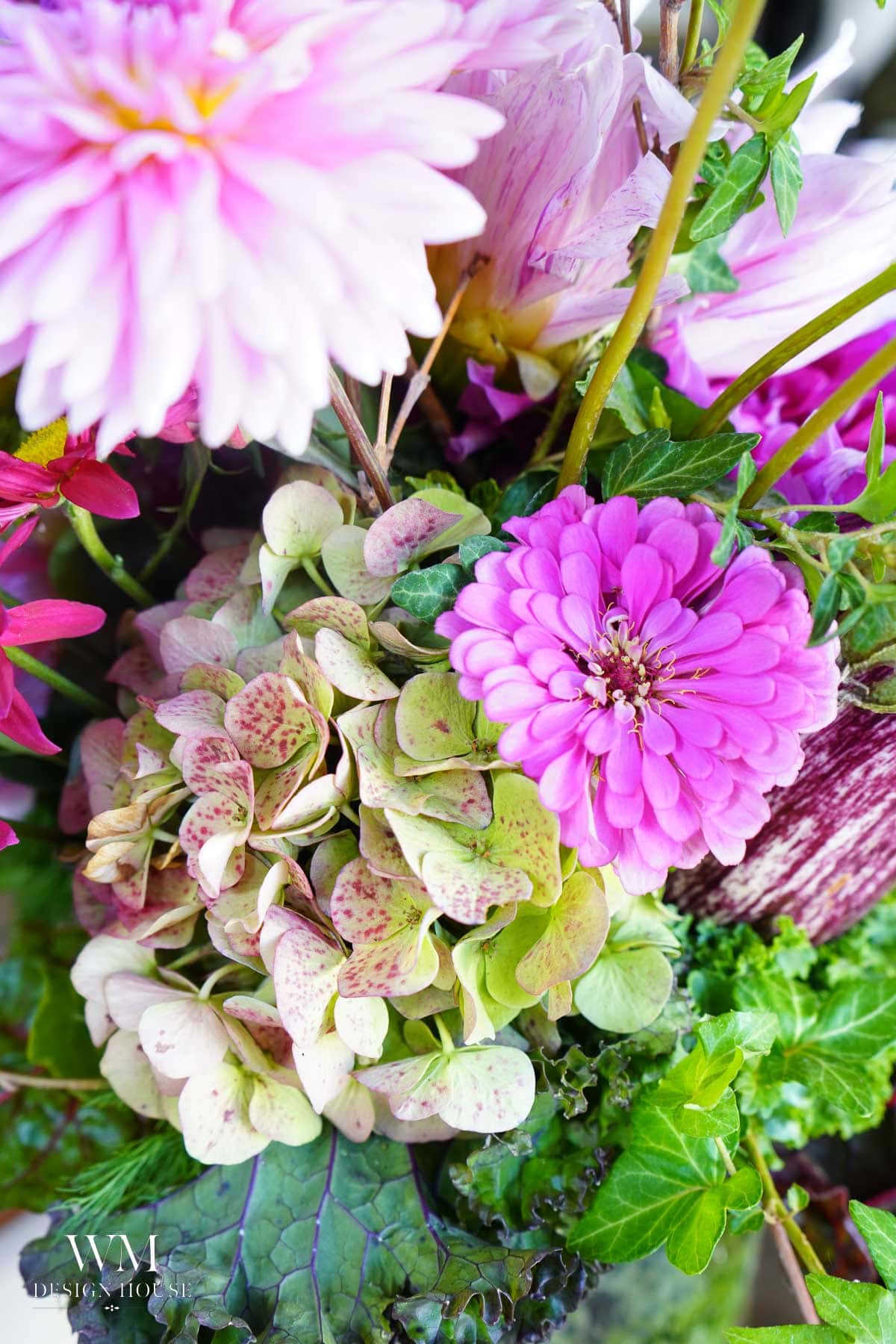
Cluster the dahlias in a loose triangle around the eggplants, then tuck a few hydrangeas into the empty spaces to fill things out. I also snipped a few zinnias from the garden because they matched my color palette so perfectly. That is the beauty of an arrangement like this: it has room for whatever is blooming right outside your door.
Step 5: Add the Final Touches
Lastly, I added deep magenta daisies in groups of three or more. Odd-numbered clusters always look more natural than single stems dotted around. Then came the fun part: gently poking in the skewered radishes, figs, and potatoes wherever the arrangement needed a little jewel of color. These small touches are what make people lean in for a closer look, and then do a double take when they realize the “berries” are actually radishes.
The Finished Flower Arrangement with Vegetables
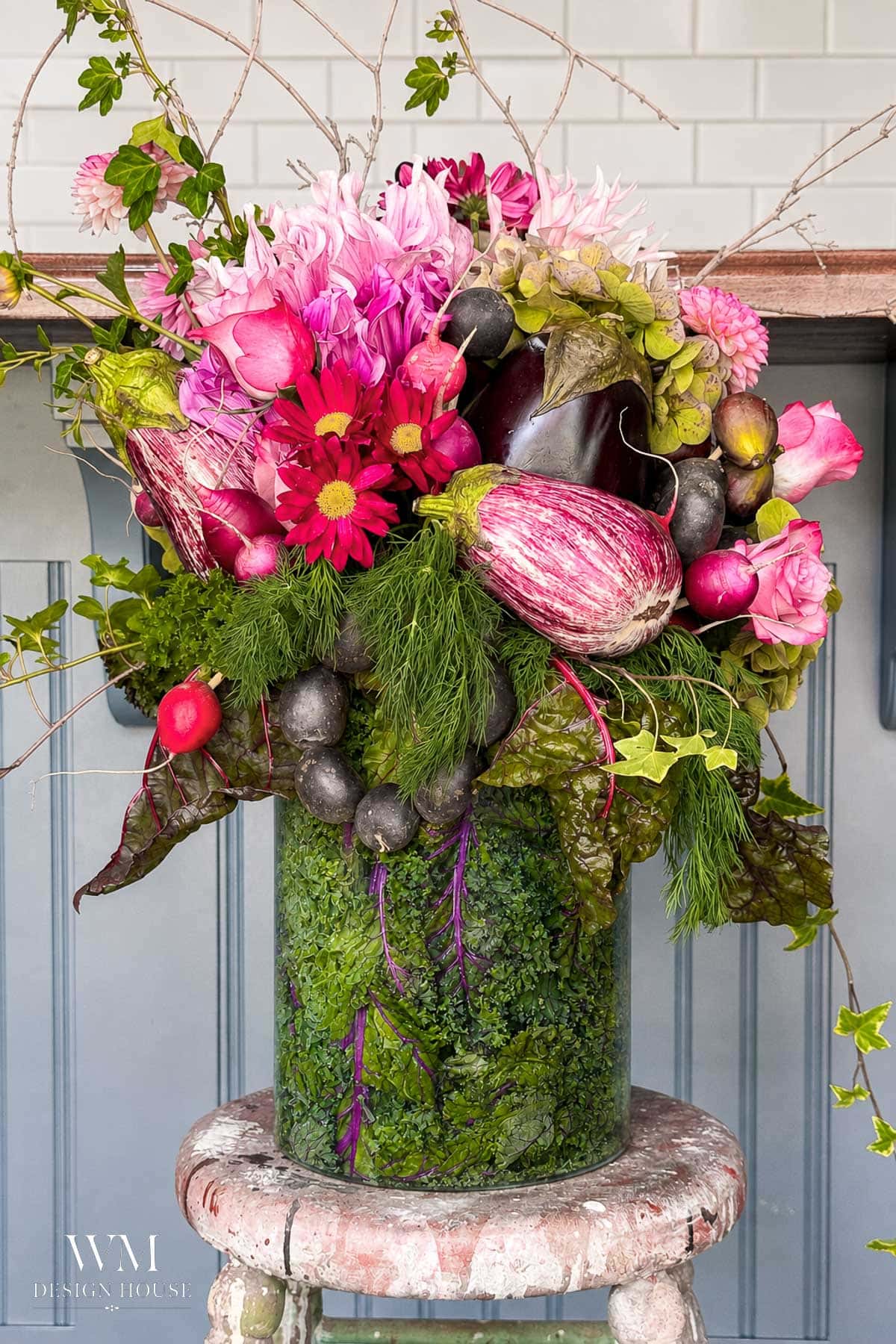
I love how the kale-filled vase reads like a lush green pedestal, and how those glossy eggplants honestly hold their own against the flowers. The ivy trailing off both sides gives the whole thing that slightly wild, just-gathered feeling. This vegetable centerpiece reads elegant rather than novelty: rich enough for a dinner party, but made entirely of things I carried home in a market basket. It carried my table beautifully from late August right into September, and the best part is that nothing goes to waste. And the garden just keeps growing more dahlias.
A Few Final Tips for Your Vegetable Bouquet
- Wash and dry all the vegetables well before they go in. Clean produce keeps the vase water clear and photographs so much brighter. Keep the potatoes up in the arrangement rather than in the water; they cloud it quickly.
- Build the arrangement the same day you plan to enjoy it. The flowers and kale hold for 3–4 days.
- Keep the arrangement out of direct afternoon sun and refresh the inner water daily.
- When the party is over, the eggplants, potatoes, and radishes go to dinner, the figs are dessert, and the kale goes into soup. Nothing wasted.
Frequently Asked Questions
Yes, as long as they were only skewered or resting in clean water. Rinse everything well, trim the skewer holes, and cook as usual. I would skip eating anything that sat in water alongside flower stems, since some cut flowers release compounds into the water. I would also not eat the kale in the outer vase that has been sitting in water for days.
You can line the vase with kale and skewer the vegetables the night before. Store the skewered vegetables in the refrigerator. Add the flowers the morning of your gathering and it will look market-fresh through dinner.
Carrots with their feathery tops are the classic, and baby turnips, golden beets, artichokes, mini peppers, and rhubarb (for the vase lining, in spring) are all wonderful. The rule of thumb: firm vegetables that can be skewered, and sturdy leafy greens for lining the vase.
Plan on three to four days. The flowers and kale hold up well, but the kale in the vase will start to soften first. Refresh the water in the inner cylinder daily, keep the arrangement out of direct afternoon sun, and it will look lovely straight through a weekend of entertaining.
More Vegetable-Inspired Projects
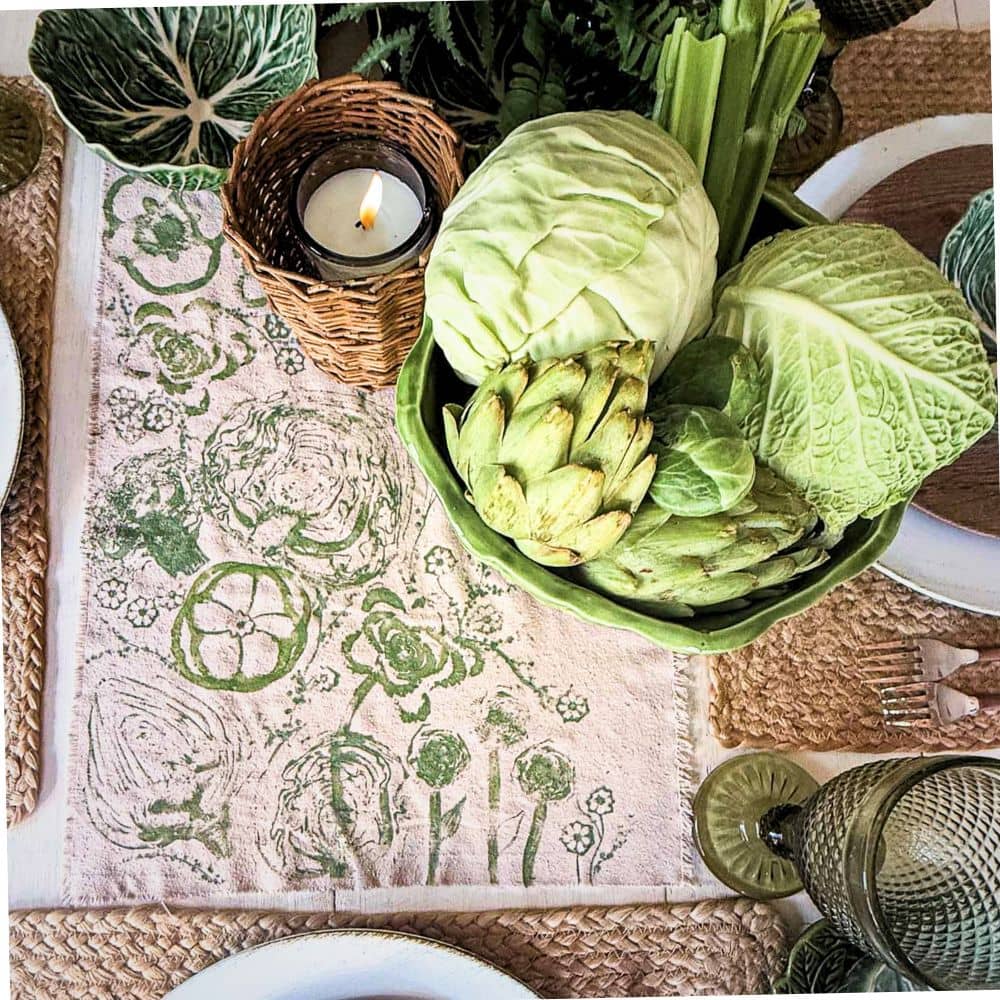
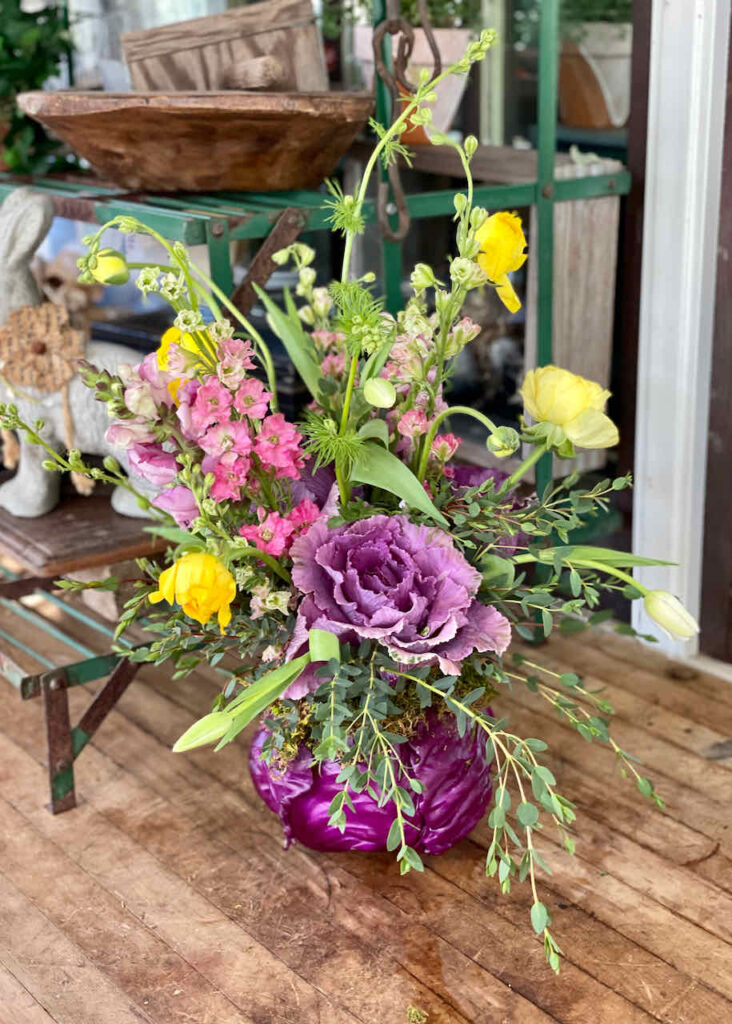
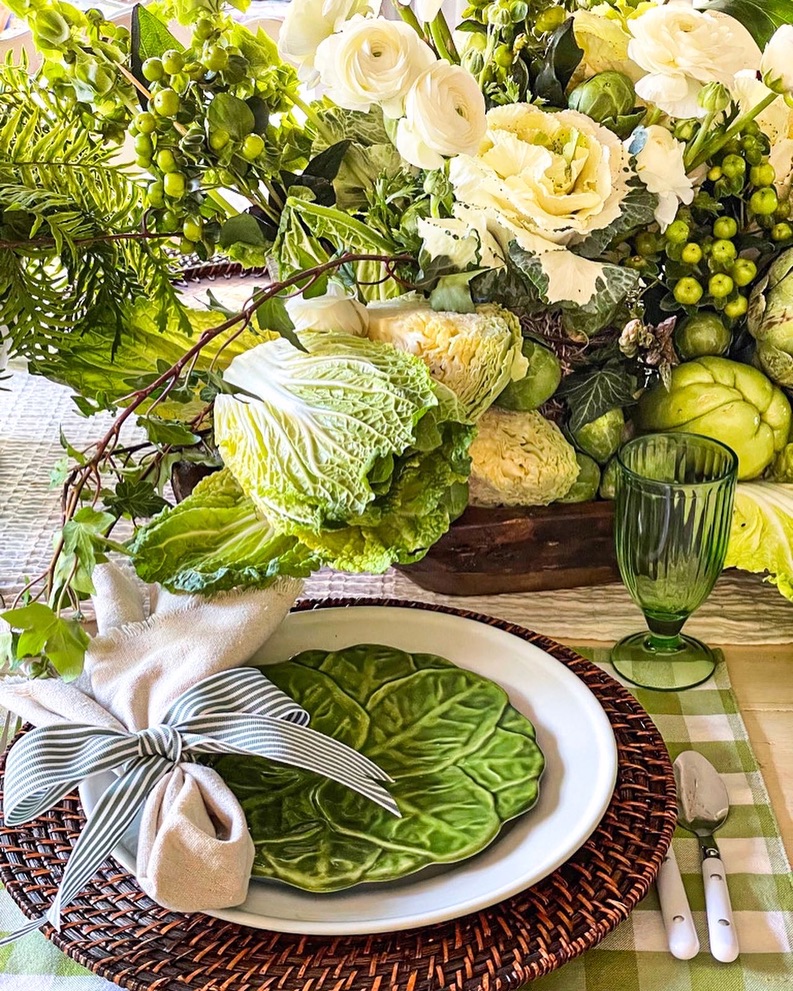
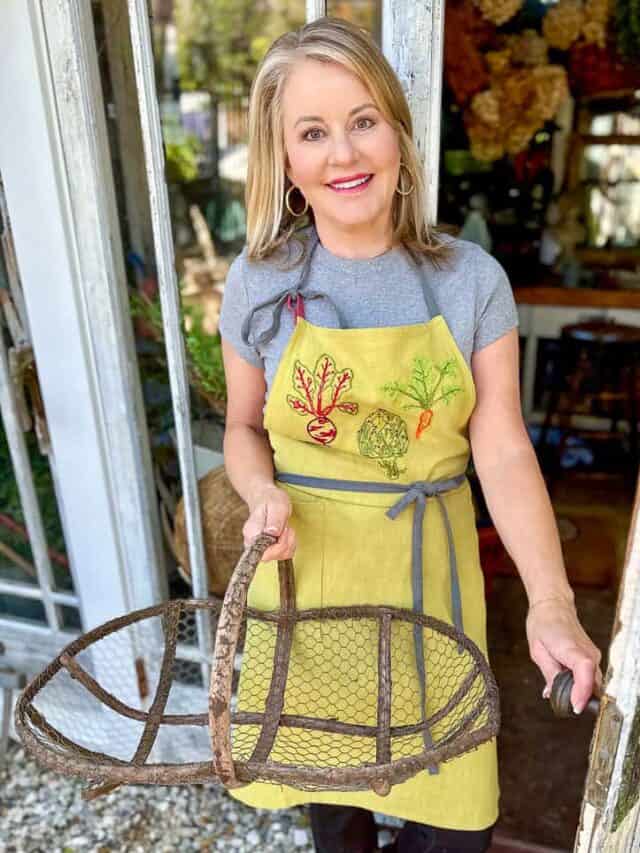
If the veggie aesthetic has you as charmed as it has me, I have a few more projects to keep you going. I used vegetables as stamps to block print a linen table runner, and it would be gorgeous underneath this very arrangement. I also embroidered the sweetest vegetable patterns onto a garden apron, with a free pattern you can download. And of course, there is the cabbage vase arrangement that started my whole vegetable obsession.

More Handcrafted Society Vegetable Projects
My talented friends in the Handcrafted Society have been creating in the garden this month too, and you won’t want to miss a single one. Click through and show them some love!
A Painted Farmers Market Tote
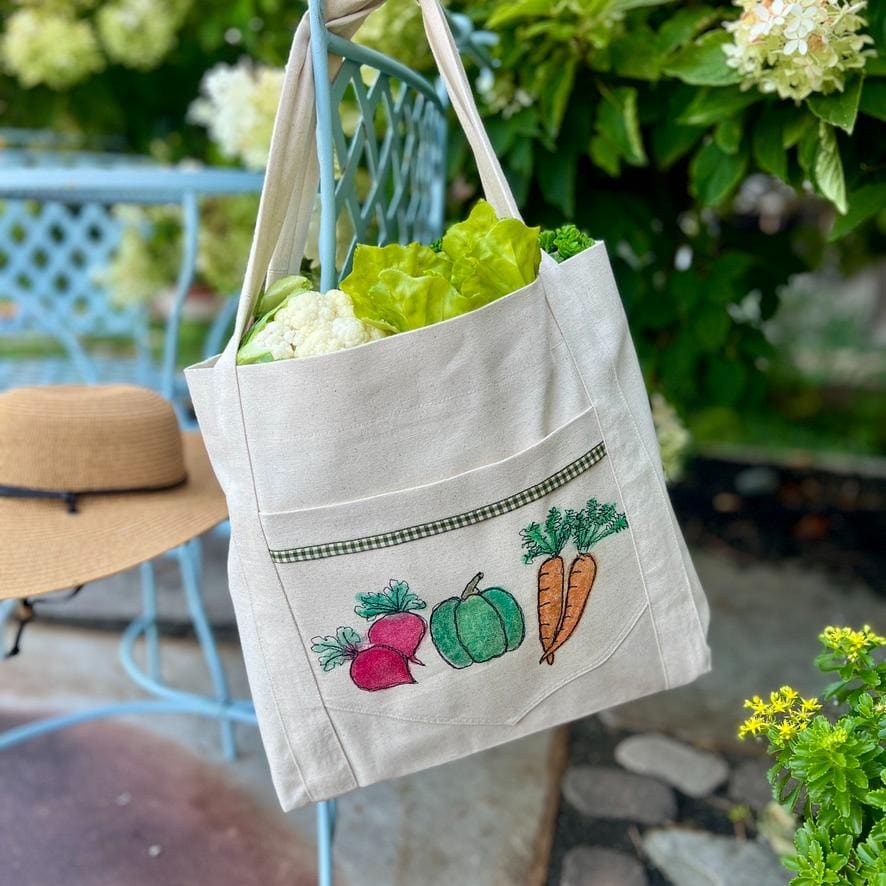
Diane from South House Designs painted the sweetest loose watercolor-style veggies on canvas, then added stitched outlines to turn it into a one-of-a-kind farmers market tote. She shares the full tutorial, along with simple alternatives if you would rather use marker than free-motion stitching, plus a free veggie printable to get you started. Head over to South House Designs to see it!
An Apple Grapevine Wreath
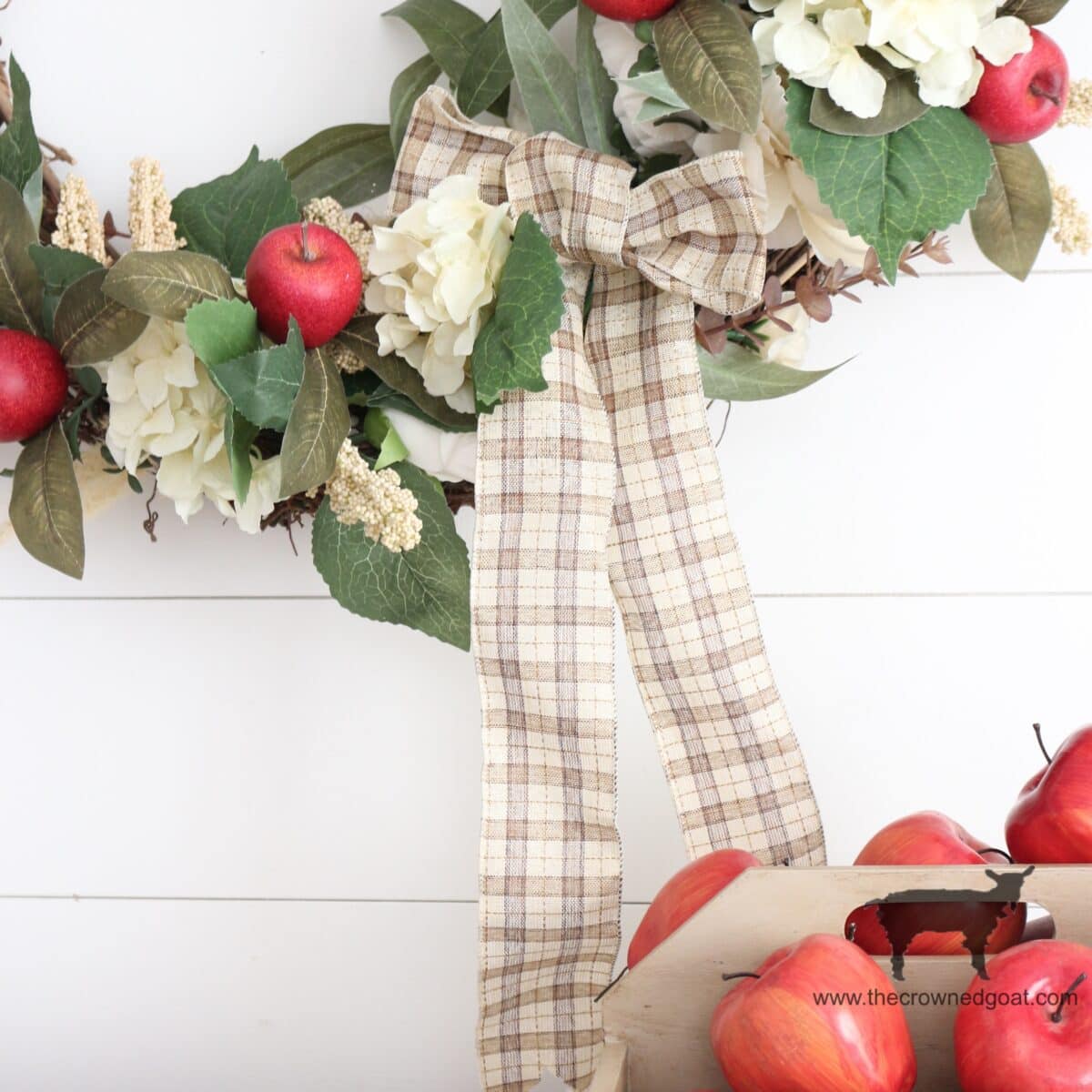
Coco from The Crowned Goat is adding a warm, welcoming seasonal touch with this easy grapevine wreath dressed up with apples. It bridges late summer and early fall beautifully, and her simple DIY brings so much charm to a front door, kitchen, or entryway without a lot of fuss. Head over to The Crowned Goat to see how she put it together!
A Vegetable-Stamped Pinafore Apron
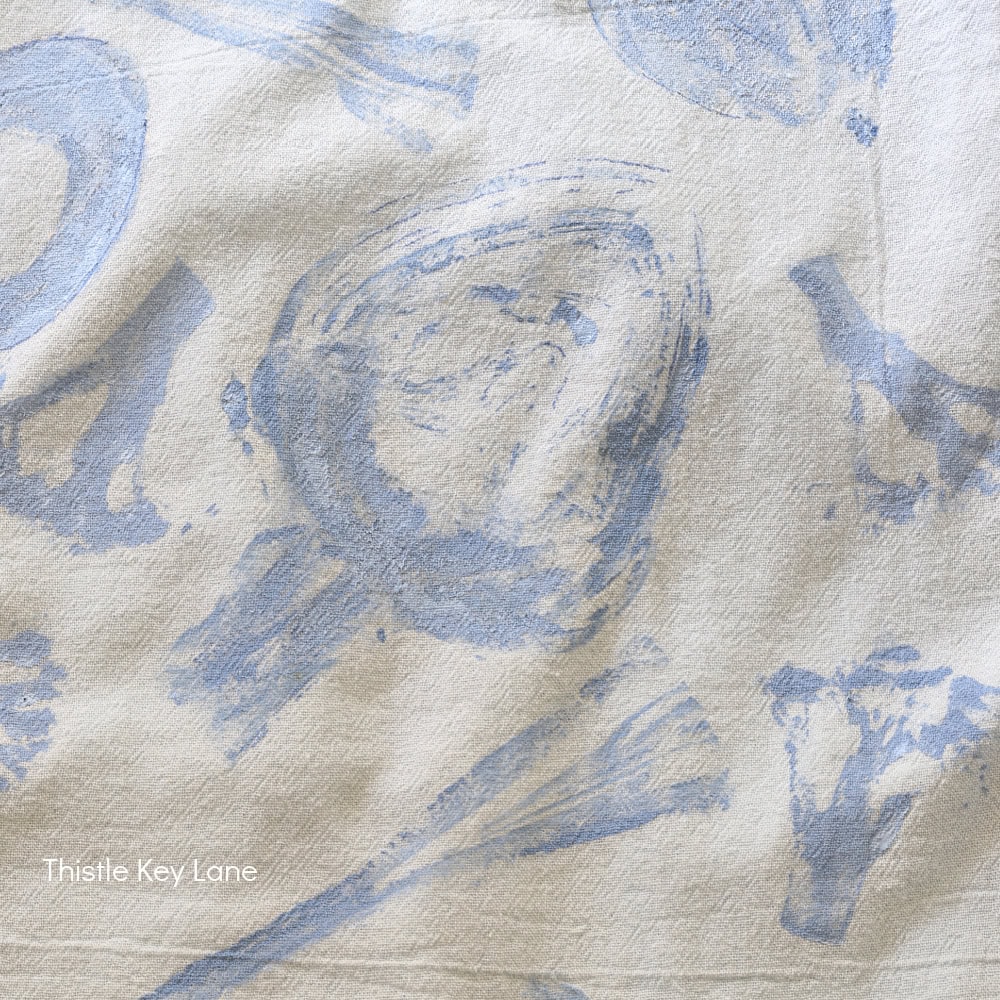
Michelle from Thistle Key Lane added the cutest vegetable shapes to a classic pinafore apron using easy-to-use fabric paint. It is just as much decor as it is an apron, and when you are not cooking, you will want to display it on the pantry door for all to admire. Head over to Thistle Key Lane to see how she made it!
A Kitchen Herb Container Garden
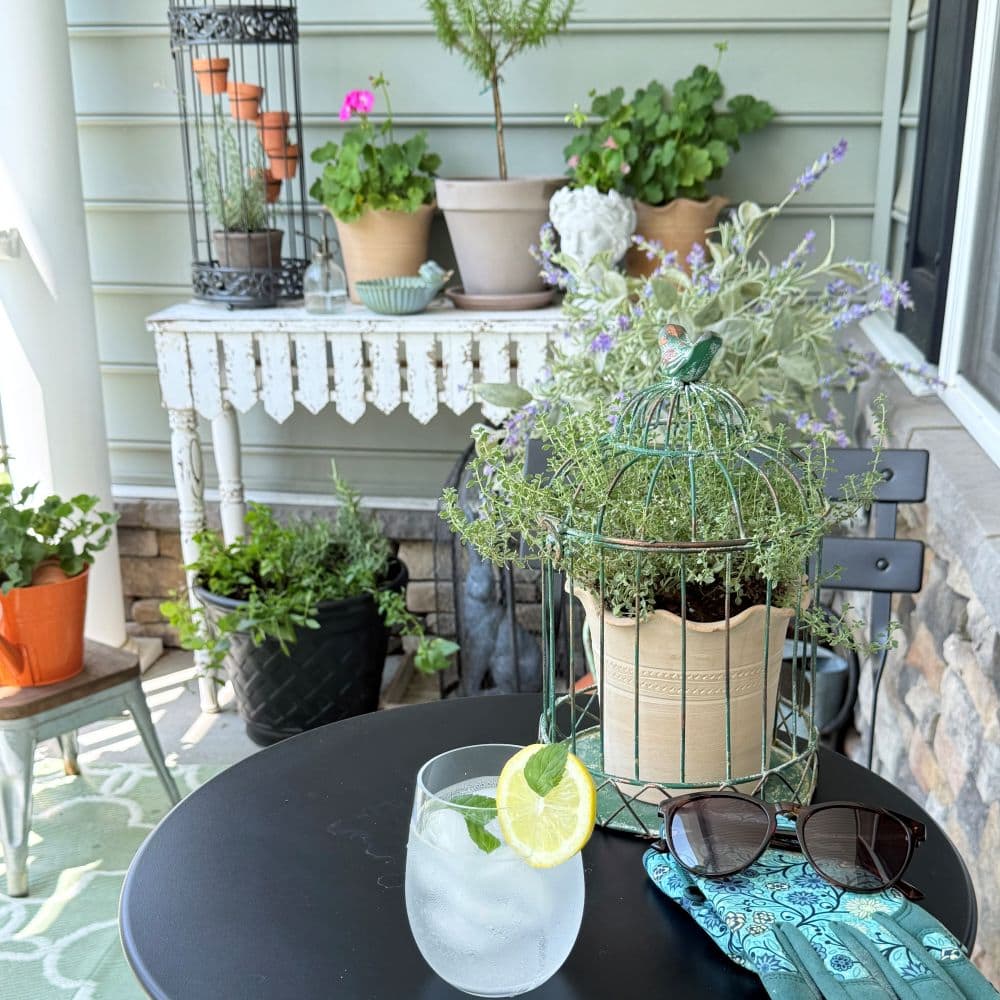
Tammy from White Lilac Farmhouse planted a beautiful kitchen herb container garden that puts fresh herbs right at your fingertips, even with limited outdoor space. She shows you how to choose the best culinary herbs, plant them in a charming container, and add handmade clay herb markers for a truly personal touch. It works on a patio, a sunny windowsill, or as a thoughtful housewarming gift. Head over to White Lilac Farmhouse to see the full tutorial!
Bringing the Veggie Aesthetic to Your Own Table
Who knew a bunch of kale and a few eggplants could steal the show from the flowers? This arrangement was such a joy to create, and I hope it inspires you to look at your next farmers market haul a little differently. If you make your own flower arrangement with vegetables, I would love to see it — tag me or leave a comment below!


Shop the Post
More about me!
Hello, I’m Wendy – a dedicated homemaker with a deep passion for decorating, gardening, cooking, and crafting. I find joy in harmonizing beautiful elements to fashion a space that is both comfortable and inspiring. I will help you create a beautiful home, one project at a time.
Wendy – This floral arrangement looks like something I would buy from a florist for $200. I love how you added the kale leaf to the water and I absolutely adore the color palette you used for the arrangement. The whole arrangement is stunning.
Absolutely stunning, Wendy!
Such a stunning floral arrangement! I cannot wait to show your post to my mother. She is a retired floral designer. She will love it!
This is just beautiful Wendy. I love the little radishes they add a little cuteness.
This looks amazing Wendy. The colors are perfect and the arrangement is stunning. Thanks for the inspo! XO- MaryJo
Wendy, I know this is such a cliche, but your arrangement is a feast for the eyes and then some! The colors, flowers and vegetables are just so vibrant and appetizing! This will certainly make a gorgeous addition to any buffet or dining table! Well done my friend!
Such a beautiful way to transition from one season to the next, Wendy. Plus, I love that you can use this same idea throughout the year for multiple occasions too. Bookmarking this now so I can use this idea as inspiration for our Thanksgiving feast. These colors are gorgeous! Big hugs, CoCo
Thank you CoCo! Veggies are such a fun way to transition into fall. Glad you enjoyed this months projects. So glad you joined us!
I just knew you would do an arrangement with veggies. But wow, oh wow! I did not anticipate it would be so fabulous! Now i want to host a Farmer’s Market dinner, or Garden Harvest dinner!